Color Realism Tattoos: Designs, Aging & Artists Near You
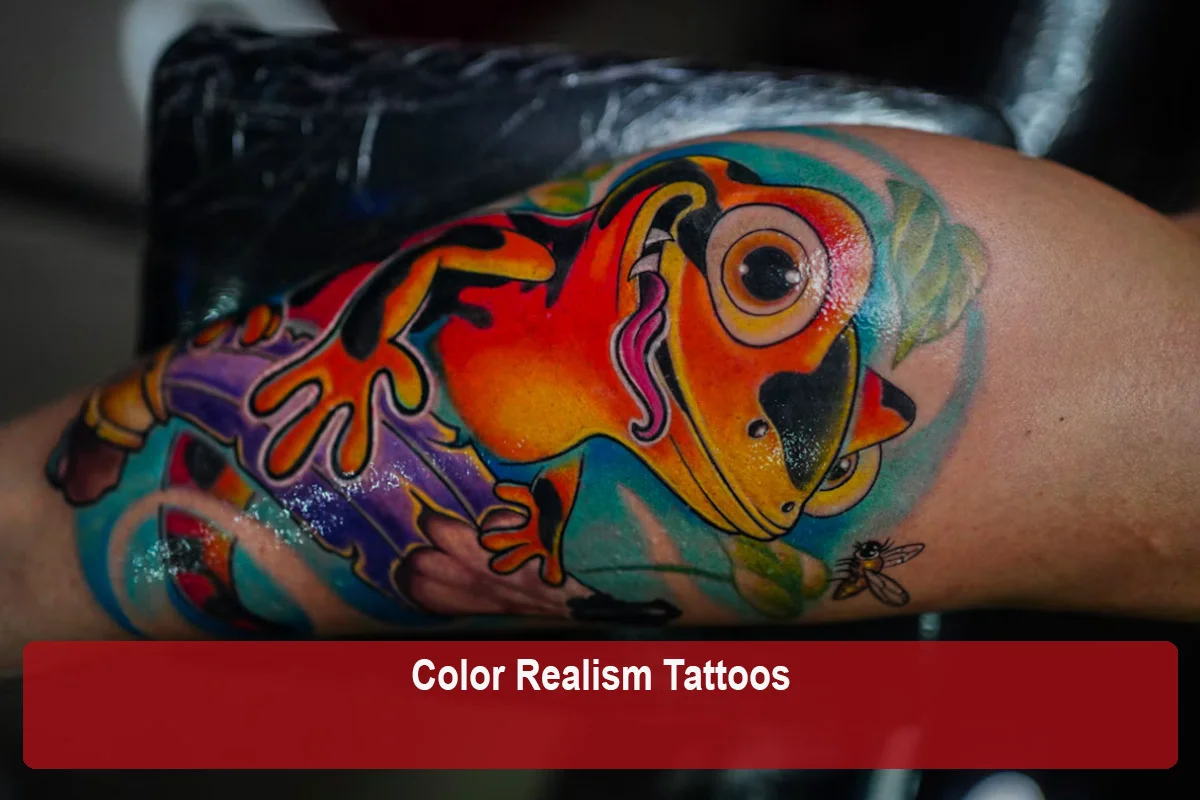
Color realism tattoos recreate a subject the way it actually looks, with lifelike color, light, texture, and depth. A rose shows the soft shift from deep crimson to pale pink, a pet portrait captures the exact warmth of its fur, and a tiger's eye reflects light as it would in a photograph. Done well, a color realism tattoo looks less like a drawing and more like an image sitting in the skin.
That realism demands a lot from both the design and the artist. Color realism usually needs more space, more sessions, and more careful aftercare than simpler styles. Explore color realism tattoo artists and shops across the United States, compare healed portfolios, and learn what to look for before you book. Still deciding on a style? Compare all 44 tattoo styles.
Color Realism Tattoo Artists & Shops Near You
Browse 11 tattoo artists and shops featuring Color Realism work. Compare portfolios and healed examples before you book.
1502 W Camelback Rd Ste 1, Phoenix, Arizona, 85015
American Traditional, Neo-Traditional, Black & Grey
What Is a Color Realism Tattoo?
A color realism tattoo uses full color to reproduce a subject with lifelike accuracy. Instead of bold outlines and flat color fills, the artist builds the image through layered pigment, smooth blending, highlights, and shadows, much like a realist painter.
The defining skill is understanding how color behaves in light. A red apple is not simply red: it has warm highlights, cool shadows, reflected light from its surroundings, and subtle texture. Color realism artists translate those relationships into skin.
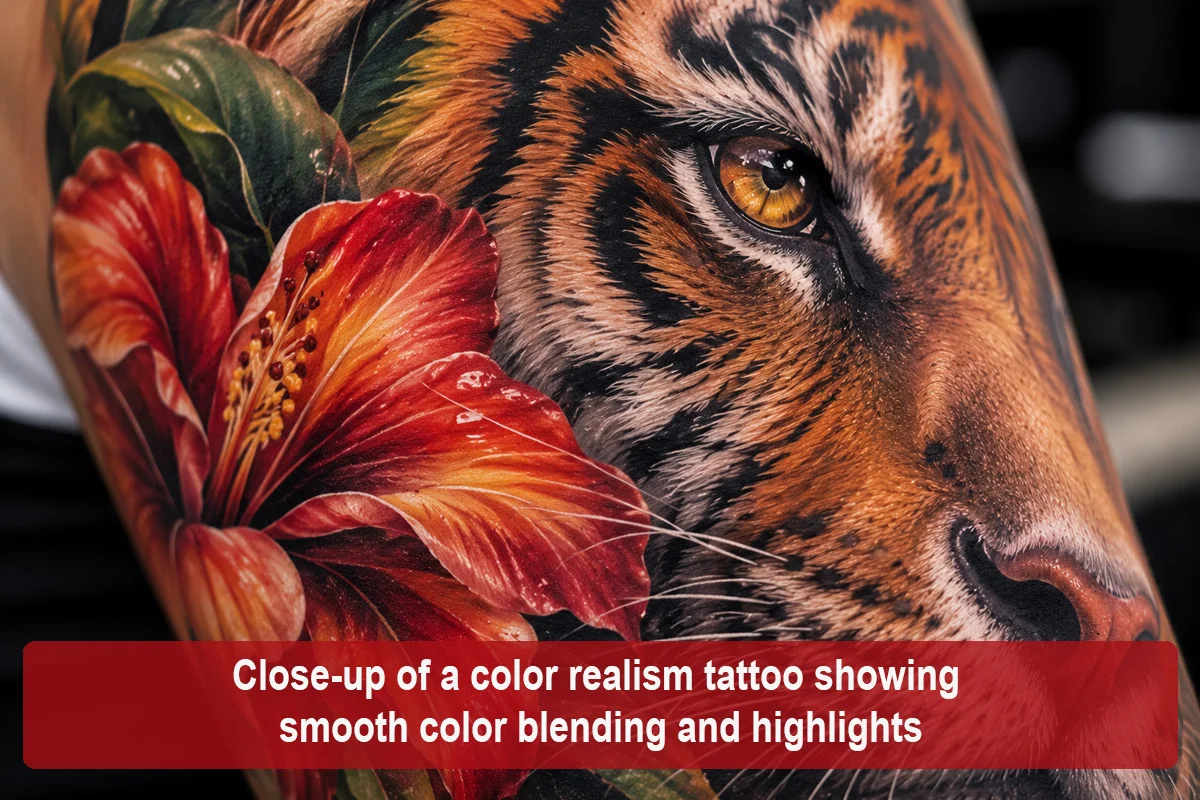
Smooth transitions and a consistent light source define color realism.
How to Recognize Color Realism
Few or no visible outlines: Edges are defined by changes in color and value rather than black linework.
Smooth color blending: Tones transition gradually, such as from shadow to midtone to highlight.
Believable light source: Highlights and shadows fall consistently, giving the subject form and depth.
Accurate texture: Fur, feathers, skin, petals, and metal each look like their real-world material.
Strong value contrast: Good work still has clear darks and lights, not just bright color.
Color Realism vs. Black and Grey Realism
Both styles aim for lifelike accuracy, but they create depth in different ways. Realism is the broader category, while color realism and black and grey realism describe the palette.
Feature
Color Realism
Black & Grey Realism
Palette
Full color, including subtle tints
Black ink diluted into grey tones
Depth created by
Color temperature and value
Value (light and dark) alone
Best subjects
Flowers, wildlife, pets, food, colorful portraits
Portraits, religious imagery, statues, dramatic scenes
Typical size
Medium to large
Medium to large
Long-term upkeep
Light colors may need touch-ups sooner
Generally lower maintenance
Darker skin tones
Bright tints can appear muted; contrast planning matters
Usually highly visible
Choose color realism when the subject's identity depends on color, like a koi's orange scales, a specific pet's coat, or a flower's shading. Choose black and grey when mood, contrast, or lower maintenance matters more.
Where Did Color Realism Tattooing Come From?
Realistic shading has appeared in tattooing for well over a century, but modern realism developed mainly from the 1970s onward. In the United States, black and grey realism grew strongly in Los Angeles, alongside Chicano fine-line work. Artists with fine art training began applying painting principles such as light, form, and perspective to skin.
Color realism became more achievable from the 1990s and 2000s onward as artists gained access to wider and more consistent pigment ranges, finer needle groupings, and better tattoo machines. Today it has strong followings worldwide, and Eastern European artists in particular are known for highly detailed color realism and painterly portraits.
Popular Color Realism Tattoo Designs
Color realism suits subjects where color carries meaning or identity. Each design has different requirements for size, contrast, and artist experience.
Color Realism Portrait Tattoos
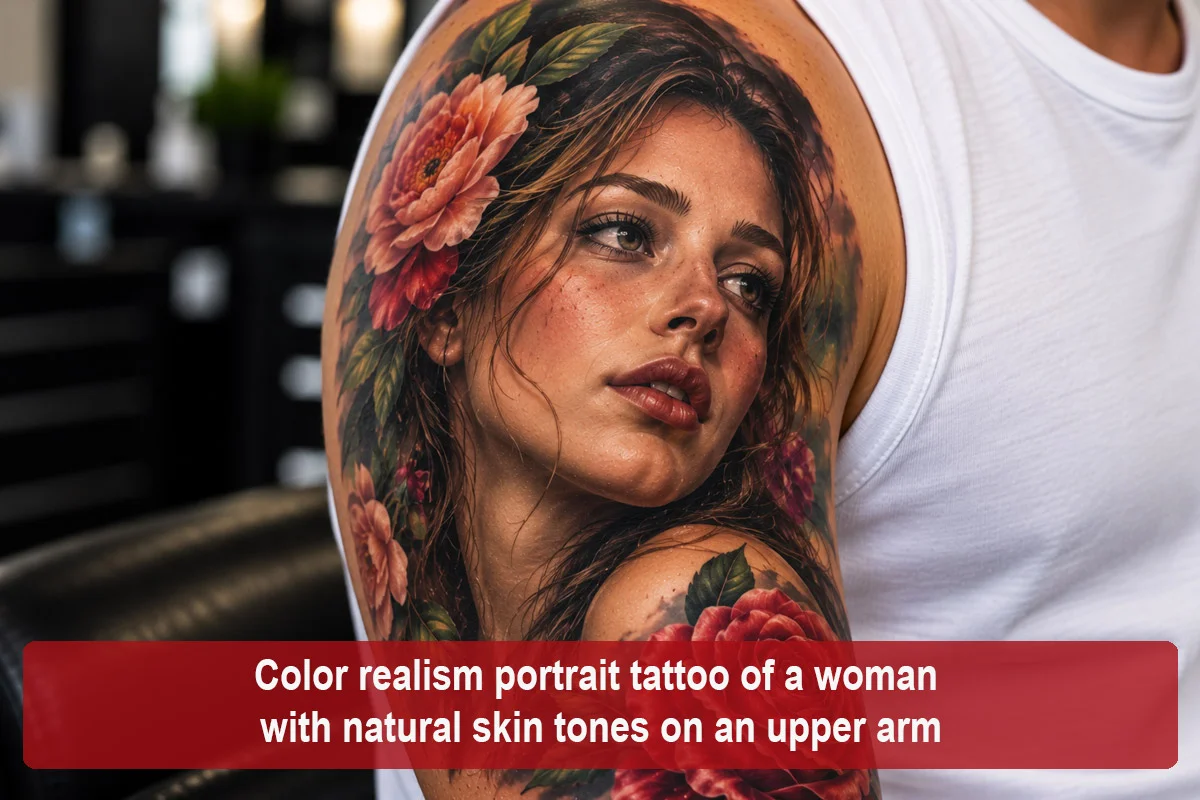
Portraits of loved ones, musicians, and actors are among the most requested color realism tattoos. Skin tones are demanding because faces contain subtle shifts of warm and cool color, and small errors in proportion or tone change the likeness. See our Portrait tattoo guide for more.
Portfolio test: Look at several healed portraits by the same artist. Do the faces still look like real people, with natural skin tones rather than orange or grey patches?
Natural skin tones are the hardest test of a color realism artist.
Pet Portrait Tattoos
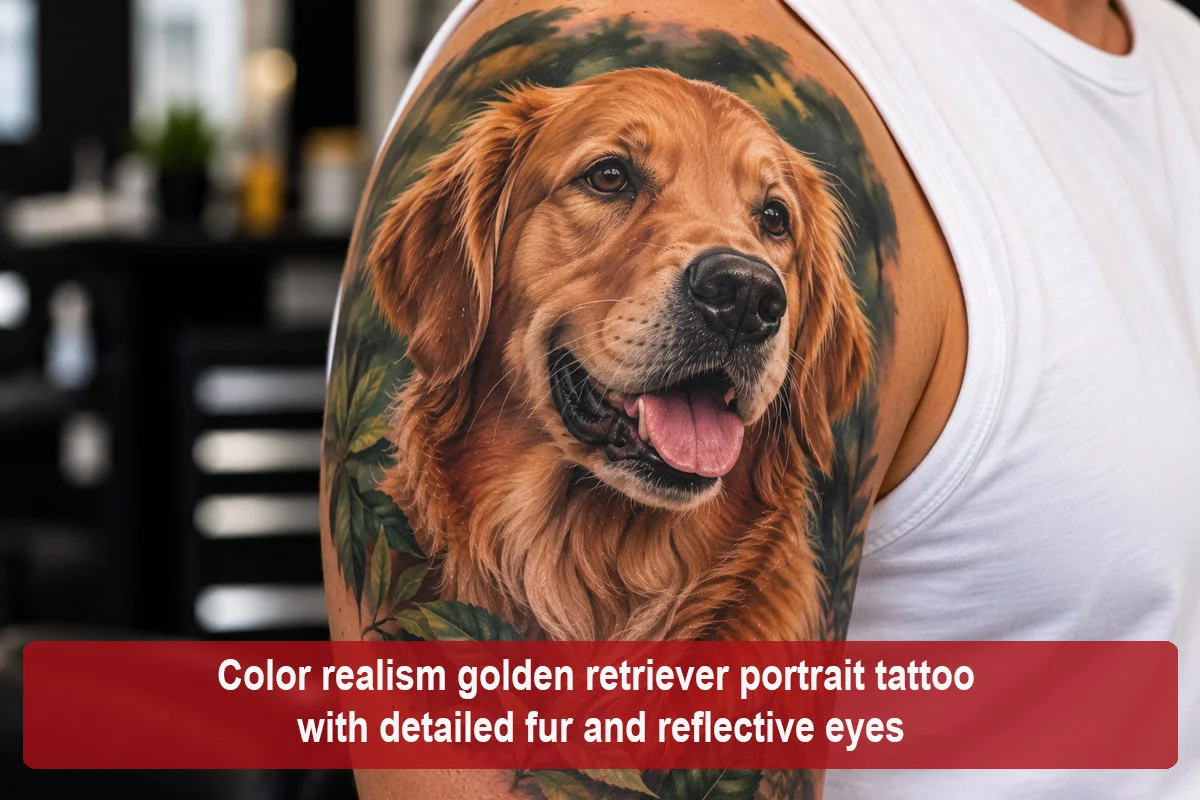
Color is often what makes a pet portrait recognizable: the exact shade of a golden retriever's coat, a cat's green eyes, or the markings on a calico. Fur direction and eye reflections bring the portrait to life.
Accurate fur color and eye highlights make a pet portrait recognizable.
Color Realism Animal and Wildlife Tattoos
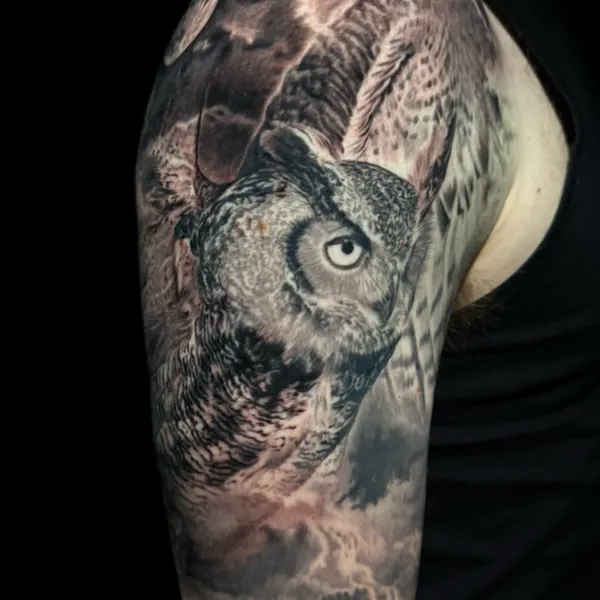
Tigers, lions, wolves, owls, parrots, and koi are popular choices. Wildlife offers strong natural color and dramatic textures, from striped fur to iridescent feathers and shimmering scales.
Design consideration: A full animal with background usually needs a large placement such as the thigh, back, or upper arm. A close-up face can work at a smaller size while keeping the realistic detail.
Color Realism Rose and Flower Tattoos
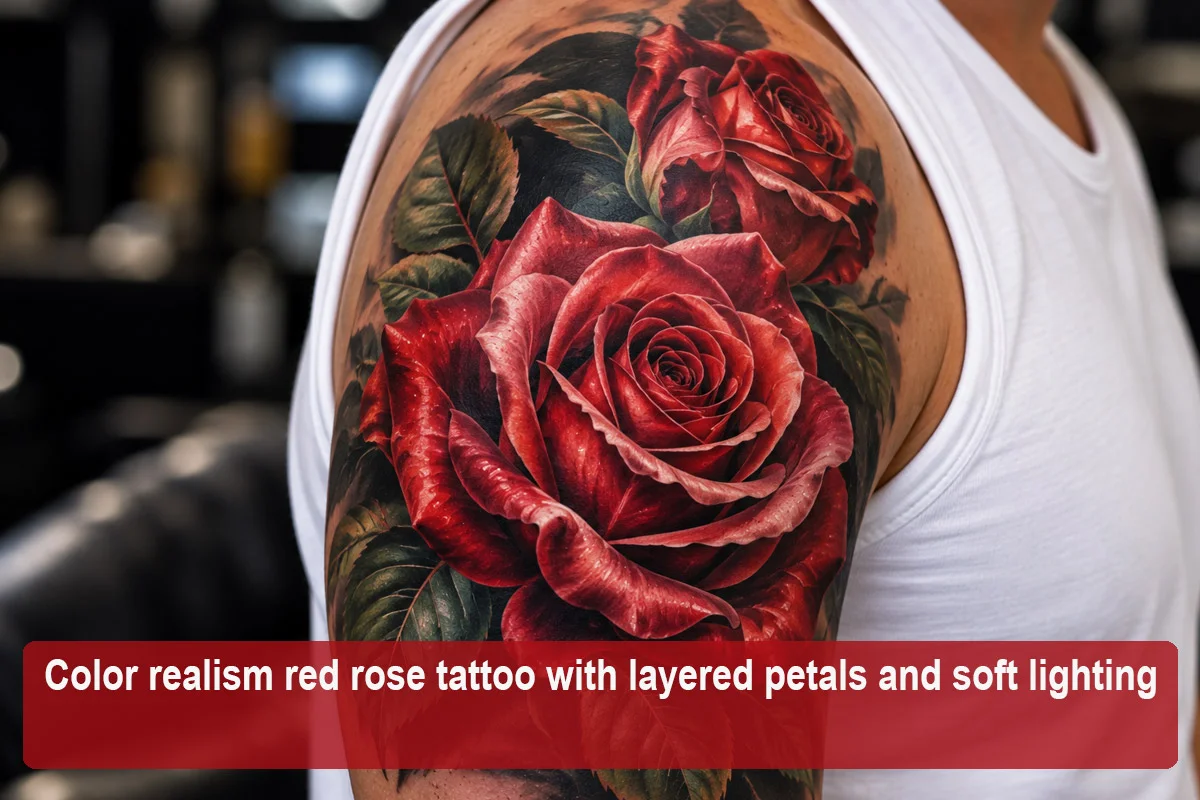
Roses are a classic color realism subject because their layered petals show gradual color transitions and soft lighting. Peonies, lilies, sunflowers, and orchids are also common, often combined with portraits, animals, or clocks.
Design consideration: Pale petals rely on light pigments, which can soften faster over time. A good artist builds in darker shadows and background contrast so the flower stays readable.
Dark shadows keep pale petals readable as the tattoo ages.
Butterfly, Bird, and Insect Tattoos
Butterflies, hummingbirds, and beetles allow vivid, saturated color in a compact design. Their natural patterns make them suitable for medium-sized placements like the forearm, calf, or shoulder.
Nature, Landscape, and Space Tattoos
Sunsets, forests, oceans, and galaxies use color realism to create atmosphere and depth. These designs often work as backgrounds in sleeves or larger compositions.
Eye, Skull, and Surreal Tattoos
A realistic eye with a vivid iris or a skull with colored flowers shows off an artist's control of highlights and texture. Color realism also combines well with Surrealism, where lifelike rendering makes impossible scenes look believable.
Why Size Matters for Color Realism Tattoos
Color realism depends on gradual transitions and fine detail. Those transitions need physical room in the skin. When a realistic design is shrunk too far, colors that should blend instead sit side by side, and small features like eyes, petals, or fur strands can merge as the tattoo ages.
As a general rule, the more detail a design contains, the larger it needs to be. A single rose may work at a medium size, while a full portrait with background usually needs a forearm, calf, thigh, or larger area. Your artist should tell you the minimum size at which the design will stay readable. Learn how tattoo size affects detail and whether any design can be made smaller.
If you want something small, consider Micro Realism, which is designed for compact sizes, or simplify the design by removing the background and focusing on one strong subject.
Best Placements for Color Realism Tattoos
Placement
Suitable Designs
What to Consider
Forearm
Portraits, pets, flowers, birds
Good flat area; high sun exposure
Upper arm and shoulder
Animal faces, roses, portraits
Curves suit round compositions
Thigh
Full animals, scenes, large portraits
Lots of room; lower sun exposure
Calf
Vertical portraits, flowers, wildlife
Good width for medium pieces
Back
Large scenes and multi-subject pieces
Ideal canvas; many sessions
Chest
Portraits, birds, symmetrical designs
Plan around contours and muscle
Hands and fingers
Rarely recommended
Fading and friction limit detail
Placements that see less sun, such as the thigh, upper arm, and back, tend to keep color brighter for longer. Read more about how placement affects design detail.
How Color Realism Tattoos Heal and Age
Every tattoo changes over time, and color realism is especially sensitive to those changes because its effect depends on subtle tones and fine transitions.
Not All Colors Fade at the Same Rate
Darker pigments such as black, dark blue, and dark green generally hold up longest. Lighter colors, including white, yellow, pink, orange, and light blue, tend to soften sooner. That matters in color realism because highlights are often made from the lightest tones. Many color tattoos benefit from a touch-up after several years, and designs with lots of pale color may need one sooner.
Contrast Keeps Realism Readable
Strong darks are what hold a realistic image together as it ages. A design built only from bright, mid-value colors can look stunning when fresh but flatten out over time. Experienced artists deliberately include deep shadows and a range of values so the image stays clear even as colors soften.
Sun Protection Matters Most for Color
Ultraviolet light breaks down tattoo pigment, and bright colors are the most affected. Once your tattoo has healed, use a broad-spectrum, water-resistant sunscreen with SPF 30 or higher whenever it's exposed, and reapply regularly outdoors. Avoid tanning beds.
Healing Takes Patience
Color realism pieces often involve multiple passes over the same skin to build saturation. Follow your artist's aftercare closely, avoid picking at flaking skin, and keep the tattoo out of pools and direct sun while it heals. Color can look slightly cloudy during healing and settle in the weeks that follow.
Red and Colored Ink Reactions
Allergic reactions to tattoo ink are uncommon, but they are reported more often with colored pigments, especially red, than with black. If you've reacted to a previous color tattoo, tell your artist before booking. Itching, raised bumps, or swelling that persists after healing should be checked by a dermatologist.
Color Realism Tattoos on Darker Skin Tones
Color realism can be done on every skin tone, but planning matters. Tattoo pigment sits beneath the top layer of skin, so your natural skin tone acts like a filter over the ink. Very light tints such as pastels, pale yellow, and white highlights can appear muted on darker skin, while deeper, saturated colors and strong contrast tend to show well.
An experienced artist may adjust the palette, increase contrast between darks and lights, or enlarge the design so details have more room. Always ask to see healed color realism on skin tones similar to yours. Fresh photos on lighter skin won't tell you how the piece will look on you.
If you are prone to keloids or raised scars, mention it during your consultation, since color realism often involves heavy saturation over the same area.
How Much Does a Color Realism Tattoo Cost?
Color realism is usually one of the more expensive tattoo styles because it takes longer and requires specialist skill. Most realism artists charge by the hour or by the session rather than a flat rate. The main factors that affect the price are:
Size and detail: More detail and background mean more hours.
Number of sessions: Large pieces may need several sessions spaced weeks apart to heal.
Artist experience and demand: Well-known realism specialists often charge more and have longer waiting lists.
Location: Rates vary between cities and studios.
Touch-ups: Ask whether a touch-up session is included after healing.
Ask for an estimated number of hours or sessions during your consultation. See what a tattoo shop minimum is and why shops require deposits. Choosing a cheaper artist for color realism is risky, because poorly blended color is difficult to fix and expensive to cover.
Choosing the Right Reference Photo
A color realism tattoo can only be as good as its reference. For portraits and pet tattoos, choose a high-resolution, in-focus photo with clear lighting from one direction and good detail in the eyes. Avoid heavily filtered, blurry, or very dark images.
Many artists combine several photos or adjust lighting and color digitally before tattooing. Bring your best options to the consultation and let the artist advise which will translate best to skin. Here's what to bring to a tattoo consultation.
Planning a Color Realism Sleeve
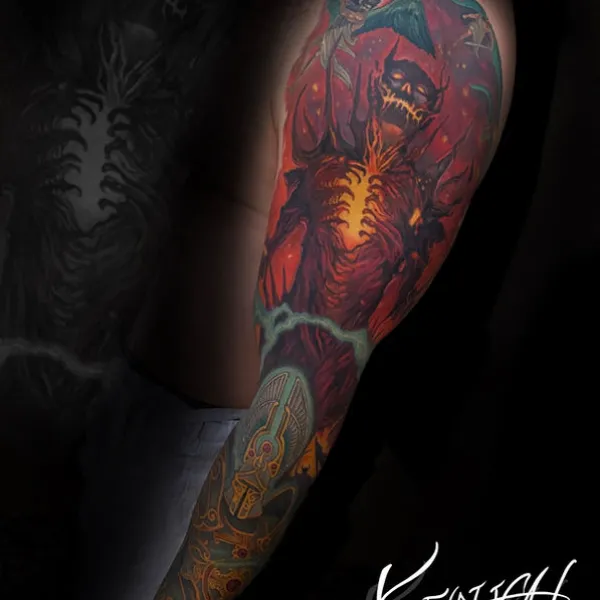
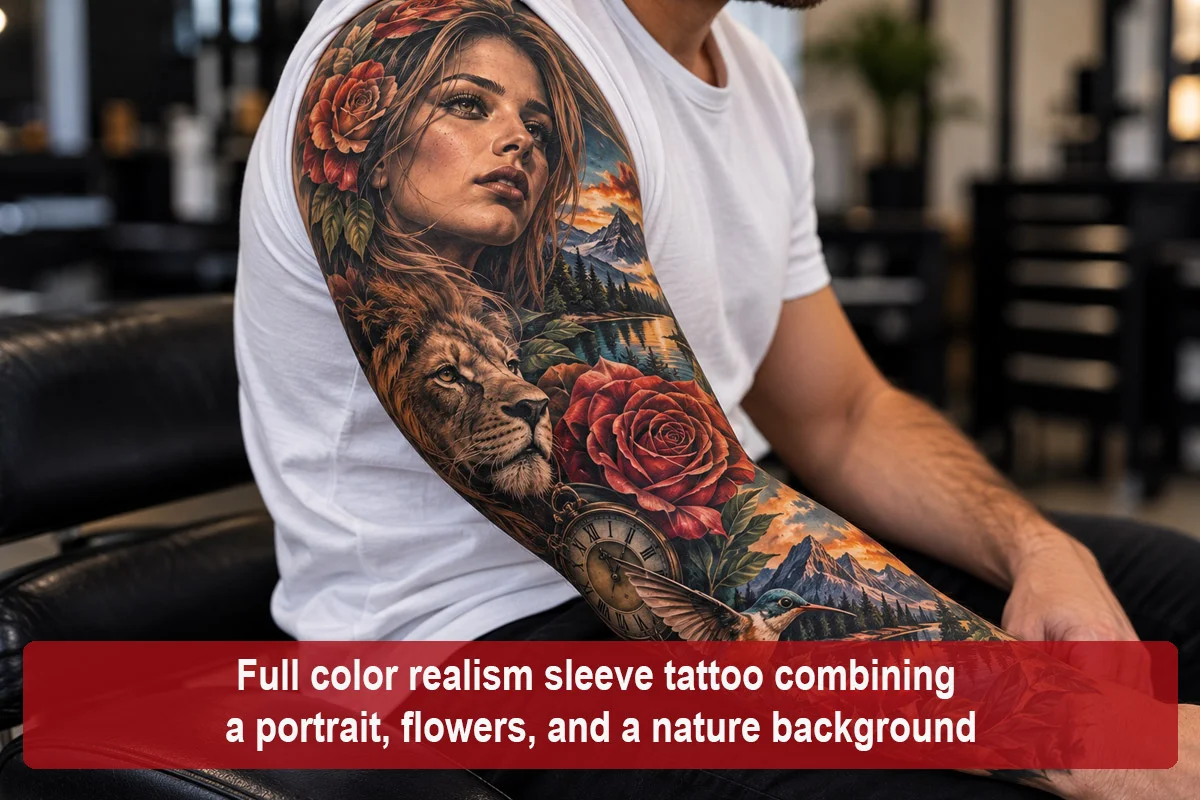
A color realism sleeve often combines a main subject, such as a portrait or animal, with flowers, nature, or atmospheric backgrounds that link the pieces together. A consistent color palette and lighting direction keep the sleeve feeling unified.
Plan the full arm with your artist before starting, even if you complete it over months or years. See our guide to planning a tattoo sleeve. Consider how the composition moves around the elbow and wrist, and where darker background areas can separate subjects. Some people mix color realism with black and grey sections to add contrast and reduce overall maintenance.
A consistent palette and light direction unify a color realism sleeve.
How to Choose a Color Realism Tattoo Artist
Color realism is one of the most technically demanding tattoo styles, and skill levels vary widely. Look past the most eye-catching photos and evaluate the evidence carefully.
Ask for Healed Color Work
Fresh color realism looks its brightest on the day it's tattooed. Healed photos taken months or years later show whether the artist's blending, saturation, and contrast hold up. Learn how to read a tattoo artist's portfolio.
Check Their Experience With Your Subject
An artist who excels at flowers may not be the right choice for a human portrait. Look for several examples of the exact type of subject you want.
Look Closely at Contrast and Blending
Strong portfolios show smooth transitions, clear darks, and believable light. Be cautious of work that looks muddy, patchy, or relies on heavy photo filters and editing.
Discuss Size, Sessions, and Expectations
A good artist will tell you honestly whether your design needs to be larger, how many sessions it may take, and how it is likely to age. For licensing, hygiene, and booking checks, see what to check before booking a tattoo shop.
Find Color Realism Tattoo Artists Near You
Finding the right color realism artist starts with their portfolio, not their location alone. Browse color realism tattoo shops and artists across the United States on TattooShopsNearYou, compare healed work, and look for specialists in the subject you have in mind.
Frequently Asked Questions About Color Realism Tattoos
A color realism tattoo uses full color to recreate a subject with lifelike accuracy, using smooth blending, highlights, shadows, and texture instead of bold outlines. Common subjects include portraits, pets, wildlife, and flowers.
Often, yes. Lighter colors such as white, yellow, pink, and light blue tend to fade sooner than black and dark tones. Strong contrast, a suitable size, low-sun placement, and consistent sunscreen help a color realism tattoo stay vibrant longer.
Many color tattoos benefit from a touch-up after several years, and designs with lots of pale highlights may need one sooner. Ask your artist whether a post-healing touch-up session is included.
It depends on the detail. A single flower or close-up animal face can work at a medium size, while portraits with backgrounds usually need a forearm, calf, thigh, or larger area. For small designs, consider Micro Realism or a simplified composition.
Yes, with careful planning. Deep, saturated colors and strong contrast show well, while pale tints and white highlights may appear muted. Review healed examples on similar skin tones and ask your artist how they will adapt the palette.
Small pieces may be finished in one session, but larger color realism tattoos often take several sessions spaced weeks apart. Your artist can estimate hours after reviewing your reference and placement.
Color realism takes more time and specialist skill than most styles, often requiring multiple sessions and layered color. Artist experience, size, detail, and location all affect the final price.
Sometimes, but it's challenging. Color realism relies on light tones that can't easily hide dark ink. Laser lightening of the old tattoo first often gives better results. Discuss options with an experienced cover-up artist.