American Traditional Tattoos: Designs, Flash & Style Guide
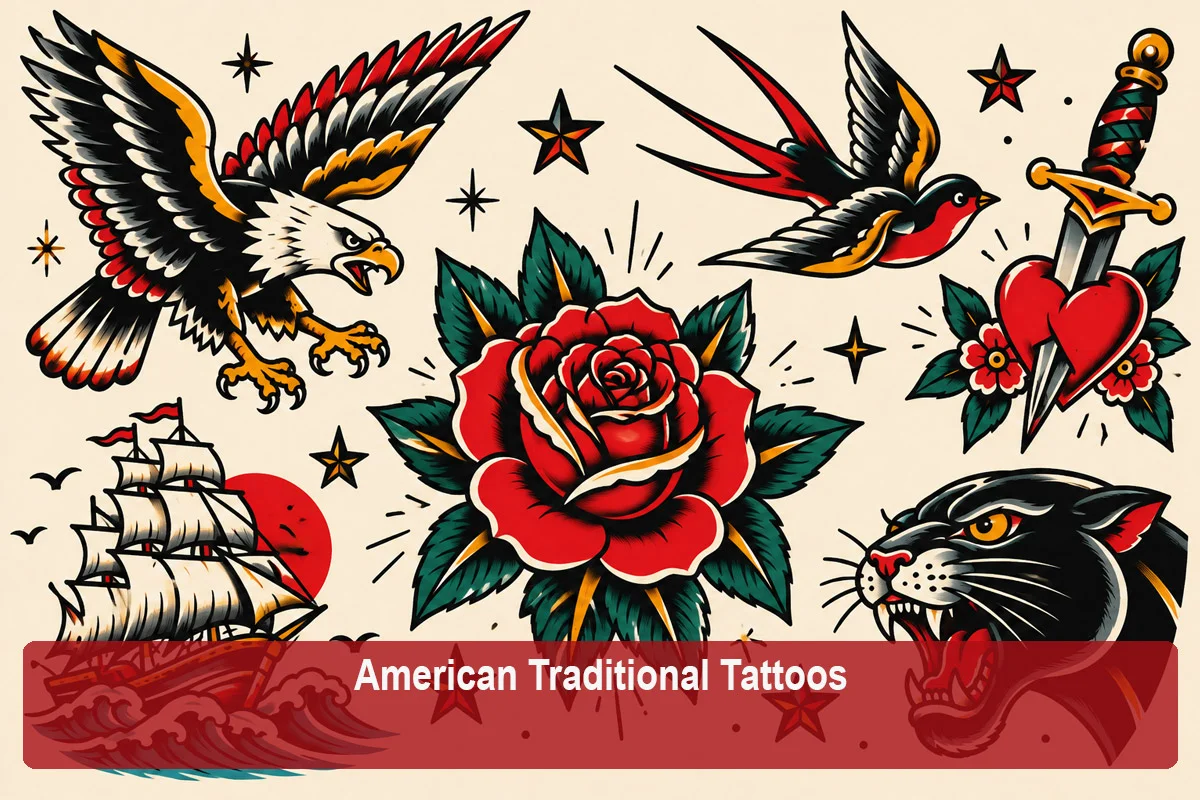
American Traditional tattoos are recognizable for their bold black outlines, strong colors, and instantly readable designs. A red rose, an eagle with outstretched wings, or a black panther may appear simple at first glance, but creating a balanced traditional tattoo requires careful drawing, controlled shading, and a clear understanding of how the design fits the body.
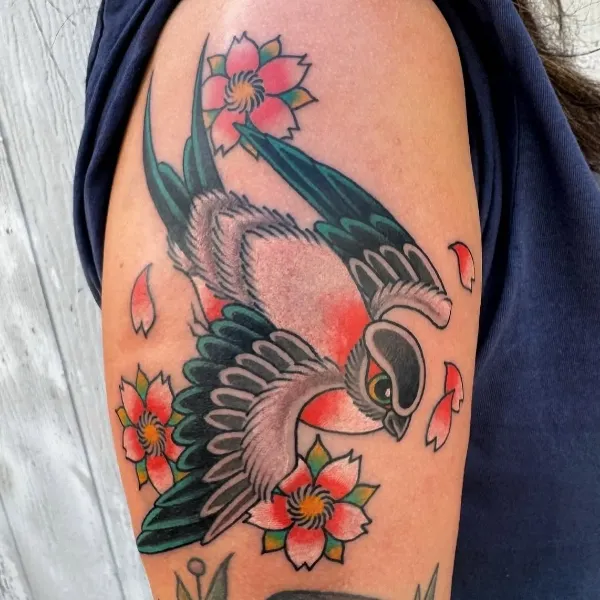
Also called Old School tattoos or Western Traditional tattoos, this style remains an important part of tattoo culture in the United States. Its familiar imagery includes anchors, swallows, hearts, snakes, daggers, ships, and animals, but contemporary artists also adapt new subjects to the traditional visual language.
This guide explains what defines American Traditional tattooing, how to choose between classic flash and custom artwork, which designs work for different placements, and what to examine when selecting a traditional tattoo artist.
American Traditional Tattoo Artists & Shops Near You
Browse 20 tattoo artists and shops featuring American Traditional work. Compare portfolios and healed examples before you book.
American Traditional is a tattoo style built around clear outlines, simplified forms, deliberate black shading, and a relatively limited color palette. Rather than reproducing every realistic detail, the artist emphasizes the features that make a subject recognizable.
Traditional tattooing is often described through three visual characteristics:
Bold black outlines: Strong boundaries separate major shapes and establish the design's structure.
Solid color areas: Red, green, yellow, and black are frequently associated with classic traditional work, although contemporary artists may use additional colors.
Readable compositions: Important features remain visually distinct without relying on tiny details.
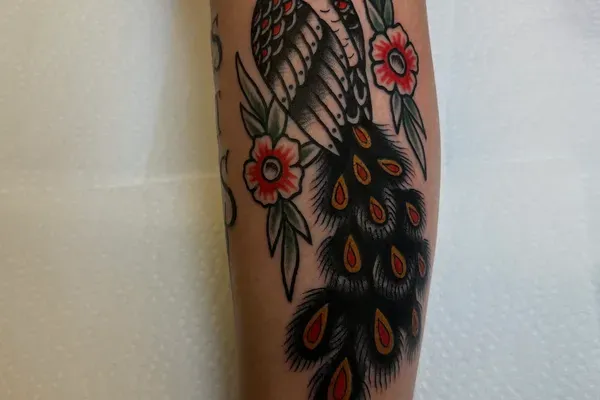
For example, a traditional eagle usually emphasizes its head, wings, talons, and silhouette rather than attempting to reproduce every feather realistically. A traditional rose uses distinct petals, leaves, and shading areas instead of subtle photographic textures.
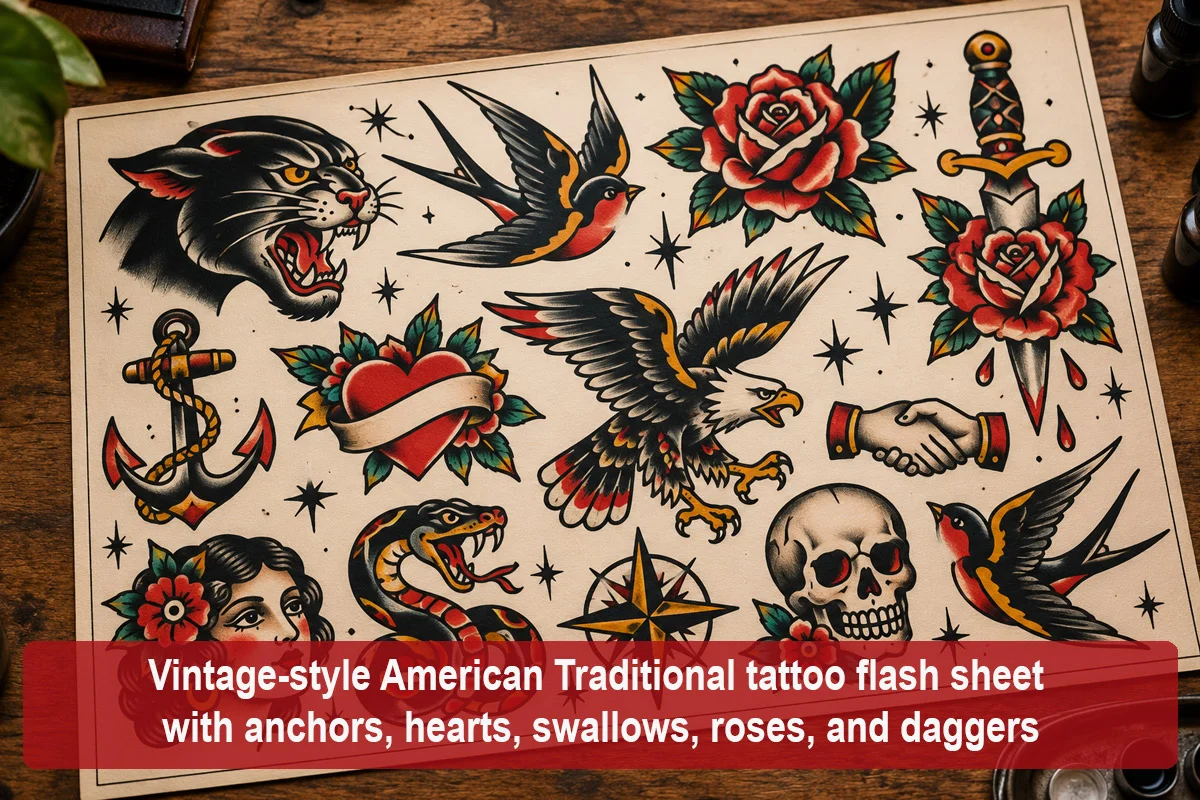
Traditional designs emphasize silhouette and bold outlines over realistic detail.
The style can appear straightforward, but its simplicity makes mistakes noticeable. An uneven outline or poorly balanced shape may be harder to disguise when the design contains relatively few elements.
The History of American Traditional Tattooing
American Traditional tattooing developed through the work of numerous tattoo artists, especially in US cities and port communities where sailors, service members, travelers, and working-class customers encountered commercial tattoo shops.
The development of electric tattoo equipment helped change how tattoo artists worked. In 1891, New York tattooist Samuel O'Reilly patented an electric tattoo machine, an important development in the history of American tattooing.
As tattoo shops developed, artists displayed sheets of pre-drawn designs known as tattoo flash. Customers could select recognizable images such as anchors, hearts, birds, and roses without commissioning an entirely new drawing.
Flash sheets let customers choose from ready-made traditional designs.
The Influence of Sailor Jerry
Norman Keith Collins, widely known as Sailor Jerry, became one of the most influential figures in twentieth-century American tattooing. Working in Honolulu, he developed a recognizable approach to traditional designs and became associated with bold imagery, color, and technical refinement.
His work was particularly connected to the maritime and military tattoo culture of the period. However, American Traditional tattooing was not invented by one person. Artists including Cap Coleman, Bert Grimm, Charlie Wagner, and others contributed to the development and spread of the style.
Today, traditional tattoo artists continue to study historical flash while creating new designs using the same fundamental visual principles.
Popular American Traditional Tattoo Designs and Their Meanings
Many classic American Traditional tattoo ideas have historical or symbolic associations. However, tattoo meanings are not universal. A design may carry a traditional interpretation, a personal memory, or no symbolic meaning beyond its appearance.
American Traditional Rose Tattoos
Roses are among the most adaptable traditional designs. Their layered petals, dark outlines, and contrasting leaves make them recognizable in both small and large compositions.
Roses may represent love, remembrance, or personal connection. They can also be paired with daggers, snakes, hearts, or banners to create a more complex design.
Design consideration: A rose intended for the hand or elbow needs a different arrangement of petals and leaves than one designed for the upper arm or thigh.
American Traditional Eagle Tattoos
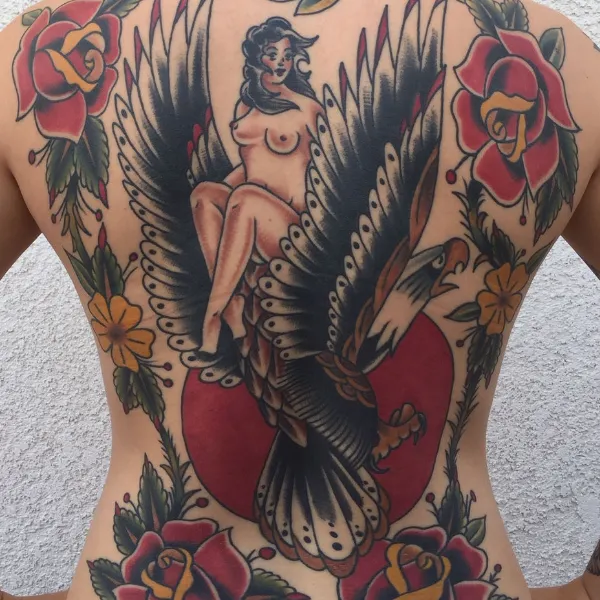
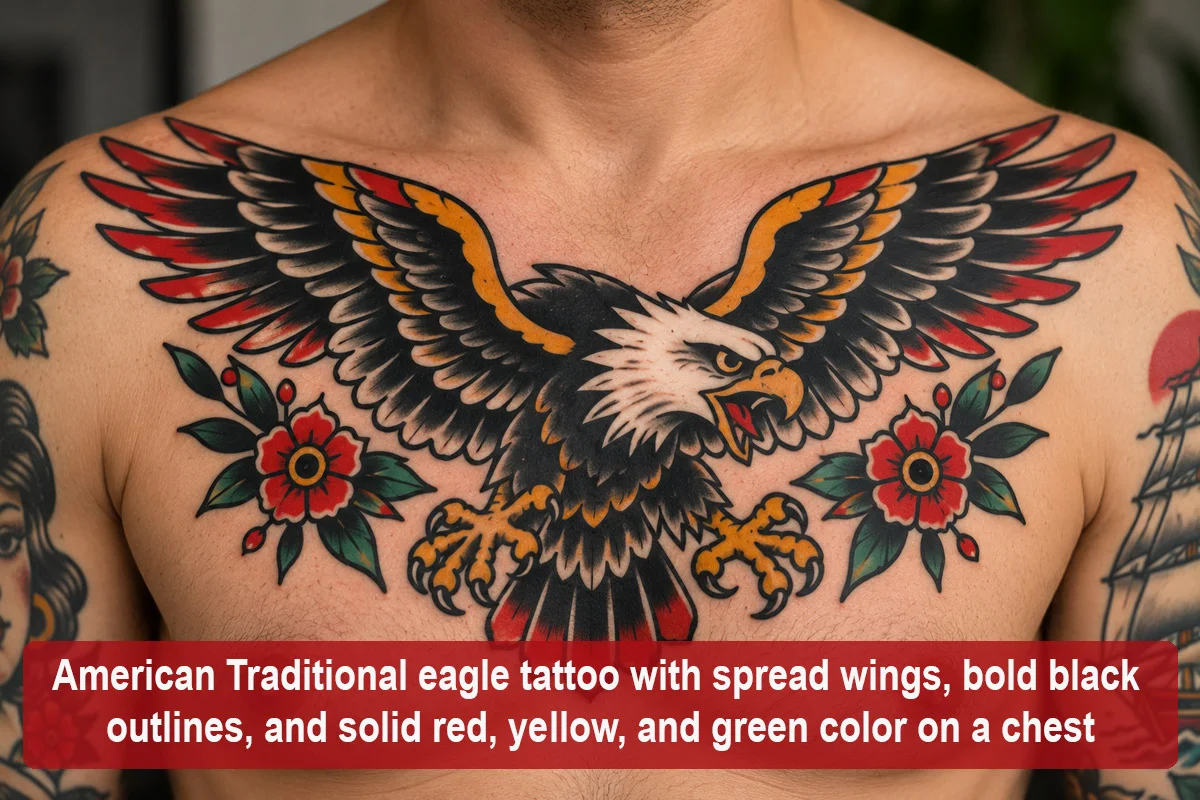
Eagles are closely associated with classic American tattoo imagery. They are frequently depicted with spread wings, strong talons, and a bold silhouette.
Depending on the composition, an eagle may suggest freedom, strength, patriotism, or resilience.
Design consideration: A spread-wing eagle usually needs enough width to keep the wings and body balanced. The chest, back, and upper arm can offer different compositional possibilities.
American Traditional Panther Tattoos
Black panthers are a recognizable traditional motif, often depicted crawling, climbing, or showing their teeth.
The design depends on a strong silhouette, expressive movement, and carefully placed highlights or negative space to distinguish the animal's body.
Design consideration: A crawling panther can suit longer body areas, but the artist should avoid compressing the head, paws, and tail into a space too small for clear separation.
American Traditional Dagger Tattoos
Daggers appear in many traditional flash designs, either alone or passing through roses, hearts, or other objects.
They may represent courage, sacrifice, betrayal, or determination, depending on the accompanying imagery and the wearer's interpretation.
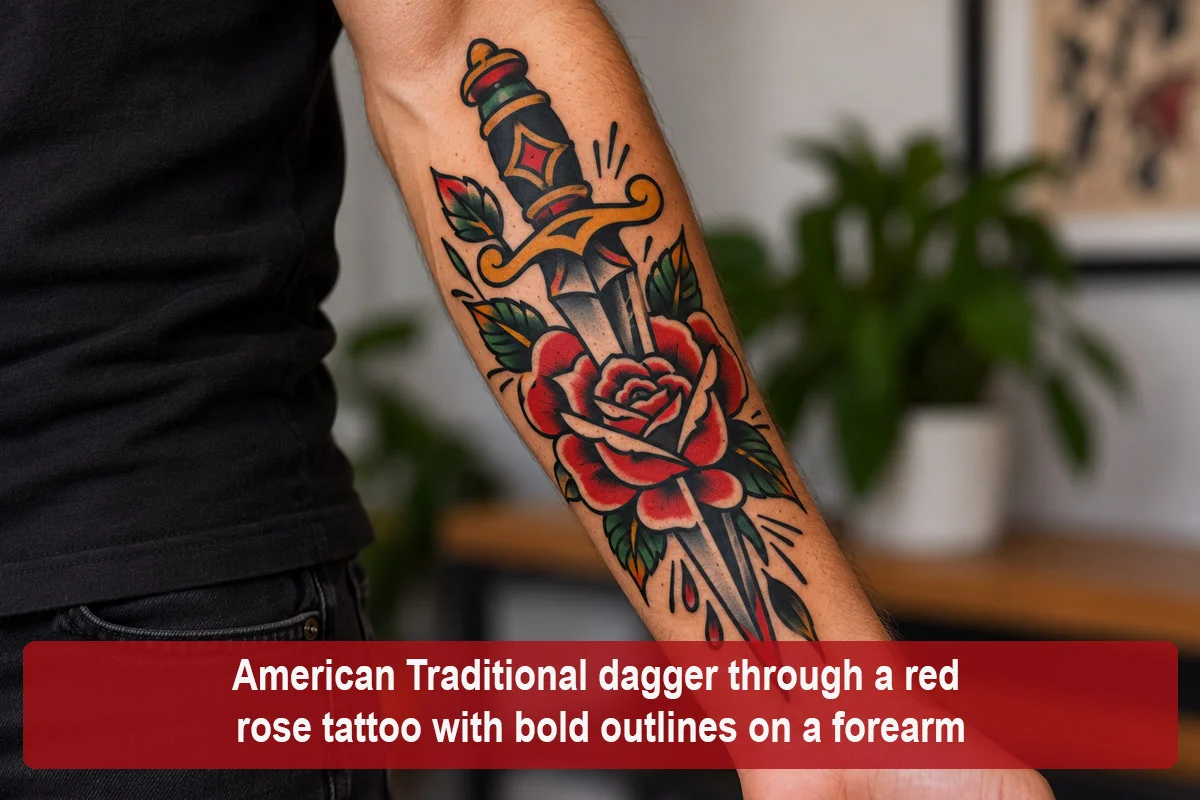
Design consideration: Daggers work naturally as vertical compositions on the forearm, calf, or upper arm. The blade, handle, and surrounding elements should remain visually balanced.
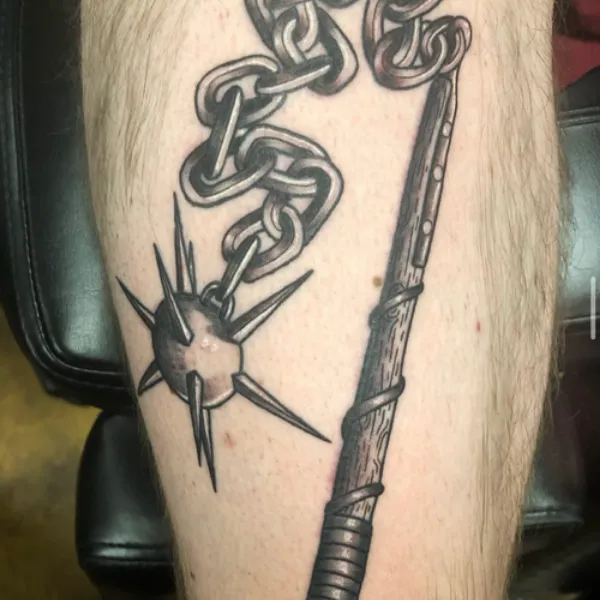
Daggers suit vertical placements like the forearm and calf.
American Traditional Snake Tattoos
Snakes are frequently depicted coiled, striking, or wrapped around a dagger. Their curved bodies allow artists to create movement within narrow or irregular spaces.
Snake symbolism varies widely and may include transformation, danger, protection, or renewal.
Design consideration: Pay attention to the spacing between coils. Tight overlaps can make the design harder to read.
American Traditional Dragon Tattoos
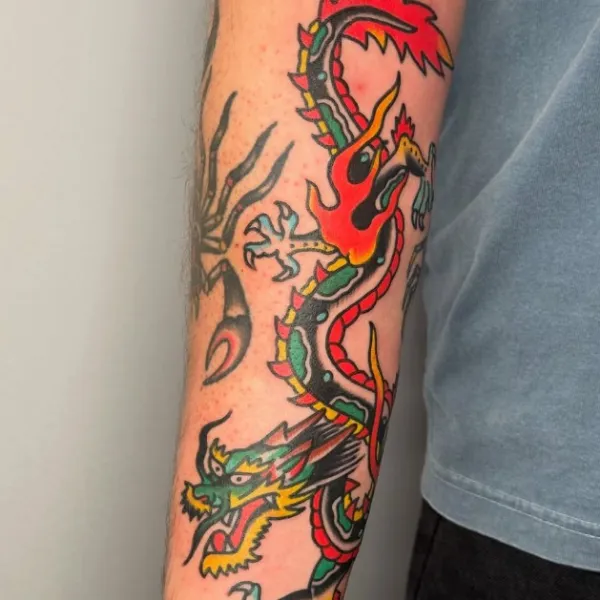
Traditional dragon designs may draw on established American flash imagery and historical exchanges with Asian tattoo traditions. They often emphasize a strong head, claws, scales, and flowing body movement.
Design consideration: Dragons contain more complex anatomical elements than many small traditional motifs. Larger placements can provide room for a readable head, body, and tail.
Other Classic Traditional Tattoo Ideas
Swallows: Commonly associated with maritime travel, return, and homecoming.
Anchors: Often associated with stability, connection, and seafaring traditions.
Hearts: Frequently used for love, family, memorials, and names.
Ships: Connected to travel, adventure, and nautical tattoo history.
Tigers and wolves: Animal motifs that can express power, independence, or personal identity.
Scorpions, sharks, and bears: Strong silhouettes suited to expressive traditional artwork.
When selecting a symbol, consider how its shape fits your intended placement rather than choosing solely based on a conventional meaning.
American Traditional Tattoo Flash vs. Custom Designs
Traditional tattoo flash consists of pre-drawn designs that customers can select from a shop's available artwork. Flash is an important part of American tattoo history and remains a practical option for people who appreciate established imagery.
When Flash Makes Sense
Flash can be a good choice when you like the artist's existing designs and do not need a highly personalized composition. Some tattoo shops offer walk-in appointments for available flash, although policies vary.
Before selecting a design, ask whether it is repeatable flash, a one-time design, or artwork reserved for a particular customer.
When to Choose a Custom Traditional Tattoo
Custom artwork is useful when you want to combine several symbols, adapt a design to a particular body area, incorporate meaningful lettering, or plan a larger composition.
A custom design should still follow the visual principles of traditional tattooing. Adding excessive details or realistic textures can change the style and may reduce readability at the intended size.
What to Check Before Booking Flash
Whether the design is repeatable or exclusive.
Whether size or color adjustments are available.
Whether the artwork can be adapted to your preferred placement.
Whether the artist has tattooed similar designs successfully.
Whether the shop accepts walk-ins or requires an appointment.
American Traditional Tattoo Sleeves: Planning a Cohesive Collection
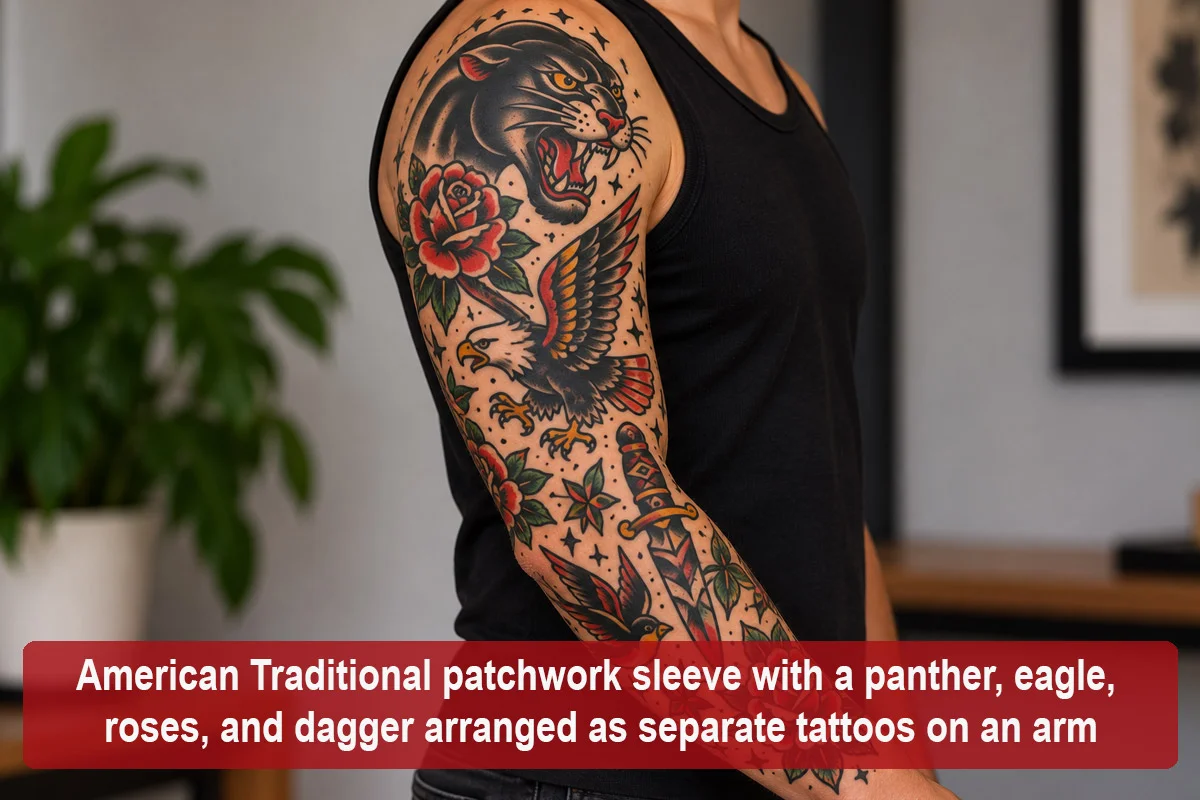
An American Traditional sleeve often consists of several individual tattoos arranged across the arm. Roses, eagles, panthers, daggers, snakes, and other designs can work together without forming one continuous scene.
However, a collection of individually strong tattoos does not automatically create a balanced sleeve.
A traditional sleeve combines individual pieces with balanced spacing.
Choose the Largest Designs First
If you're planning a full sleeve, identify the major pieces before filling smaller gaps. An eagle or panther may require a prominent area, while roses, stars, and smaller symbols can occupy remaining spaces.
Maintain Consistent Visual Weight
Traditional sleeves tend to feel cohesive when the pieces share compatible line weights, shading approaches, and color relationships. Mixing artists is possible, but compare their work carefully if you want a consistent appearance.
Leave Room for Future Tattoos
A common planning mistake is filling the most convenient spaces first and leaving awkward gaps for larger designs later.
Discuss future additions with your artist before placing the first few pieces. A planned sleeve can still develop gradually without sacrificing composition.
Should You Use Background Fillers?
Small stars, dots, and other fillers are sometimes used between traditional tattoos. They are optional and should support the overall layout rather than compensate for poor spacing.
Best Placements for American Traditional Tattoos
American Traditional tattoos can be adapted to many body areas. The best placement depends on the shape of the subject, the amount of detail, and how the design interacts with the body's contours.
Placement
Design Considerations
Examples
Forearm
Good for vertical or moderately wide compositions
Daggers, snakes, roses
Upper arm
Offers room for rounded and medium-sized designs
Panthers, eagles, tigers
Chest
Supports wider compositions and paired designs
Eagles, ships, symmetrical artwork
Back
Provides space for large, detailed compositions
Eagles, dragons, multi-subject designs
Thigh
Offers a broad surface for substantial artwork
Panthers, wolves, roses
Elbow
Requires careful adaptation to a moving joint
Webs, flowers, circular motifs
Hand
Needs strong readability and consideration of wear
Roses, small animals, simple symbols
Knee
Requires planning around movement and curvature
Webs, flowers, bold circular designs
American Traditional Hand Tattoos
Hand tattoos are highly visible and can be exposed to frequent washing, sunlight, and friction. Compact traditional designs may suit the area, but intricate details should be limited.
Some artists have specific policies for hand tattoos, especially for first-time customers. Ask about placement, touch-up policies, and healed examples.
American Traditional Chest Tattoos
The chest provides room for broad designs such as eagles and symmetrical compositions. Consider how the tattoo will sit when standing naturally and how it interacts with the shoulders and sternum.
American Traditional Elbow and Knee Tattoos
Elbows and knees create placement challenges because the skin stretches and moves. Designs with circular or radiating compositions can be adapted to these areas, but careful planning is essential.
Color vs. Black and Grey American Traditional Tattoos
Although classic American Traditional tattooing is strongly associated with saturated colors, many traditional designs can also be executed primarily in black and grey.
Color Traditional Tattoos
Color can emphasize the contrast between roses, leaves, animals, and decorative elements. Traditional designs often use distinct color fields rather than subtle photographic blending.
Black and Grey Traditional Tattoos
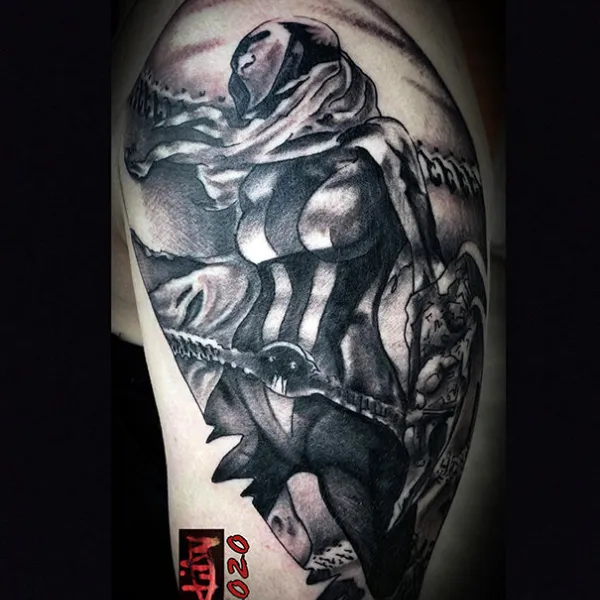
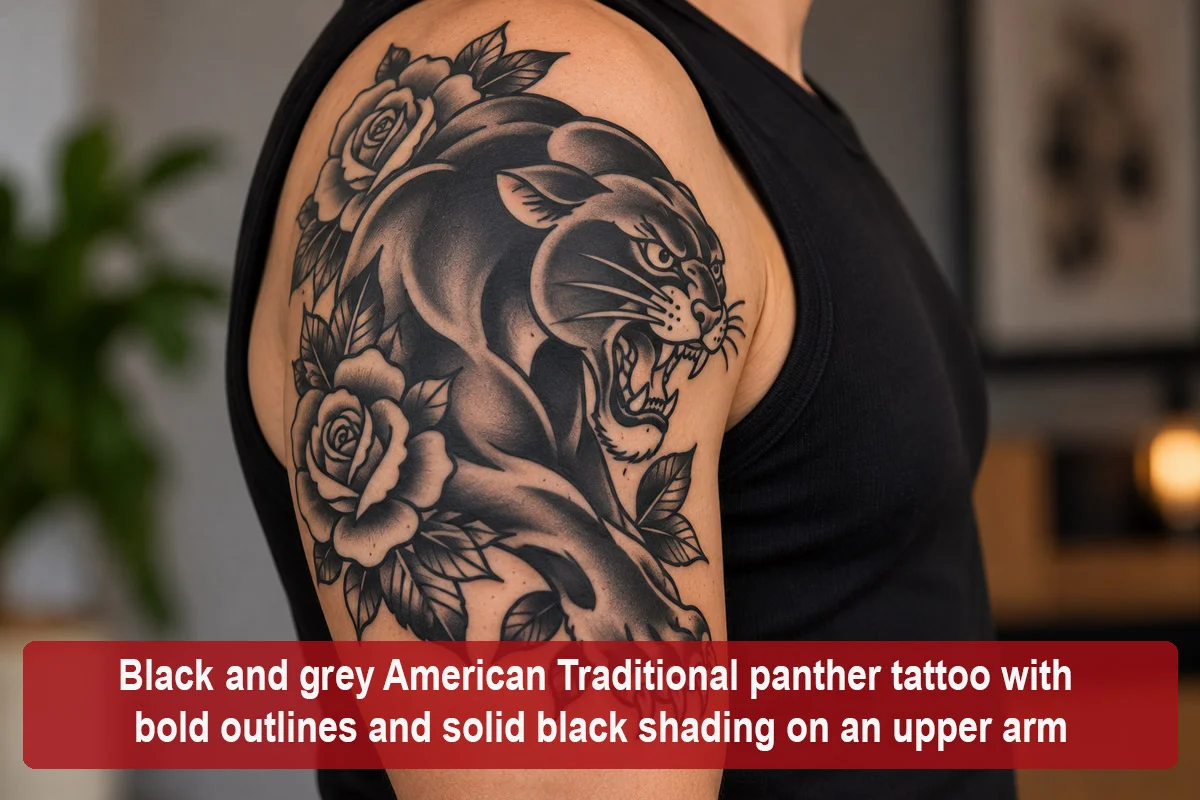
Black and grey versions retain the strong outlines and simplified shapes of the style while using tonal contrast instead of multiple colors.
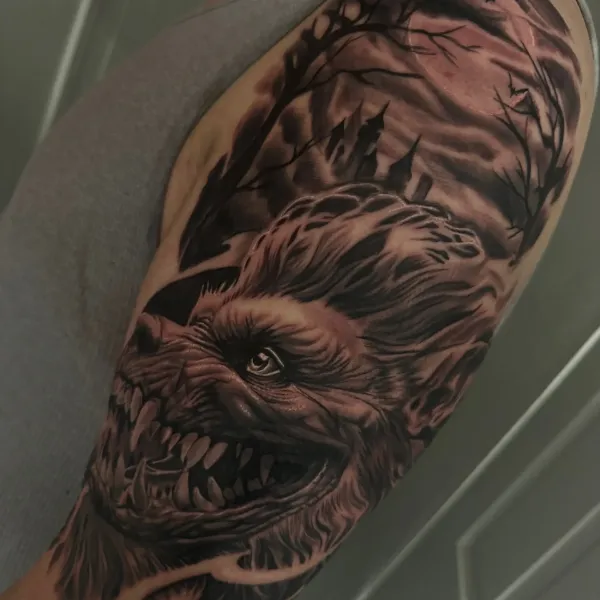
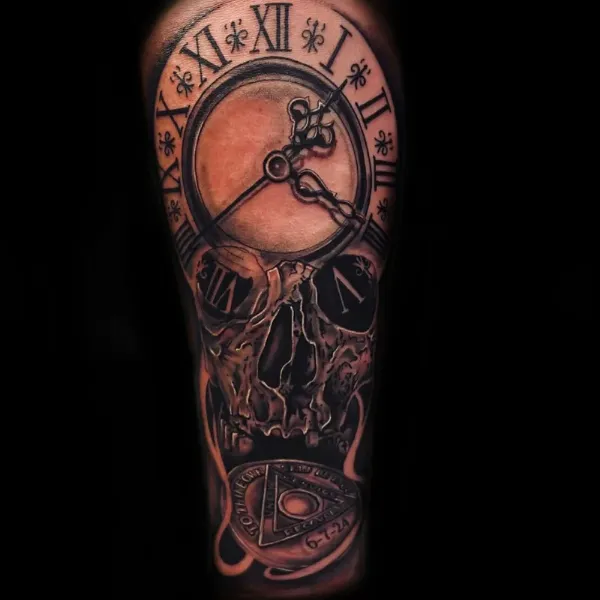
Black and grey traditional keeps bold outlines and uses tonal contrast instead of color.
When evaluating a black and grey traditional tattoo, look for clear separation between the outline, dark shading, lighter areas, and untouched skin.
Neither approach is automatically more durable. The long-term appearance depends on the design, application, skin characteristics, placement, and aftercare.
American Traditional vs. Neo-Traditional Tattoos
These styles share historical and visual influences, but they differ in the amount of detail and the way artists handle color, linework, and composition.
Feature
American Traditional
Neo-Traditional
Outlines
Typically bold and prominent
Often varied in thickness
Color
Frequently limited, saturated palette
Often broader and more nuanced
Shading
Strong black shading and simple transitions
Can include more elaborate gradients
Detail
Simplified, recognizable shapes
More decorative and intricate elements
Common subjects
Roses, eagles, panthers, daggers
Animals, flowers, portraits, ornate subjects
For example, a traditional fox may emphasize a bold silhouette and a few essential features. A Neo-Traditional fox may include layered fur textures, decorative framing, and a more complex color treatment.
Neither is inherently better. Choose the approach that matches your preferred visual result and available placement.
Do American Traditional Tattoos Age Well?
American Traditional tattoos are often appreciated for their strong outlines, recognizable shapes, and separation between major elements. These characteristics can help a design remain readable as it changes over time.
However, no tattoo style is guaranteed to retain its original appearance indefinitely. Tattoos can fade or change due to sun exposure, skin characteristics, placement, application quality, and other factors.
Why Design Spacing Matters
Even bold tattoos need adequate space between important details. A panther's teeth, a rose's petals, or an eagle's feathers should not be compressed into an area too small to maintain visual separation.
How Sun Exposure Affects Tattoos
Ultraviolet exposure can contribute to fading. Once a tattoo has healed, appropriate sun protection helps maintain the appearance of tattooed skin.
What Healed Traditional Tattoos Can Tell You
Ask an artist to show healed tattoos, preferably photographed after enough time has passed to evaluate the settled appearance. Look at whether the outlines, shading, and color remain visually balanced.
How to Choose an American Traditional Tattoo Artist
Traditional tattooing requires more than the ability to reproduce a classic symbol. The artist needs to understand how outlines, shading, color, and placement work together.
Check for Consistent Linework
Look across several portfolio pieces. Outlines should appear intentional, confident, and appropriate to the design. One successful photograph does not demonstrate consistent ability.
Review the Artist's Flash
Original flash sheets can reveal an artist's drawing approach and understanding of traditional composition. Look for recognizable subjects, balanced shapes, and thoughtful use of negative space.
Look at the Same Subjects Repeatedly
If you want a panther tattoo, compare several panthers by the artist. If you want a traditional rose, examine how they draw petals, leaves, and shading across different placements.
Discuss Your Placement and Future Plans
Tell the artist whether the tattoo will be a standalone piece or part of a future sleeve. This helps them plan size, orientation, and surrounding space.
Confirm Studio Safety Practices
In the United States, tattoo licensing and health requirements vary by state and locality. Check applicable regulations and ask about hygiene procedures, equipment, and aftercare before booking.
Also discuss any concerns about tattoo ink reactions or existing skin conditions with an appropriate healthcare professional.
Find American Traditional Tattoo Artists in the USA
Finding the right traditional tattoo artist means looking beyond a studio's list of services. Compare actual portfolios, healed examples, and experience with the specific subject you want.
TattooShopsNearYou helps visitors discover tattoo shops and artists throughout the United States. Browse available listings by city and state, review traditional tattoo portfolios, and contact studios to discuss your design.
Whether you're planning a classic rose, a black panther, a dagger, or a full traditional sleeve, prioritize an artist whose work demonstrates strong outlines, balanced compositions, and consistent execution.
Frequently Asked Questions About American Traditional Tattoos
American Traditional tattoos typically feature bold black outlines, simplified recognizable subjects, strong shading, and a relatively limited color palette. Common imagery includes roses, eagles, panthers, anchors, daggers, and swallows.
American Traditional and Old School are commonly used as names for the same broad tattoo style. Both generally refer to classic Western tattoo imagery with bold outlines and graphic compositions.
Yes. Although the style is often associated with saturated colors, traditional designs can use black and grey while retaining strong outlines and simplified forms.
Yes. Traditional tattoos can be arranged as separate pieces within a sleeve or planned as a more coordinated composition. Choosing major designs first helps maintain balance and leaves room for future additions.
Bold outlines and separated details may help traditional designs remain recognizable over time, but no style guarantees better longevity. Application quality, design scale, placement, skin characteristics, and sun exposure all affect the result.
Review multiple examples of the artist's traditional work, including healed tattoos when available. Look for consistent outlines, readable compositions, balanced shading, and experience with your preferred subject. Confirm studio safety practices and consultation policies before booking.