
 Tattoo Ideas & Designs
How Do Tattoo Artists Connect Existing Tattoos Into a Sleeve...
Published On 07-10-2026
Published by the Tattoo Shops Near You Editorial Team

A portfolio is the most direct evidence you have of what an artist can actually do, but scrolling through a feed of impressive-looking photos is not the same as evaluating it carefully. A handful of strong individual images tells you much less than looking for consistency, technical fundamentals, and whether the work genuinely matches what you are hoping to get.
Every portfolio has a few standout pieces the artist is proudest of, and those are often the images that get the most visibility. The more useful exercise is scrolling further back through a broader range of their work to see whether that same level of quality holds up consistently, rather than being an exceptional result surrounded by more average pieces. Consistency across many examples is a far stronger signal of reliable skill than one or two impressive photos.
Many artists develop a clear specialty, whether that is fine line work, bold traditional, black and grey realism, color-heavy illustrative pieces, or something else entirely, and their portfolio usually makes this fairly obvious once you look at enough of it. An artist with an outstanding portfolio in one style is not automatically the right choice for a completely different style, even if their overall skill level is high. Looking specifically for examples close to what you have in mind, rather than judging the portfolio purely on general impressiveness, is a more reliable way to gauge fit for your particular project.
Clean, consistent linework is one of the more objective things to assess in a portfolio, even without deep tattooing knowledge. Look for lines that appear smooth and deliberate rather than shaky or uneven, and check whether symmetrical elements, like matching petals on a flower or both sides of a geometric design, actually look balanced rather than noticeably off. These technical fundamentals matter across nearly every style, and weaknesses here tend to show up consistently across a portfolio rather than as an isolated issue in just one photo.
For styles that rely on shading or color transitions, look at how smoothly tones blend into each other, whether there are visible patchy or uneven areas, and how well color work has translated in photos taken in different lighting conditions. Bold, solid color fills should look even and consistent, without noticeable gaps or streaking, while gradient shading should transition smoothly rather than showing obvious hard edges where the technique changes.
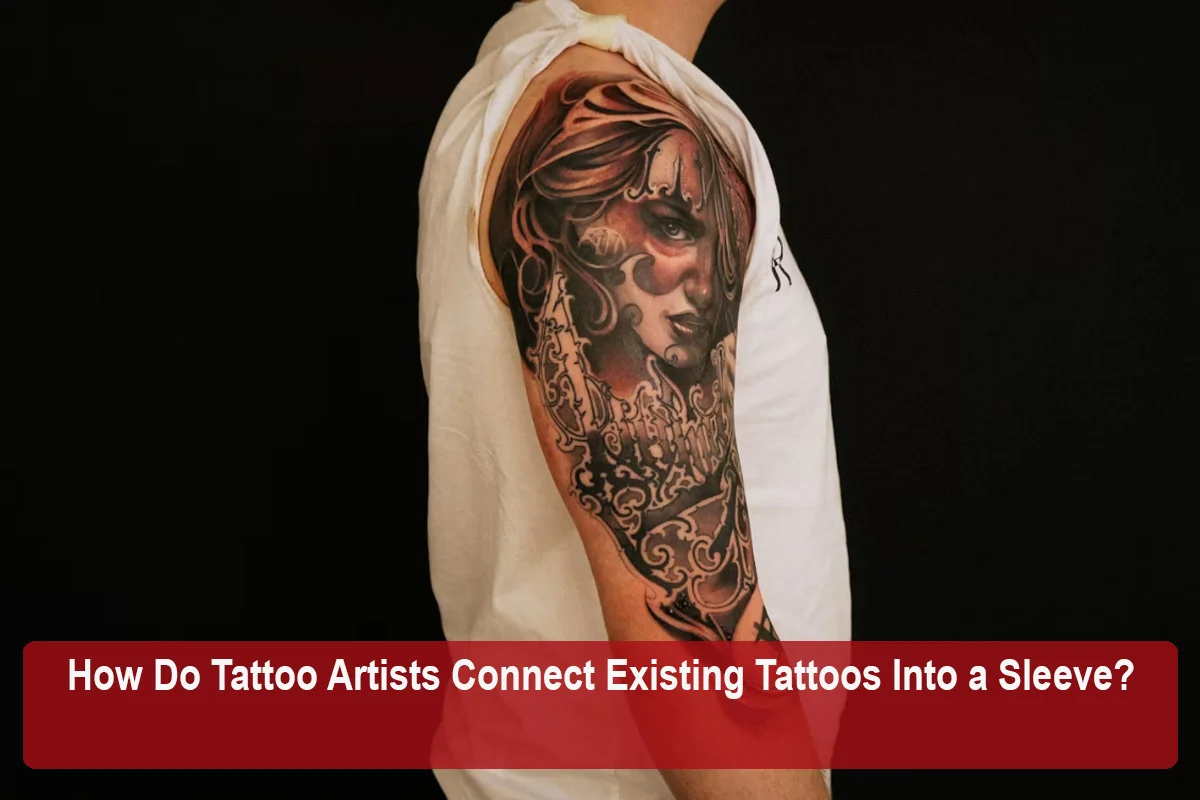
A strong portfolio usually shows evidence that the artist thinks about how a design sits on the specific body part it was placed on, rather than treating every piece as a flat image simply transferred onto skin. Look for designs that seem to follow the natural curve of an arm, wrap thoughtfully around a leg, or use the contours of a shoulder or back in a way that enhances the piece rather than fighting against the body's shape. This kind of composition awareness is one of the clearer signs of a more experienced, thoughtful artist.
Most portfolio photos are taken immediately after a tattoo is finished, which tends to make any piece look sharper and more vibrant than it will appear once fully healed. This is a significant enough consideration on its own that it deserves its own closer look, but the short version is that a portfolio built entirely from fresh photos tells you less about long-term quality than one that includes healed examples as well.
A portfolio that has not been updated in a long time may not reflect an artist's current skill level, particularly if they have been actively working and improving since those older posts. On the other hand, an account with only a handful of total posts gives you less to evaluate overall, regardless of how good those few examples look. A reasonably active, recently updated portfolio with a solid volume of work gives you a more complete and current picture than either a stale account or a sparse one.
Occasionally a portfolio includes reposted images of other artists' work, sometimes for inspiration purposes and clearly labeled as such, but sometimes presented ambiguously in a way that could be mistaken for the account owner's own tattooing. If a portfolio's overall style seems inconsistent in a way that does not track with a single artist's typical range and skill level, or if a specific image looks noticeably different in technique from the rest, it is fair to ask directly whether every piece shown was actually done by that artist.
Some portfolio images are taken under carefully controlled studio lighting immediately after the tattoo, which can flatter the work more than an ordinary photo would. Others are more casual client photos, sometimes taken well after healing in regular lighting. Neither type is inherently better, but being aware of the difference helps you judge what you are actually looking at, since a heavily lit, professionally staged fresh photo does not tell you the same thing as a casual snapshot of healed work sent in by a past client.
| What to Look For | Why It Matters |
|---|---|
| Consistency across many pieces | Confirms reliable skill rather than a few standout results |
| Specialty match | General skill does not guarantee fit for a specific style you want |
| Line quality and symmetry | Objective indicators of technical fundamentals |
| Shading and color blending | Shows how well the artist handles tone and transitions |
| Composition on the body | Reflects thoughtful placement rather than a flat design simply applied |
| Healed examples included | Gives insight into long-term results, not just fresh appearance |
Many artists organize their online portfolio into categories or highlights by style, subject, or placement, which can make it considerably easier to find examples directly relevant to your project rather than scrolling through everything in chronological order. If an artist's account is organized this way, spending time in the specific category closest to what you want gives you a more focused sense of their work in that area than judging from their overall feed, which often mixes many different styles and subjects together.
Some artists deliberately specialize narrowly, building deep expertise in a single style, while others maintain a genuinely broad range across many different approaches. Neither is inherently better, but they suit different needs. A narrow specialist is often the stronger choice if your project sits squarely within their specialty, while a versatile generalist may be a better fit if you are still deciding between a few different style directions or want an artist comfortable moving between approaches. Recognizing which type of portfolio you are looking at helps set the right expectations for what that artist is likely to deliver.
Beyond the images themselves, captions sometimes include useful context, such as the size of the piece, how many sessions it took, whether the photo is fresh or healed, or specific details about the placement. This information adds real value beyond what the image alone shows, and it is worth actually reading captions rather than skimming past them, particularly for pieces that closely resemble what you are considering for your own tattoo.
If you are deciding between a few different artists, reviewing their portfolios close together, rather than days or weeks apart, makes differences in consistency, style, and technical quality easier to notice. Details that seem fine in isolation sometimes stand out more clearly once compared directly against another artist's work in a similar style, which can help clarify a decision that felt closer before the direct comparison.
A careful review of an artist's portfolio does more than help you decide whether to book with them. It also gives you specific material to bring into the consultation itself, such as pointing to a particular piece and asking what made that composition work well, or asking how a specific technique shown in one photo might apply to your own idea. Coming into the consultation having already studied the portfolio closely tends to produce a more focused, productive conversation than starting from scratch with only a vague impression of the artist's overall style.
A strong portfolio is a genuinely useful research tool, but it is not the only thing worth weighing when choosing an artist. How clearly they communicate, whether their approach to consultations and design revisions feels collaborative, and how comfortable you feel with their overall professionalism all matter alongside the visual evidence of their past work. A thorough portfolio review is the right place to start narrowing down your options, not necessarily the final word on the decision itself.
Beyond the more technical checklist of consistency, symmetry, and composition, it is also worth paying attention to your own genuine reaction as you scroll through a portfolio. Work that technically checks every box but simply does not resonate with your own taste is still worth taking seriously as a signal, since a tattoo is something you will see on your own body for years. The most useful portfolio review combines both the analytical evaluation of technical quality and an honest read on whether the artist's overall aesthetic actually matches what you personally want.
This article was reviewed by the Tattoo Shops Near You Editorial Team for accuracy, clarity, and relevance. We use reliable industry resources, official business information, and other authoritative sources where applicable to help readers make informed decisions about tattoo shops, artists, styles, and services.
Last reviewed: September 2026
Tattoo Ideas & Designs
 Tattoo Ideas & Designs
 Tattoo Ideas & Designs
 Tattoo Ideas & Designs