Realism Tattoos: Portraits, Ideas & Artists Near You
Realism tattoos recreate people, animals, and objects as they look in real life. Instead of bold outlines and simplified shapes, the artist uses careful proportions, controlled shading, texture, and a consistent light source so the image reads almost like a photograph on skin. Portraits of loved ones, wildlife, statues, and lifelike flowers are some of the most popular choices.
Realism is also one of the most demanding tattoo styles. A small error in an eye or the angle of a nose can change a likeness completely, so the artist you choose matters more than almost anything else. Explore realism tattoo artists and shops across the United States, compare healed portfolios, and learn what to look for before you book. Still deciding on a style? Compare all 44 tattoo styles.
Realism Tattoo Artists & Shops Near You
Browse 14 tattoo artists and shops featuring Realism work. Compare portfolios and healed examples before you book.
1502 W Camelback Rd Ste 1, Phoenix, Arizona, 85015
American Traditional, Neo-Traditional, Black & Grey
What Is a Realism Tattoo?
A realism tattoo aims to represent its subject accurately, with lifelike proportions, believable lighting, and convincing surface texture. The artist works more like a portrait painter than an illustrator: edges are defined by changes in light and shadow rather than black outlines, and depth comes from gradual tonal transitions.
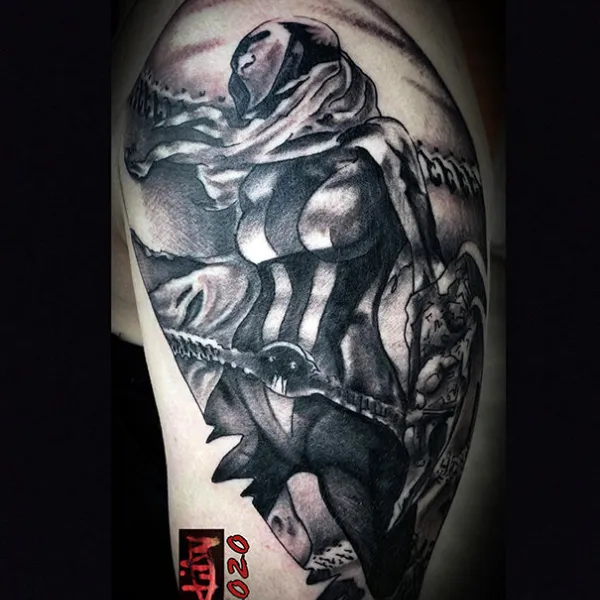
Realism builds form through smooth shading and a consistent light source.
Realism can be done in black and grey or in full color. Black and grey realism uses diluted black ink to create a full range of tones, while color realism adds lifelike color and color temperature.
How to Recognize Realism Tattoos
Accurate proportions: Faces, anatomy, and objects are drawn as they appear in life, not stylized.
Little or no outline: Shapes are separated by contrast and shadow instead of black linework.
Consistent light source: Highlights and shadows fall in one logical direction.
Realistic texture: Skin, fur, feathers, stone, fabric, and metal each look like the real material.
Full tonal range: Strong blacks, soft mid-tones, and clean highlights, often with open skin used as the brightest white.
Types of Realism Tattoos
"Realism" is an umbrella term. Artists and clients often use more specific labels, and knowing them helps you find the right specialist.
Type
What It Is
Typical Size
Best For
Black & Grey Realism
Lifelike rendering in black and grey tones
Medium to large
Portraits, statues, religious and dramatic imagery
Color Realism
Lifelike rendering in full color
Medium to large
Pets, wildlife, flowers, colorful portraits
Hyperrealism
Extremely detailed work meant to look like a photograph
Hyperrealism pushes realism further, adding tiny details such as skin pores, individual hairs, and reflections so the tattoo resembles a photograph. It typically requires long sessions and a larger area.
Be aware that many hyperrealistic tattoos shared online are photographed fresh and edited for contrast, sharpness, and redness. That can make them look more dramatic than they do in person. Because extremely fine details have less room to settle as skin heals, ask any hyperrealism artist for healed, unedited photos taken in natural light.
Where Did Realism Tattooing Come From?
Modern realism tattooing has strong roots in Los Angeles. Black and grey realism developed among Chicano artists, including in California's youth detention facilities, where tattooers worked with improvised single-needle tools and black ink. Freddy Negrete, who began tattooing as a teenager in that system, is widely credited as one of the style's founders.
In the 1970s, Good Time Charlie's Tattooland in East Los Angeles became a center for the style. Ed Hardy, who owned the shop in the late 1970s, championed black and grey work, and artists such as Jack Rudy helped bring fine-line realism into professional studios. Learn more about these roots in our Chicano and Single Needle guides.
Since then, improved machines, finer needle groupings, better ink, and artists with fine art training have pushed realism toward photographic detail. Today it is practiced worldwide, with highly skilled realism specialists across the United States and Europe.
Popular Realism Tattoo Designs and Ideas
Realism suits almost any subject that exists in real life, but some designs are especially popular and each has its own challenges.
Realistic Portrait Tattoos
Portraits of family members, partners, children, and public figures are the most requested realism tattoos. A good portrait captures the person's likeness and expression, not just their features.
Portfolio test: Cover the reference photo and ask whether you'd recognize the person from the tattoo alone. Look for several healed portraits, not just one standout.
Likeness depends on precise proportions around the eyes, nose, and mouth.
Memorial Portrait Tattoos
Memorial tattoos honor someone who has passed, often combining a portrait with flowers, clouds, dates, names, or a sample of their handwriting. Because the reference photo may be old or low quality, artists often need to restore or combine several images before tattooing.
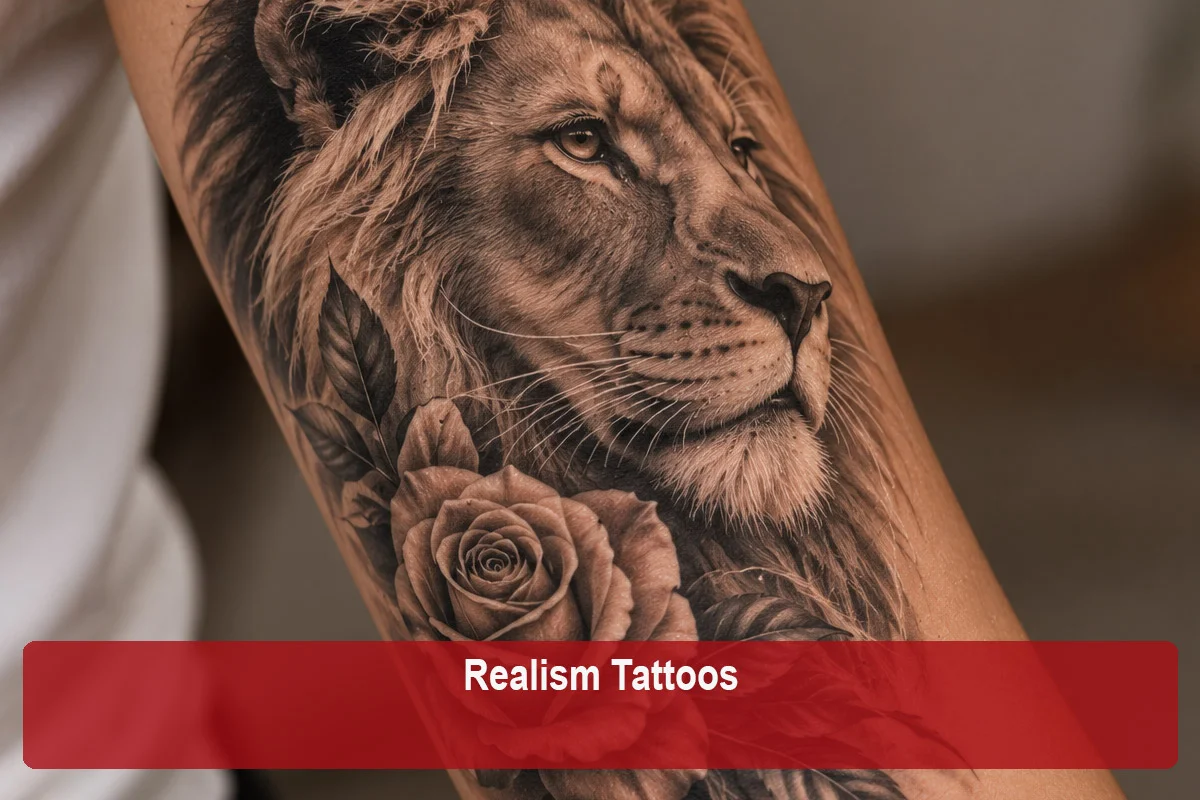
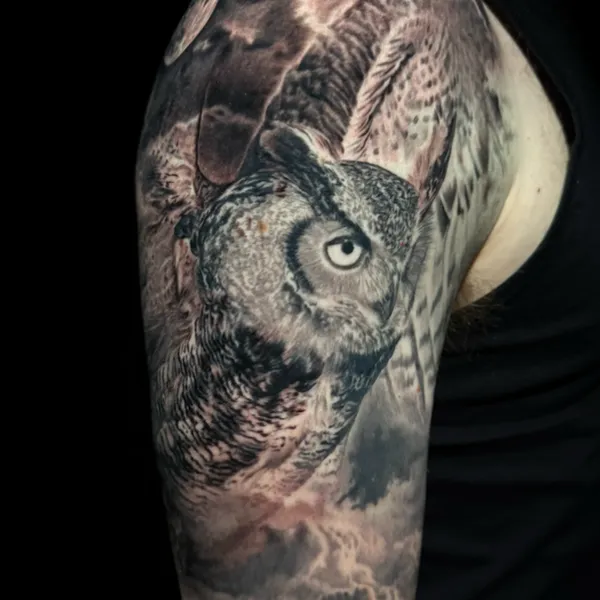
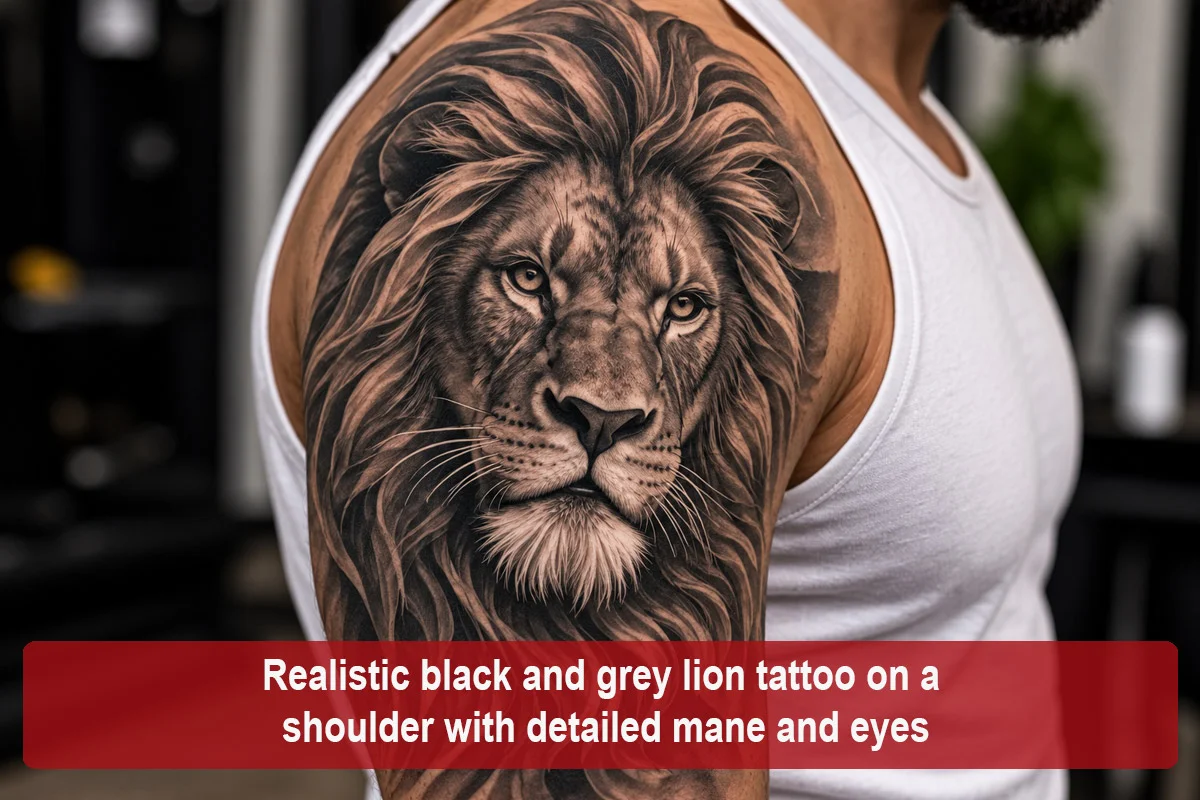
Lions, wolves, tigers, owls, horses, and beloved pets are classic realism subjects. Fur direction, whisker placement, and the reflections in the eyes make the difference between a convincing animal and a flat one.
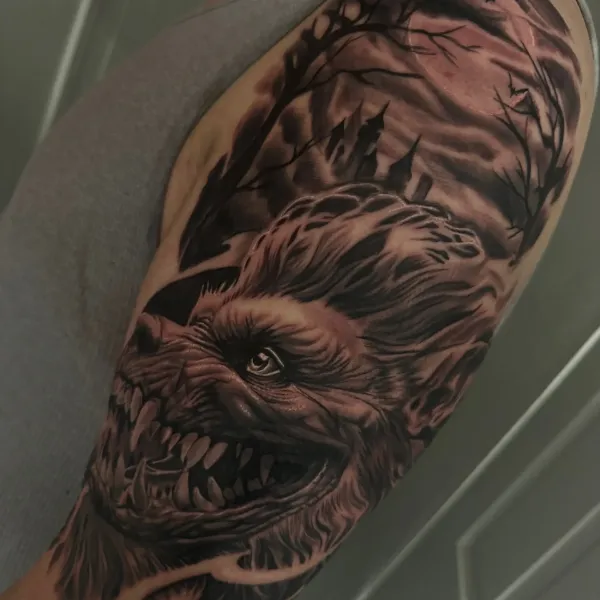
Fur direction and eye reflections bring realistic animals to life.
Statue and Religious Realism Tattoos
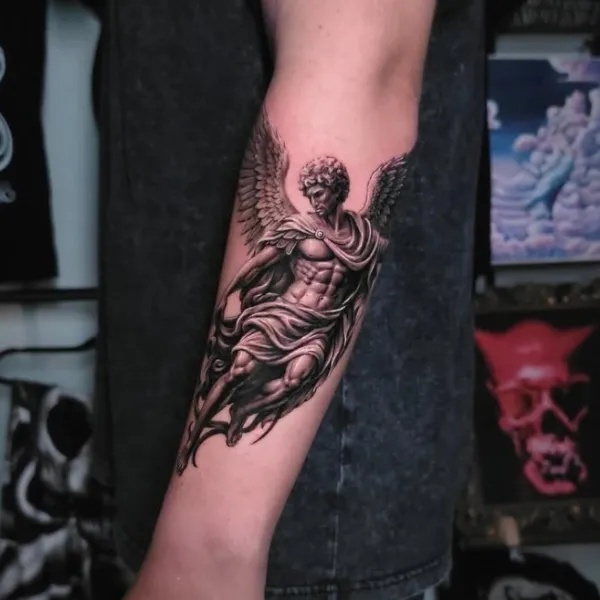
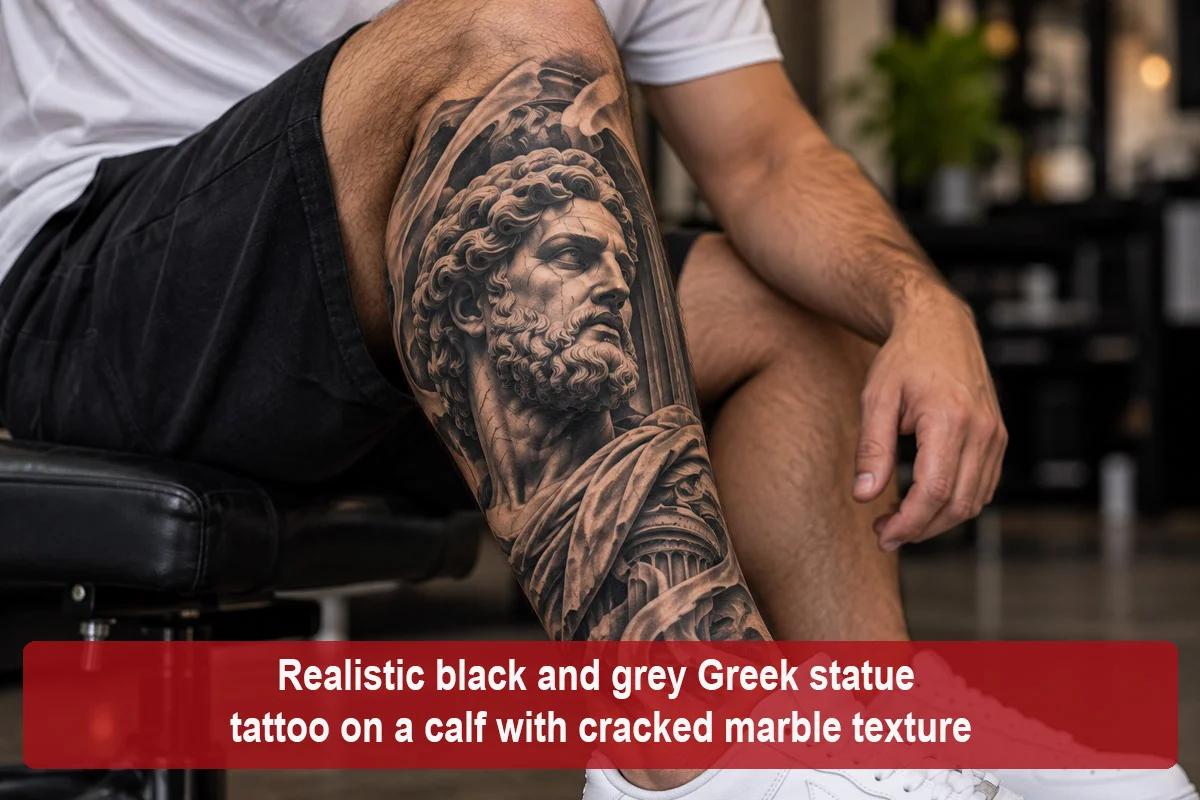
Greek and Roman statues, angels, the Virgin Mary, praying hands, and other religious imagery are long-standing black and grey realism subjects. Marble textures and dramatic lighting suit grey tones particularly well.
Classical statues are a popular black and grey realism subject.
Realistic Flower and Nature Tattoos
Roses, lilies, peonies, trees, and landscapes appear often in realism, either alone or as supporting elements in larger pieces.
Realistic Eye, Clock, and Skull Tattoos
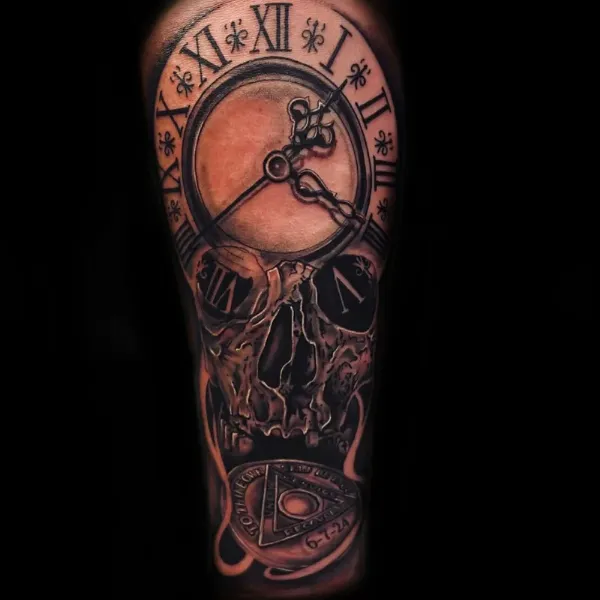
Eyes, pocket watches, compasses, and skulls are popular because they show reflections, metal, and bone texture. They also act as connecting elements in realism sleeves.
Why Realism Tattoos Need Enough Size
Realism depends on gradual shading and fine detail, and that detail needs physical space. When a realistic design is shrunk too far, features such as eyes, lips, and fur strands sit too close together and can blur as the tattoo settles and ages.
As a general rule, a face needs enough room for the features to be clearly separated at normal viewing distance. A full portrait with background usually works best on the forearm, calf, upper arm, thigh, or larger areas. Your artist should tell you the minimum size at which the design will hold up. Learn more about how tattoo size affects detail.
If you want a small realistic tattoo, look at Micro Realism specialists, or simplify the design by focusing on one feature, such as an eye or a single flower, without background. Our comparison of fine line vs. micro realism explains the small-scale options.
Best Placements for Realism Tattoos
Placement
Suitable Designs
What to Consider
Forearm
Portraits, animals, eyes, clocks
Flat, visible area; consider arm rotation
Upper arm and shoulder
Portraits, animal heads, statues
Curves suit rounded compositions
Calf
Vertical portraits, statues, wildlife
Good width for medium pieces
Thigh
Large portraits, full animals, scenes
Lots of room and lower sun exposure
Chest
Portraits, religious imagery, symmetrical pieces
Plan around contours and sternum
Back
Large multi-subject compositions
Best canvas for detail; many sessions
Hands, fingers, and feet
Rarely recommended
Friction and fading limit fine detail
Faces are sensitive to distortion. A portrait placed over a joint or a strongly curved area can look stretched when you move, so your artist may adjust the angle or position for the best result.
Do Realism Tattoos Age Well?
Realism tattoos can age well, but they are more sensitive to time than bold, outline-based styles. Their effect depends on fine detail and subtle tonal differences, and all tattoos soften gradually as ink settles and skin changes.
Contrast Is What Holds a Realism Tattoo Together
Artists who build strong darks and leave clean open skin for highlights create realism that stays readable for years. Designs built mostly from soft mid-tones may look beautiful at first but can flatten as they age.
Size and Spacing Matter
Details that are too small or too close together have nowhere to go as the ink softens. Choosing an appropriate size is one of the most effective things you can do for long-term results.
Long Sessions Affect Healing
Very long sessions put more stress on the skin, which can lead to more swelling and affect how fine details heal. Many realism artists split large pieces into several shorter sessions for this reason. If you are booked for a long sitting, read how to prepare for an all-day tattoo session.
Protect Your Tattoo From the Sun
Once healed, use a broad-spectrum, water-resistant sunscreen with SPF 30 or higher on exposed tattoos, and avoid tanning beds. Ultraviolet light gradually breaks down pigment and softens fine shading.
Realism Tattoos on Darker Skin Tones
Realism works on every skin tone, and black and grey realism is particularly effective on darker skin because it depends on value contrast rather than bright color. The main consideration is that subtle mid-tones and pale highlights show less contrast against darker skin.
Experienced artists adjust by using deeper shadows, stronger value separation, and slightly larger sizes for fine detail. Ask to see healed realism on skin tones similar to yours, and mention any history of keloids or raised scarring during your consultation.
How Much Does a Realism Tattoo Cost?
Realism is usually priced higher than simpler styles because it takes more time and specialist skill. Most realism artists charge by the hour or by the session. The main price factors are:
Size and detail: Backgrounds, multiple subjects, and hyperrealistic detail all add hours.
Black and grey or color: Color realism often takes longer because of layered blending.
Number of sessions: Large pieces are spread across several sessions with healing time in between.
Reference preparation: Restoring or combining old photos for memorial portraits can add design time.
Artist demand and location: In-demand realism specialists often charge more and book months ahead.
Ask for an estimate in hours or sessions during your consultation. A poorly executed portrait is very difficult to correct, so artist skill should matter more than the lowest price.
How to Choose a Reference Photo for a Realism Tattoo
A realism tattoo can only be as accurate as its reference. For portraits and pets, the best photos are:
High resolution and sharp, especially around the eyes.
Lit from one clear direction, with visible shadows that show the shape of the face.
Unfiltered, without beauty filters, heavy editing, or strong color casts.
Taken at eye level, since extreme angles distort features.
If your photo isn't ideal, bring several. Many artists combine or adjust references digitally before creating the stencil.
Planning a Realism Sleeve
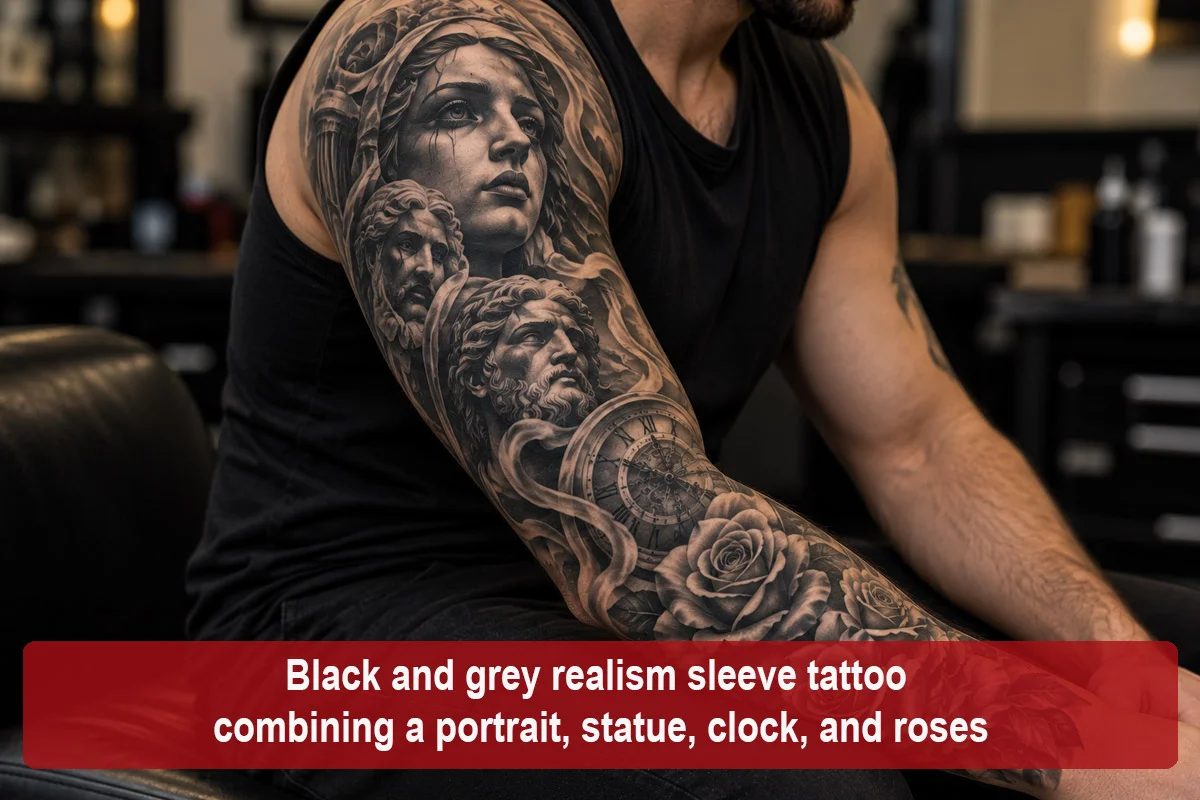
A realism sleeve usually combines one or two main subjects, such as a portrait or animal, with supporting elements like roses, clocks, clouds, smoke, or architecture. Shared lighting and dark background shading tie the pieces together into one composition.
Plan the whole arm with your artist from the start, even if you complete it over months or years. See our guide to planning a tattoo sleeve. Consider how faces will sit around the elbow and wrist, where background shading will separate subjects, and whether you want pure black and grey, full color, or a mix.
Realism sleeves often connect a main subject with clocks, roses, and smoke.
How to Choose a Realism Tattoo Artist
Realism is one of the hardest styles to execute, and skill varies widely. Take your time comparing artists, and use our in-depth guide on how to choose a realism tattoo artist.
Look for Healed, Unedited Work
Fresh realism photographs well, and many portfolio photos are edited. Ask for healed photos taken in natural light to see how the artist's work actually settles. Here's how to compare fresh and healed tattoo photos.
Match Their Experience to Your Subject
An artist who excels at wildlife may not specialize in human portraits. If you want a portrait, look for many healed portraits, ideally including subjects with a similar age or skin tone.
Check Likeness and Proportion
In portraits, look at eye alignment, the distance between features, and whether the expression feels natural. In animals, check anatomy and fur direction.
Ask How They Plan Sessions
A good realism artist will explain how many sessions your piece needs and why. Be cautious of artists who promise very large, detailed pieces in a single long sitting. For licensing, hygiene, and booking checks, see what to check before booking a tattoo shop.
Find Realism Tattoo Artists Near You
The right realism artist is defined by their portfolio, not just their location. Browse realism tattoo shops and artists across the United States on TattooShopsNearYou, compare healed portraits and animals, and look for specialists in the exact subject you want.
Frequently Asked Questions About Realism Tattoos
A realism tattoo recreates a real subject, such as a person, animal, or object, with lifelike proportions, shading, texture, and lighting instead of bold outlines. It can be done in black and grey or in full color.
Realism aims for a lifelike image, while hyperrealism adds extremely fine details, such as pores and individual hairs, so the tattoo resembles a photograph. Hyperrealism usually needs a larger size and longer sessions, and it's worth checking healed, unedited examples.
They can, especially when they have strong contrast, adequate size, and good spacing between details. Fine details soften over time, so very small or low-contrast realism tends to age less well. Sun protection helps preserve shading.
Neither is better overall. Black and grey suits portraits, statues, and dramatic imagery and usually needs less upkeep. Color realism suits subjects where color matters, such as pets, flowers, and wildlife.
Large enough for the eyes, nose, and mouth to stay clearly separated at normal viewing distance. Portraits with backgrounds usually work best on the forearm, calf, upper arm, thigh, or back. Your artist can recommend a minimum size.
A small piece may take one session, while a detailed portrait or sleeve often needs several sessions spaced weeks apart. Your artist can estimate the hours after reviewing your reference and placement.
Often, yes. Experienced artists can work from older or lower-quality photos, sometimes combining several images to fill in details. The clearer the face and lighting in the photo, the more accurate the tattoo will be.
Look for artists with many healed examples of your chosen subject, check likeness and proportions in their portraits, and ask for unedited photos. Compare several artists before booking, and discuss size and sessions during a consultation.