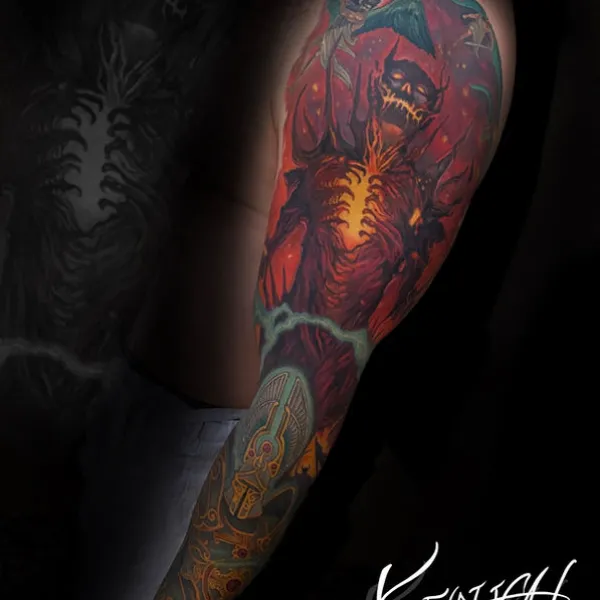
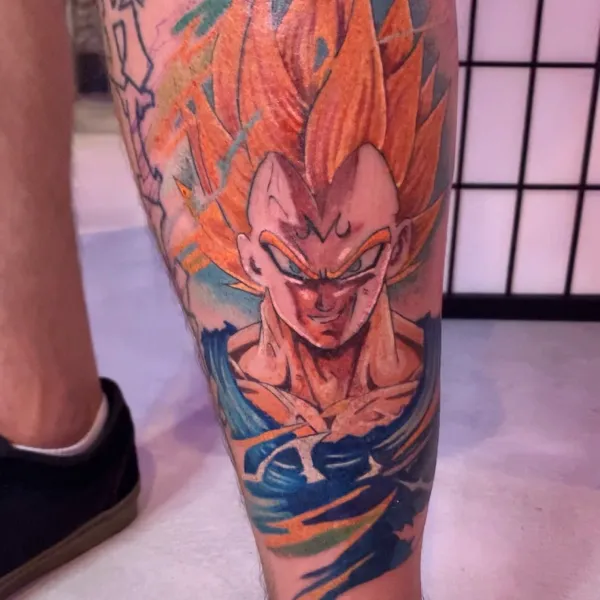
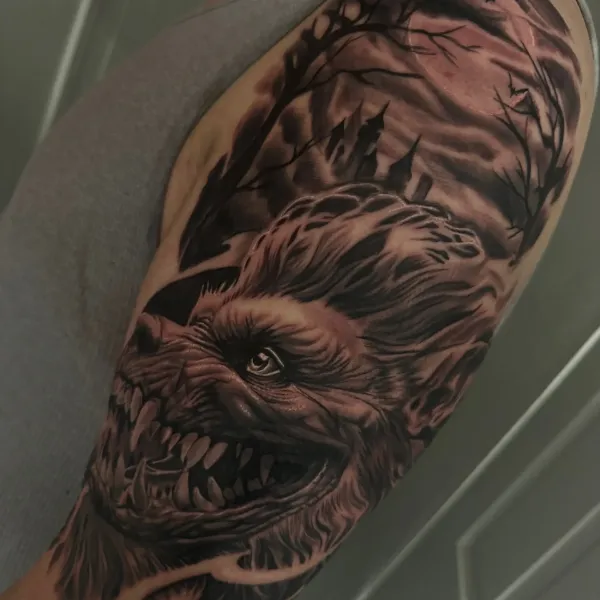
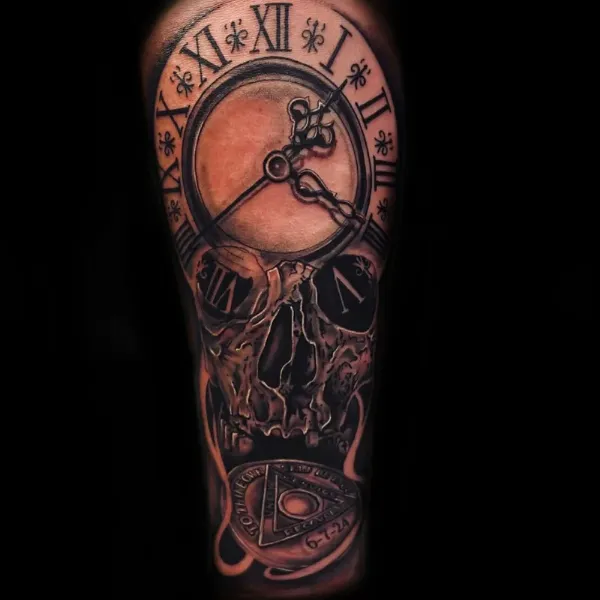
Neo-Traditional tattoos combine the bold outlines of classic tattooing with the depth and detail of modern illustration. From richly shaded animal portraits and ornamental flowers to dark tattoo flash and Japanese-inspired dragons, the style offers more freedom in color, linework, and composition than American Traditional tattooing.
But a successful Neo-Traditional tattoo is more than an attractive illustration. Its main subject must remain recognizable, its decorative elements need room to breathe, and the design should work at the intended size and placement. This guide explores Neo-Traditional tattoo designs, flash, black-and-grey artwork, sleeves, and the details worth checking before choosing an artist.
Neo-Traditional Tattoo Artists & Shops Near You
Browse 9 tattoo artists and shops featuring Neo-Traditional work. Compare portfolios and healed examples before you book.
1502 W Camelback Rd Ste 1, Phoenix, Arizona, 85015
American Traditional, Neo-Traditional, Black & Grey
What Is a Neo-Traditional Tattoo?
A Neo-Traditional tattoo is an illustrative style that builds on American Traditional tattooing while introducing more elaborate shading, varied line thicknesses, broader color palettes, and decorative compositions. The main subject is usually defined by a strong outline, while thinner lines and tonal transitions create depth within the design.
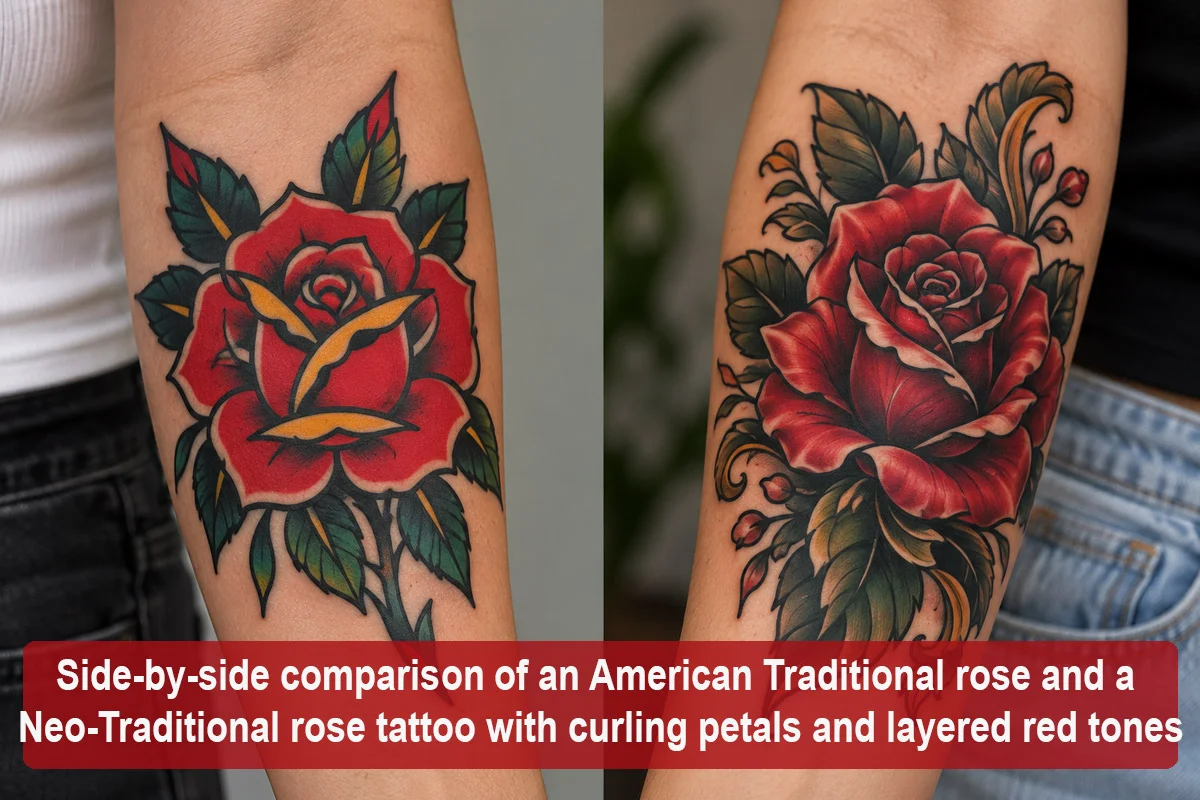
For example, an American Traditional rose might use a few clearly separated petals, bold black shading, and solid red and green. A Neo-Traditional rose may retain the strong silhouette but introduce curling petals, layered shadows, multiple red tones, and ornamental leaves.
The same rose in American Traditional (left) and Neo-Traditional (right).
Neo-Traditional does not require a specific subject, color combination, or amount of decoration. A restrained black-and-grey moth can belong to the style just as convincingly as a colorful portrait surrounded by flowers.
How to Recognize Neo-Traditional Tattoo Style
Structural outlines: Prominent contours define the main subject and separate it from surrounding details.
Illustrative shading: Animals, flowers, faces, and objects often have a dimensional appearance.
Expanded color palettes: Jewel tones, muted earth colors, deep reds, greens, and purples are common possibilities.
Ornamental influences: Decorative frames, botanical curves, jewelry, and patterned backgrounds may support the composition.
Not every tattoo with these characteristics is automatically Neo-Traditional. Illustrative, Japanese-inspired, New School, and Realism tattoos can share individual features. The overall drawing approach matters more than any single technique.
Why Neo-Traditional Tattoos Need More Than Attractive Illustrations
A detailed illustration can be enlarged, printed, and viewed from a few inches away. A tattoo has to work on living skin, often on a curved body area and at a smaller size than the original drawing.
Consider an owl surrounded by flowers. On a digital illustration, the artist might include dozens of tiny feather markings, elaborate petals, jewelry, and a patterned background. On skin, those elements compete for a limited amount of space.
A thoughtful Neo-Traditional design establishes a hierarchy. The owl's head and overall silhouette should be recognizable first. The eyes, beak, and main feather groups provide the next level of detail. Flowers and decorative elements should support the owl rather than compete with its face.
The Distance Test
Reduce a design to approximately the size it will appear on your body. Look at it from a normal conversational distance. Can you still identify the subject? Are the face, flowers, and ornaments separate? Does one area become a dark, crowded mass?
This simple check does not replace an artist's assessment, but it can help you identify designs that need simplification before booking.
Neo-Traditional tattoo flash is pre-drawn artwork offered by a tattoo artist or studio. It may include individual designs, themed collections, seasonal sheets, or larger compositions intended for specific body placements.
Contemporary Neo-Traditional flash often reflects an artist's individual drawing style. A collection of ornamental animal heads, for example, can reveal how an artist handles expression, linework, color, and decorative framing.
Repeatable Flash vs. One-Off Designs
Before choosing flash, ask whether the artwork is repeatable or reserved for one customer. Neither approach is inherently better. Repeatable flash can be suitable when you appreciate a particular design, while one-off flash may appeal to someone seeking an individual composition.
Also ask whether the artist permits changes to size, color, or placement. Some flash designs can be adapted easily, while others depend on particular proportions.
What Is Dark Neo-Traditional Tattoo Flash?
Dark Neo-Traditional flash often features gothic, macabre, or mysterious imagery. Bats, ravens, skulls, snakes, moths, candles, daggers, and dramatic botanical arrangements are common subjects.
Its dark appearance may come from the imagery, restrained colors, heavy black shading, or a combination of these elements. A dark moth with burgundy flowers and charcoal shading can still contain carefully positioned highlights that separate its wings from the background.
Dark Neo-Traditional work uses restrained color and heavy shading.
What to check: Examine how the artist handles dark areas. If several important elements use nearly identical tones, ask how the subject will remain visually separated after healing.
When Custom Neo-Traditional Artwork Makes Sense
Custom artwork is useful when the design needs to fit an unusual body area, incorporate personal references, or connect with existing tattoos. It also allows the artist to adjust the amount of detail to the available space.
A fox portrait designed for the upper arm should not automatically be reduced and placed on the wrist without reconsidering its proportions and decorative elements.
Popular Neo-Traditional Tattoo Designs and Ideas
Neo-Traditional tattooing is especially effective when a subject benefits from a recognizable silhouette and expressive interior detail. Animals, flowers, insects, birds, and familiar tattoo symbols are common choices, but each presents different design challenges.
Neo-Traditional Rose and Flower Tattoos
Flowers naturally create overlapping layers, making them well suited to dimensional shading. Roses can feature curled petals and deep shadows, while peonies and chrysanthemums allow broader arrangements with intricate forms.
A single rose can become a standalone tattoo, while larger botanical compositions can wrap around animal portraits or follow the length of an arm.
Design consideration: More petals do not automatically create a better tattoo. The important details should remain separated at the intended size.
Neo-Traditional Owl Tattoos
Owls provide a strong central face, expressive eyes, layered feathers, and a naturally symmetrical structure. Artists can create different moods through the eyes, surrounding foliage, and color palette.
An owl with spread wings may need a broad placement, while an owl head surrounded by flowers can work as a more compact composition.
Portfolio test: Check whether the artist maintains a clear facial expression without allowing feather patterns to dominate the design.
A clear face and silhouette keep a Neo-Traditional owl readable.
Neo-Traditional Snake Tattoos
Snakes can follow the curves of the forearm, calf, thigh, or upper arm. Their bodies create opportunities for movement, scale patterns, and interaction with flowers, daggers, or skulls.
One challenge is visual separation. When a snake crosses its own body several times, the artist must make the head, coils, and overlapping sections easy to distinguish.
Portfolio test: Follow the snake's body through the entire composition. If the path becomes confusing, the design may need clearer overlaps.
Neo-Traditional Wolf, Bear, Tiger, and Lion Tattoos
Animal portraits allow artists to combine expressive faces with illustrative shading. A wolf may feature sweeping fur and a dramatic profile, while a bear emphasizes a broad muzzle and heavy facial structure. Tigers and lions offer distinctive patterns, manes, and strong expressions.
These designs often benefit from placements with enough width to preserve facial proportions.
Portfolio test: Look beyond color and decoration. Check whether the animal's anatomy makes sense, the eyes are aligned, and the face remains convincing without its ornamental frame.
Neo-Traditional Moth and Butterfly Tattoos
Moths and butterflies are popular choices for decorative symmetry. Their wings provide space for contrasting colors, ornamental markings, and botanical elements.
A moth with elaborate wing patterns may look striking, but the central body and wing structure should remain distinct.
Design consideration: Decide whether the wing patterns or surrounding flowers will carry the main detail. Giving both equal complexity can make smaller tattoos feel crowded.
Neo-Traditional Dragon Tattoos
Dragons can be interpreted through several artistic traditions. Some Neo-Traditional designs feature Western fantasy dragons with sculpted wings and ornamental details, while others draw inspiration from East Asian dragon imagery.
Because dragons have long bodies, claws, scales, and expressive heads, they often require more planning than compact floral or animal-head designs.
Design consideration: Determine whether the dragon should be a standalone illustration or part of a flowing body composition. This decision influences orientation, scale, and background.
Neo-Traditional Skull and Eagle Tattoos
Skulls and eagles connect Neo-Traditional tattooing with established American tattoo imagery. A skull may feature dimensional bone shading and ornate framing, while an eagle can incorporate layered feathers, expressive movement, and a broader color palette.
A Neo-Traditional eagle is not defined by adding extra colors alone. Its drawing, shading, and composition also distinguish it from an American Traditional interpretation.
Neo-Traditional Tattoos in Black and Grey
Neo-Traditional tattoos do not have to be colorful. Black-and-grey Neo-Traditional work can preserve the style's illustrative depth, strong outer structure, and decorative elements without relying on a broad palette.
This creates a particular challenge: colors that would normally separate different parts of a design must instead be distinguished through light, shadow, outlines, and negative space.
How Black-and-Grey Neo-Traditional Designs Create Depth
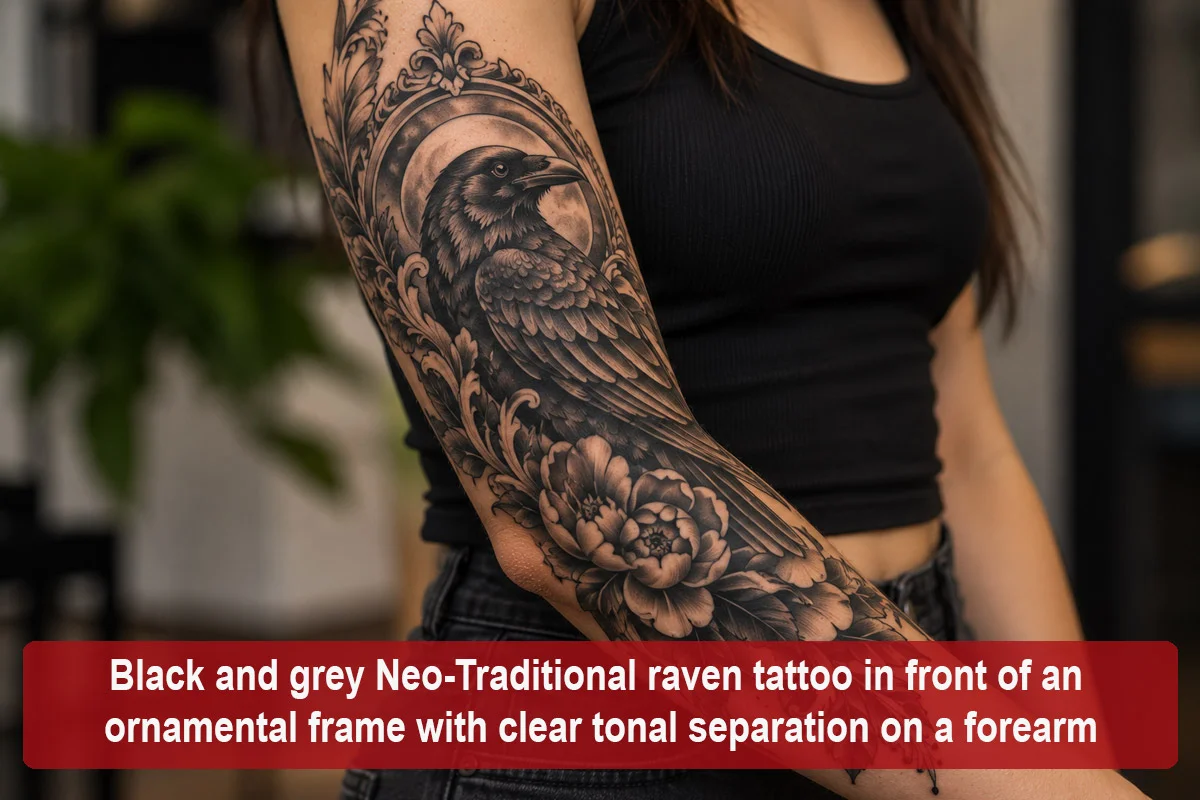
Imagine a raven sitting in front of a dark ornamental frame. In a color design, the raven might be blue-black while the frame is burgundy or green. In black and grey, those elements may occupy similar tonal ranges.
The artist needs to establish separation through the silhouette, lighter areas, deliberate gaps, and different shading values. Otherwise, the bird and frame can visually merge.
Black and grey Neo-Traditional relies on light and shadow to separate elements.
Black and Grey vs. Blackwork
Black-and-grey Neo-Traditional tattoos often use tonal gradients to create modeled forms. Blackwork generally emphasizes solid black shapes, pattern, and contrast, although individual artists may combine techniques.
Someone skilled in bold ornamental Blackwork may not necessarily specialize in the dimensional shading used for Neo-Traditional portraits.
Does Black and Grey Age Better Than Color?
There is no universal answer. Both black-and-grey and color tattoos change over time. Design size, contrast, application, placement, skin characteristics, sun exposure, and aftercare influence their appearance.
Rather than assuming one palette lasts longer, ask to see healed tattoos in the specific approach you prefer.
Neo-Traditional vs. American Traditional Tattoos
American Traditional and Neo-Traditional tattoos share a foundation of prominent outlines and recognizable subjects. Their differences become clearer when the same motif is drawn in both styles.
Feature
American Traditional
Neo-Traditional
Linework
Strong, generally consistent outlines
Strong outer contours with varied interior lines
Color
Typically limited and saturated
Broader, sometimes muted or jewel-toned
Shading
Graphic and relatively simple
More layered and dimensional
Decoration
Usually restrained
Often ornamental or botanical
Detail
Simplified, recognizable forms
More illustrative and intricate
Size planning
Many motifs adapt to compact sizes
Detailed compositions may need more room
For example, an American Traditional rose may use a few bold petals and strong black shading. A Neo-Traditional rose may have more elaborate petal shapes, tonal transitions, and decorative leaves.
Neither style is automatically better. If you prefer direct, iconic artwork, explore our American Traditional tattoo guide. If you want richer illustration and ornament, Neo-Traditional may be a better fit.
Japanese Neo-Traditional Tattoos: Understanding the Difference
The phrase "Japanese Neo-Traditional tattoo" can describe different approaches. Some people mean a Western Neo-Traditional tattoo featuring Japanese-inspired imagery, such as a dragon or peony. Others mean Neo-Japanese tattooing, a contemporary interpretation of Japanese tattoo traditions.
These approaches can share visual characteristics, but they are not interchangeable.
Japanese-Inspired Neo-Traditional Artwork
A Neo-Traditional artist might draw a Japanese-inspired dragon with decorative framing, jewel-toned shading, and a standalone composition. The subject draws from Japanese imagery, while the drawing approach follows Western Neo-Traditional illustration.
Neo-Japanese Tattooing
Neo-Japanese tattooing generally begins with Japanese tattoo subjects and compositional traditions, then introduces contemporary interpretations of color, perspective, shading, and stylization.
Large Japanese-inspired compositions often emphasize the relationship between the central subject, backgrounds such as waves or clouds, and the movement of the body.
A Neo-Traditional sleeve can become visually overwhelming if every available area contains a highly detailed subject. Planning should begin with the relationship between the largest pieces, not with the smallest gaps.
Choose a Visual Anchor
A large animal portrait, decorative face, bird, or floral arrangement can establish the main direction of the sleeve. Supporting elements should guide the eye around the arm rather than create several competing focal points.
Connected Sleeve vs. Separate Pieces
A connected sleeve may use continuous botanical elements, ornamental backgrounds, or repeated color relationships. A collection sleeve can contain individual tattoos, provided their scale and visual weight work together.
A strong visual anchor gives a Neo-Traditional sleeve direction.
Plan Around the Elbow and Wrist
The elbow is a difficult transition area because of its movement and curvature. Placing several major tattoos without considering the elbow can leave an awkward space that is hard to resolve later.
If multiple artists contribute to a sleeve, compare their line thicknesses, shading approaches, and palettes. Stylistic variation can work, but it should be intentional.
Simple Neo-Traditional Tattoos: How Much Detail Is Enough?
Not every Neo-Traditional tattoo needs an elaborate frame or a large placement. A single flower, compact moth, stylized cat, or small dagger can work when the artist prioritizes structure over ornament.
For smaller tattoos, consider removing secondary flowers, limiting internal textures, enlarging the main features, and reducing overlapping shapes.
A small cat portrait with a clear face and a few botanical accents may be more successful than the same cat surrounded by miniature jewels, ribbons, and dense foliage.
Best Placements for Neo-Traditional Tattoos
Placement affects how a Neo-Traditional composition is drawn. A vertical snake, circular owl portrait, and wide-winged eagle should not be treated as interchangeable shapes.
Placement
Suitable Designs
What to Consider
Forearm
Snakes, flowers, daggers, vertical portraits
Account for arm rotation and changing width
Upper arm
Animal heads, owls, roses, ornamental faces
Follow shoulder and muscle contours
Thigh
Large portraits, dragons, botanical compositions
Allow enough space for detail
Calf
Birds, snakes, flowers
Check visibility from different angles
Chest
Wide birds, moths, paired subjects
Plan around body contours
Back
Large connected compositions
Maintain a clear focal point
Hand
Compact, simplified motifs
Limit fine detail and consider exposure
For hand tattoos, artists may recommend stronger simplification and may have booking restrictions for first-time customers. Discuss the design's limitations rather than assuming a smaller version of a larger tattoo will work.
How Neo-Traditional Tattoos Heal and Age
Fresh Neo-Traditional tattoos can appear especially vivid because the colors and lines have just been applied. Healed tattoos provide a different and often more useful perspective on an artist's work.
As tattoos settle and change over time, closely spaced details may become less distinct, and colors or shading can appear different from the original photograph. These changes vary widely.
Look at the Borders Between Shapes
In a Neo-Traditional fox portrait, examine the separation between the ears, face, surrounding leaves, and ornamental frame. If the design already appears crowded when fresh, ask how the artist expects those areas to remain readable.
Check the Balance of Dark Areas
Strong black structure can support a design, but excessive dark shading may make several elements blend together. The goal is clear organization, not simply more or less black.
Compare Similar Healed Tattoos
A healed floral forearm tattoo is more relevant to a planned floral forearm tattoo than an unrelated large back piece. Ask for examples with comparable detail, scale, and placement.
Once a tattoo has healed, sensible sun protection can help limit ultraviolet exposure. Follow appropriate aftercare guidance and consult a healthcare professional if concerning skin reactions occur.
How to Choose a Neo-Traditional Tattoo Artist
Neo-Traditional is a broad label. Two artists may specialize in the style while producing very different work. One may excel at expressive animal portraits, another at dark ornamental flash, and another at botanical compositions.
Compare Similar Subjects
If you want an owl, examine several owls or comparable bird portraits. If you want a black-and-grey wolf, prioritize artists with strong tonal animal work rather than choosing someone solely because they produce colorful flowers.
Check Line Hierarchy and Negative Space
Look for a clear distinction between the main outline and secondary detail. Decorative designs need room between petals, feathers, jewelry, and background elements.
Review Healed Portfolio Examples
Fresh images show immediate execution, while healed images provide additional evidence about settled color, shading, and linework. Ask for both when possible.
Discuss Size and Customization
Explain your subject, placement, approximate size, palette, and whether the design is part of a future sleeve. A consultation should address whether the proposed detail is appropriate for the available space.
Confirm Studio Safety and Booking Policies
Tattoo regulations vary across US states and local jurisdictions. Confirm applicable licensing, hygiene procedures, appointment policies, deposits, and aftercare instructions before booking.
Frequently Asked Questions About Neo-Traditional Tattoos
Neo-Traditional tattoos combine strong structural outlines with varied linework, dimensional shading, expanded color palettes, and illustrative or ornamental details. The style develops ideas from American Traditional tattooing while allowing greater visual complexity.
Neo-Traditional flash is pre-drawn artwork offered by an artist or studio. Designs may be repeatable or reserved for one customer. Ask whether the artwork can be resized, recolored, or adapted to your chosen placement before booking.
Yes. Black-and-grey Neo-Traditional tattoos use outlines, tonal shading, and negative space to create depth without a broad color palette. The style is defined by its drawing and composition as well as its colors.
American Traditional tattoos generally emphasize simplified shapes, prominent outlines, and restrained color palettes. Neo-Traditional tattoos often introduce varied line weights, layered shading, decorative detail, and expanded colors.
Not necessarily. A Western Neo-Traditional tattoo can use Japanese-inspired imagery, while Neo-Japanese tattooing generally develops from Japanese tattoo composition and subjects. Review the artist's complete portfolio to understand which approach they practice.
Neo-Traditional tattoos can remain readable when their outlines, spacing, contrast, and size are well planned. Long-term appearance varies with application, placement, skin characteristics, sun exposure, and aftercare. Healed portfolio examples can help you evaluate an artist's work.