Watercolor Tattoos: How They Age, Ideas & Artists Near You
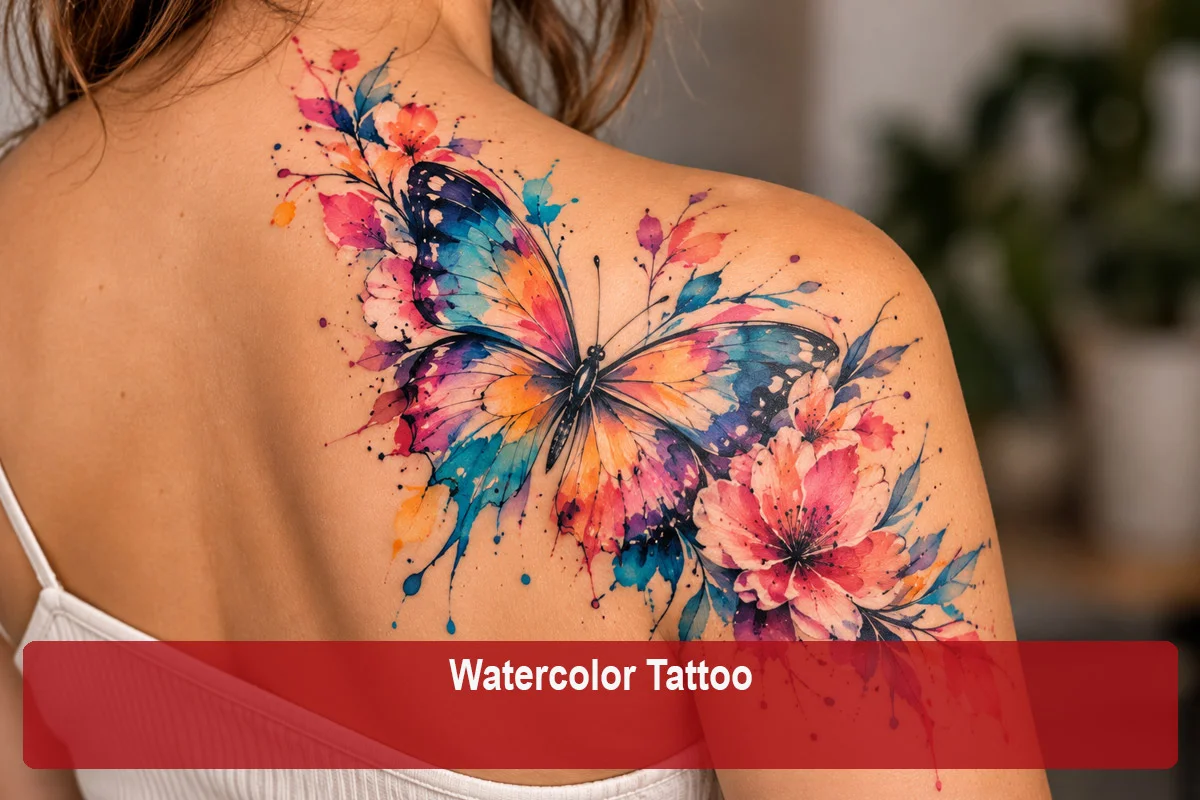
Watercolor tattoos look painted rather than drawn. Color bleeds past the edges of a shape, washes fade into bare skin, and splashes and drips make the skin look like paper. Done well, the effect is soft, expressive, and unlike any other tattoo style.
It's also one of the most debated styles in tattooing, because the qualities that make watercolor beautiful, soft edges and pale color, are exactly the qualities that tattoo pigment struggles to hold over time. This guide is honest about that debate, explains what separates watercolor tattoos that last from those that don't, and helps you find an artist in our directory who designs for the long term. Weighing up options? Compare all tattoo styles.
Watercolor Tattoo Artists & Shops Near You
Browse 1 tattoo artists and shops featuring Watercolor work. Compare portfolios and healed examples before you book.
Painterly color effects have been tried by many artists, but the watercolor style is closely associated with Brooklyn-based artist Amanda Wachob, who in 2008 developed a painting-inspired technique of brushstroke marks, washes, splatters, and spills. Her work has since been exhibited by contemporary art museums, and through the 2010s watercolor became one of the most requested color styles worldwide.
The Honest Debate: Do Watercolor Tattoos Last?
Traditional tattooers have a saying, "bold will hold," meaning strong outlines and solid color keep a tattoo readable as it ages. Watercolor deliberately breaks that rule, and the concern is real:
Light colors fade sooner. Pale pinks, yellows, light blues, and white tend to fade faster than black and darker tones.
Soft edges soften further. All tattoo lines spread slightly with age. A shape with no defined edge has nothing to hold its form as that happens.
Pale washes lose contrast. A delicate wash that looks luminous when fresh can turn into a faint blur after years of sun.
That doesn't mean watercolor tattoos are a bad idea. It means the design choices matter enormously. The watercolor tattoos that age best almost always share the features below.
Fresh (left) and aged (right). Structure is what keeps watercolor readable.
What Helps a Watercolor Tattoo Last
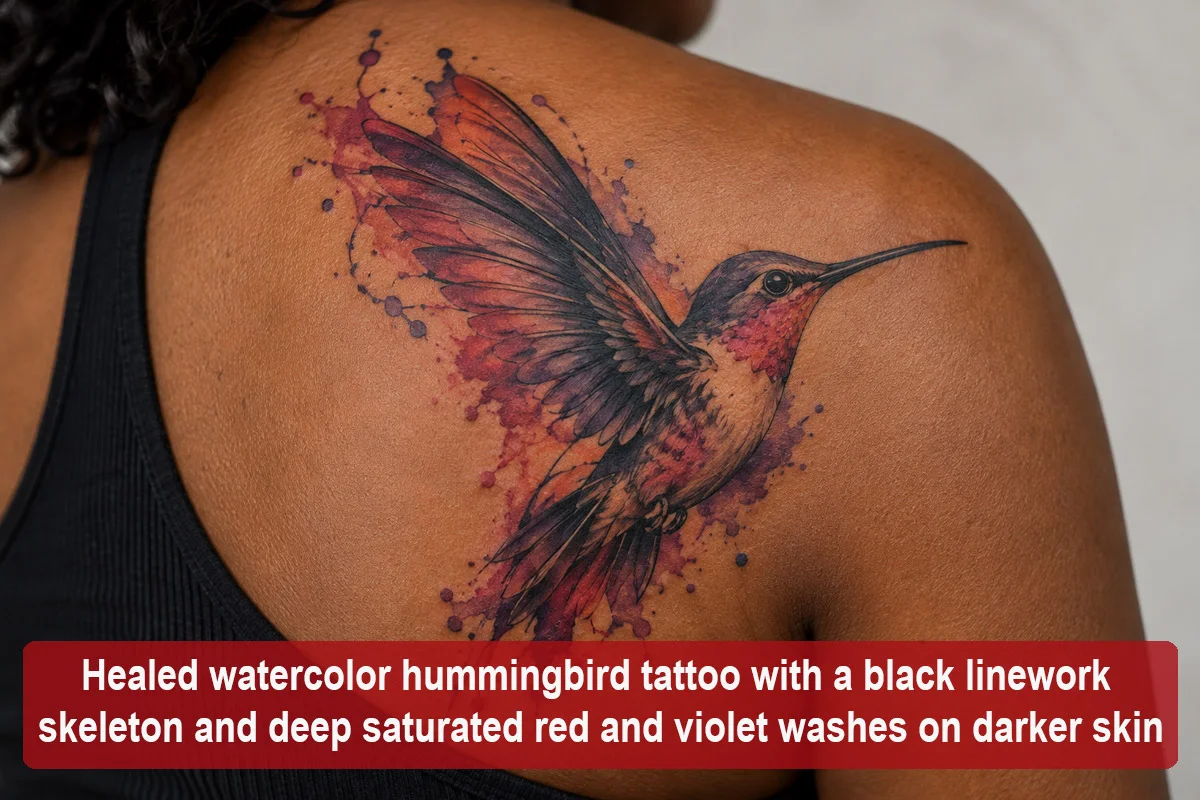
A black skeleton. Many artists tattoo a black or dark linework drawing as the structure, then add the watercolor washes around and behind it. As the color softens, the linework keeps the subject clear. This is the single most effective way to make watercolor last.
At least one dark anchor color. Including deep blues, purples, or reds alongside the pale tones gives the design contrast that survives fading.
Saturated color, not just tints. Washes that are too pale may barely heal in. Good watercolor artists pack enough pigment for the color to settle, then create softness with gradients.
Enough size. Splashes, drips, and gradients need room. Tiny watercolor tattoos lose their effect quickly.
Low-sun placement and sunscreen. Ultraviolet light is especially hard on bright and pale pigments. The upper arm, shoulder, back, ribs, and thigh hold color better than the forearm or hands.
Black linework gives watercolor a structure that holds as color softens.
Line-Free Watercolor: Possible, With Trade-Offs
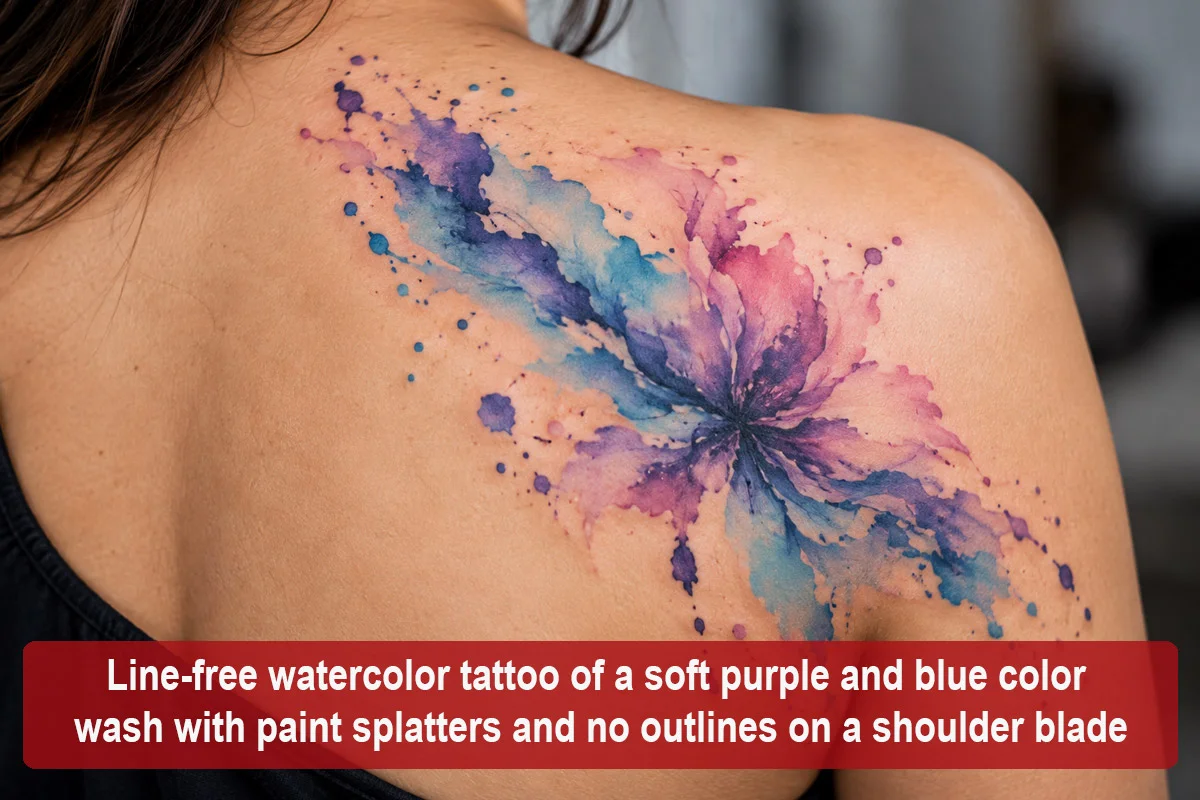
Some clients want pure watercolor with no outlines at all, like an abstract wash or a silhouette made only of color. It can be beautiful, but it's the version most likely to blur and fade. If you want it, choose an artist with healed line-free work that's several years old, plan for touch-ups, and consider a bolder palette or a larger size. An Abstract artist may also be a good fit for non-representational color work.
Line-free watercolor is the most delicate version of the style.
Ideas That Suit Watercolor
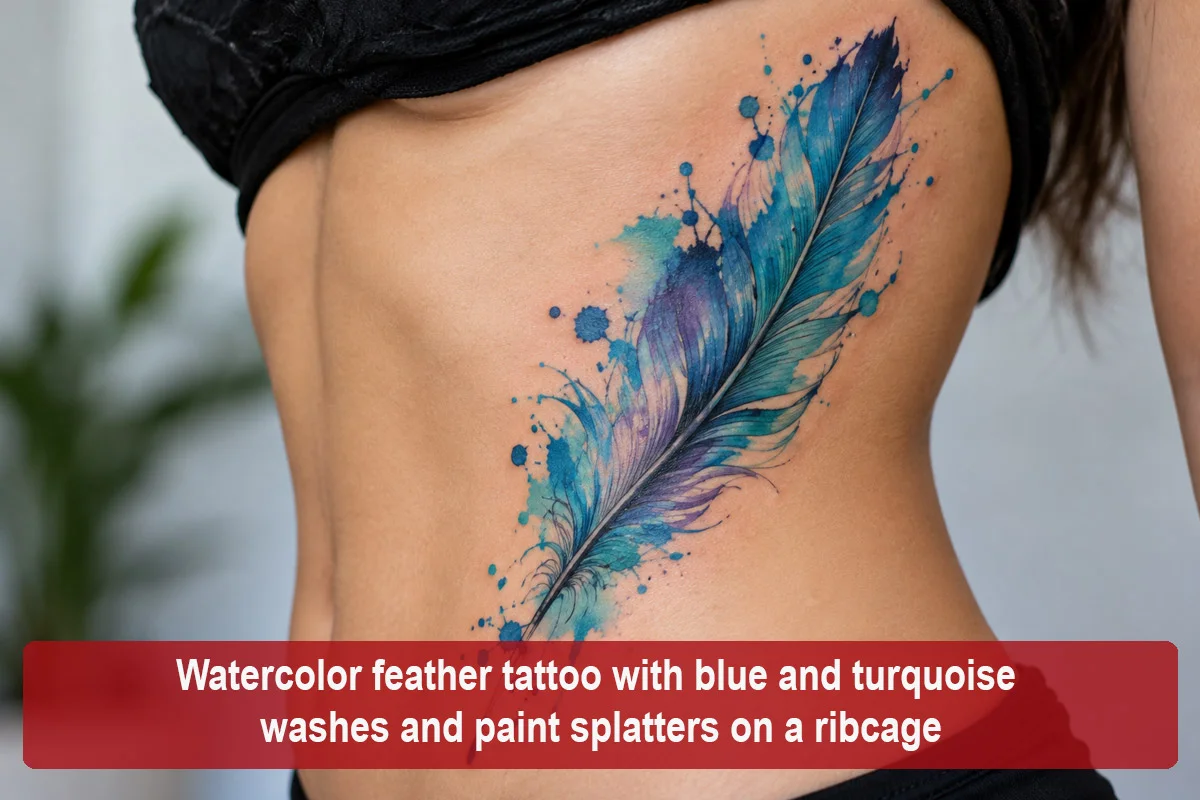
Watercolor works best with subjects that are naturally soft, flowing, or colorful: flowers, birds and hummingbirds, feathers, butterflies, animals in silhouette, galaxies and skies, ocean waves, and abstract shapes. Subjects that rely on precise detail, such as portraits, usually suit Color Realism better.
Feathers, flowers, and birds suit watercolor's flowing color.
Watercolor on Darker Skin
Watercolor relies heavily on pale and translucent color, which can look muted on darker skin. That doesn't rule it out, but it does change the approach. A black skeleton, richer and more saturated colors, and a larger size help the design show. Ask to see healed watercolor work on skin tones similar to yours, and be wary of an artist who only shows fresh work on very light skin.
Deeper color and a black skeleton help watercolor show on darker skin.
How to Choose a Watercolor Artist
Because watercolor ages so differently from fresh photos, healed work is the only real evidence. When you browse watercolor artists in our directory:
Ask for work that's two years old or more, not just healed after a few weeks.
Check how they handle structure: do their designs include linework or dark anchors?
Look for deliberate composition: splashes and drips should look intentional, not random.
Ask about touch-ups: many watercolor artists expect to refresh color after healing.
Browse watercolor artists and shops in our directory, then compare their healed color work. Related styles worth comparing include Illustrative, Abstract, Neo-Traditional, and Trash Polka, which also mixes painterly splashes with structure.
Frequently Asked Questions About Watercolor Tattoos
They often do, because they rely on lighter colors and soft edges, which fade and blur sooner than bold black. A black linework structure, darker anchor colors, a suitable size, and sun protection help them last much longer.
They don't have to, but a black or dark structure is the most reliable way to keep a watercolor tattoo readable for years. Line-free watercolor is possible but usually needs more touch-ups.
Many will benefit from a touch-up after healing and again after several years, especially designs with pale colors or no outlines. Ask your artist about their touch-up policy.
Many artists have experimented with painterly color, but Brooklyn-based artist Amanda Wachob is closely associated with the style, having developed her watercolor technique in 2008.
They can, with adjustments. Pale washes may look muted, so artists often add a black structure, use deeper colors, and increase the size. Ask for healed examples on similar skin tones.
They're priced like other color work, usually by time. Layered washes and gradients can take longer than flat color, and touch-ups may add cost over the years.