Chicano Tattooing Is More Than a Black and Grey Style
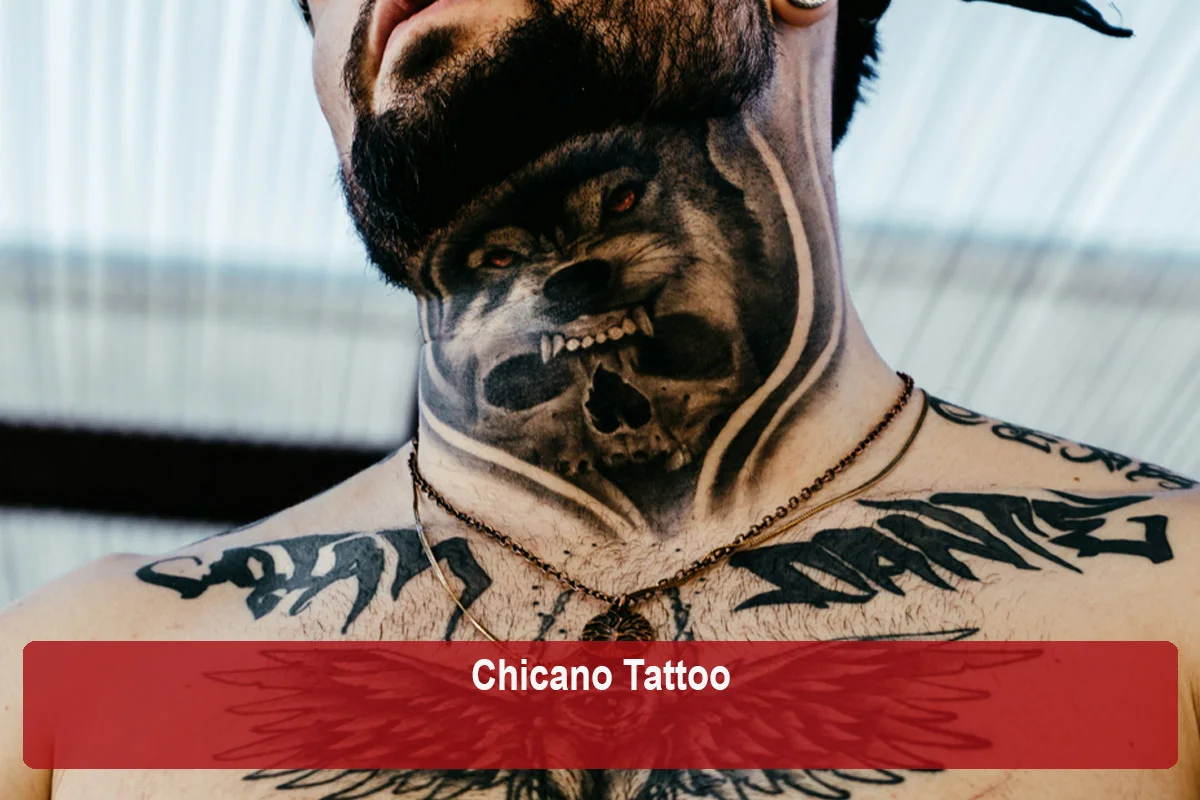
Chicano tattooing has a recognizable visual identity: smooth grey-wash shading, fine linework, expressive portraits, elaborate lettering, and imagery connected to Mexican American life. But describing it only as a black and grey tattoo technique misses the cultural history that gives the style its significance.
The tradition developed through the artistic expression of Mexican American communities, particularly in Southern California. Its visual influences include neighborhood murals, lowrider culture, religious art, lettering, family photographs, and drawings created in correctional facilities.
Chicano tattoos may represent family pride, religious devotion, remembrance, cultural identity, or personal experiences. The meaning of a particular image depends on the person wearing it, not simply on its appearance.
Technically, Chicano tattooing overlaps with Black & Grey tattoos, but the two are not interchangeable. Black and grey describes a tonal approach used across many subjects. Chicano tattooing combines related techniques with a distinctive cultural and artistic tradition.
How East Los Angeles Helped Shape Modern Chicano Tattoos
Modern Chicano tattooing has important roots in the Mexican American communities of Los Angeles and the broader Southwest. During the twentieth century, tattoo imagery circulated through neighborhood art, personal drawings, prison culture, and informal tattooing networks.
Fine linework and black and grey shading became particularly important to the style. These methods allowed artists to reproduce detailed faces, lettering, religious figures, and other imagery with relatively delicate outlines and subtle tonal transitions.
A major turning point came during the 1970s, when techniques associated with Chicano tattooing entered professional studios in East Los Angeles. Good Time Charlie's Tattooland became an influential location in this development.
Artists including Freddy Negrete and Jack Rudy helped establish fine-line black and grey tattooing as an influential professional practice. Their work contributed to techniques that later spread throughout American tattoo culture.
However, the history of Chicano tattooing cannot be reduced to one studio or artist. It developed through communities, artistic exchanges, and generations of practitioners whose contributions were not always formally documented.
Understanding this history helps explain why Chicano tattoos should not be treated as interchangeable collections of roses, lettering, and religious symbols. The visual language emerged from particular social and cultural experiences.
The Images That Define Chicano Tattoo Art
Many Chicano tattoos combine several visual elements into one composition. Rather than selecting symbols independently, consider how their meanings, proportions, and placement work together.
Chicano Lettering and Old English Script
Lettering is one of the most recognizable features of Chicano tattooing. Names, dates, family references, neighborhood identities, and personal messages may appear in elaborate scripts or bold Old English-inspired lettering.
The tradition also draws from distinctive lettering associated with Chicano graffiti and placa writing. Letterforms can communicate identity and belonging, but they should not be selected without considering their meaning and context.
From a technical perspective, Chicano lettering requires careful spacing. Decorative strokes, narrow openings, and overlapping flourishes can become difficult to distinguish when compressed into a small area.
When comparing artists, examine completed lettering tattoos at their actual size. Check whether individual characters remain readable and whether the artist has balanced decorative detail with practical legibility.
Explore Lettering tattoos for a broader comparison of letterform styles, layout, and artist techniques.
Chicano Portrait Tattoos
Portraits are central to many Chicano tattoo compositions. They may depict family members, loved ones, cultural figures, religious subjects, or stylized characters.
Chicano portraiture often combines realistic facial proportions with smooth grey-wash shading and carefully controlled highlights.
A strong portrait needs recognizable facial structure before decorative details are added. The position of the eyes, nose, mouth, and surrounding shadows should establish the likeness clearly.
For memorial portraits, reference quality matters. A clear photograph with usable lighting is generally more helpful than a low-resolution image containing heavy filters or obscured facial features.
Artists experienced in Portrait tattoos may offer relevant technical skills, but look for demonstrated experience with Chicano compositions if you want traditional lettering, decorative backgrounds, or cultural imagery incorporated into the portrait.
Roses and Floral Elements
Roses frequently appear in Chicano tattoos, sometimes alongside portraits, lettering, rosaries, or religious imagery. Depending on the wearer, they may represent love, remembrance, beauty, devotion, or another personal association.
The rose is also useful as a compositional element. Its layered petals can create transitions between larger subjects and surrounding negative space.
In black and grey work, artists must distinguish the petals using changes in shading and contrast rather than relying on different colors.
A common design challenge is crowding. When too many tightly shaded petals are placed in a small area, the flower may lose definition. Review healed floral tattoos to evaluate how an artist handles these transitions.
Religious Imagery and the Virgin of Guadalupe
Catholic imagery has a longstanding presence in Chicano art and tattooing. Common subjects include the Virgin of Guadalupe, the Sacred Heart, praying hands, rosaries, crosses, and depictions of Christ.
These images can express faith, protection, family tradition, grief, or devotion. Their significance varies by individual and community.
Religious portraits can be technically demanding because recognizable facial expressions, hands, fabric folds, and symbolic details must fit within the chosen placement.
For a detailed Virgin of Guadalupe tattoo, the artist may need to balance the central figure with the surrounding rays, mantle, and decorative elements. Reducing every feature to a very small size may compromise readability.
Discuss which elements carry the greatest personal or religious significance before the artist simplifies the composition.
Lowrider Cars and Neighborhood Imagery
Lowriders are closely associated with Chicano cultural expression, especially in Southern California and the American Southwest. In tattoo art, they may represent family traditions, craftsmanship, neighborhood pride, or memories connected to car culture.
A lowrider tattoo may depict a specific vehicle, distinctive wheels, chrome details, or a recognizable cruising scene.
For an accurate automotive portrait, the artist should understand perspective and the car's defining proportions. Excessive detail in a small design can make individual mechanical features difficult to distinguish.
If the vehicle has personal significance, provide multiple reference photographs showing its unique modifications rather than relying on a generic image of the same model.
Smile Now, Cry Later Masks
The comedy and tragedy masks, commonly called Smile Now, Cry Later, are strongly associated with Chicano tattoo imagery.
They can express contrasting emotions, resilience, hidden pain, or the difference between outward appearance and private experience. However, no single interpretation applies to everyone who wears them.
These designs often combine expressive faces with lettering, roses, or other elements. Facial contrast is particularly important because the masks should remain distinguishable even when incorporated into a larger composition.
Some versions also carry associations with particular communities or subcultures. If you are unfamiliar with a design's background, discuss its context with an artist knowledgeable about the tradition.
What Makes Chicano Black and Grey Shading Distinctive?
Chicano tattooing is widely associated with smooth grey-wash shading, delicate outlines, and carefully controlled transitions between dark and light values.
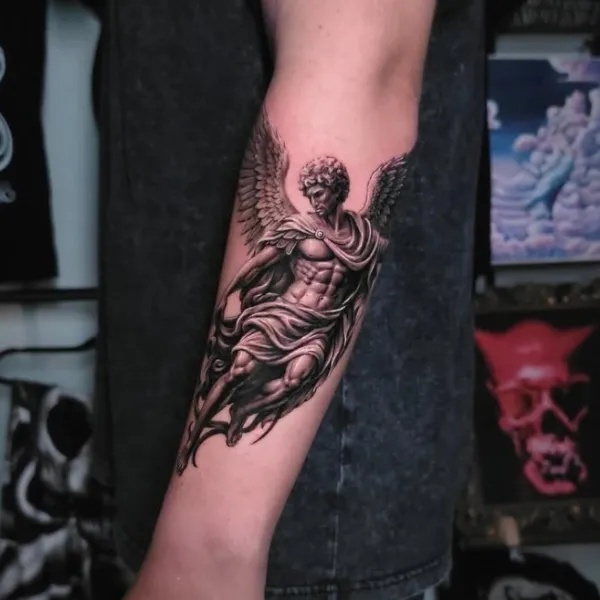
Grey wash is produced by using black pigment at different dilutions or concentrations, allowing artists to develop multiple tonal values. This approach is especially effective for faces, fabric, roses, clouds, and religious imagery.
Unlike the large solid shapes often associated with Blackwork tattoos, Chicano designs frequently depend on subtle shading to create dimension.
That does not mean every Chicano tattoo should be pale or lightly shaded. Darker areas are important for establishing structure and preventing detailed imagery from appearing visually flat.
Why Smooth Shading Alone Is Not Enough
A tattoo may have beautiful shading but still lack a clear focal point. This becomes particularly noticeable in large Chicano compositions containing portraits, roses, lettering, and decorative backgrounds.
Effective artists establish a visual hierarchy. The central portrait or subject receives the strongest emphasis, while surrounding details support the composition.
Look for portfolios where background elements do not overwhelm the main subject and where different objects remain distinguishable.
Planning a Chicano Tattoo Sleeve
Chicano sleeves often combine portraits, lettering, religious imagery, roses, lowriders, and decorative shading into a continuous composition.
The challenge is creating a unified piece without making every section equally dark or detailed.
Before beginning a sleeve, decide which subject should dominate the composition. A family portrait, religious figure, or meaningful personal image may serve as the main focal point.
Secondary elements can then connect the composition, while open skin and softer shading provide separation.
Build the Sleeve Around a Visual Story
A sleeve based on personal experiences may include several subjects, but each element should have a reason for appearing.
For example, a memorial composition might use a family portrait as its centerpiece, with dates, a meaningful phrase, and floral elements arranged around it.
Another design may emphasize cultural heritage through carefully selected imagery and lettering.
Planning the entire sleeve before the first session allows the artist to reserve appropriate space for major subjects and avoid awkward transitions between independently completed tattoos.
Should You Add Background Shading Everywhere?
Not necessarily. Background shading can connect separate elements, but excessive grey coverage may reduce the distinction between the central subject and supporting imagery.
Negative space and lighter transitions can make a complex sleeve easier to read.
Ask the artist to show how the composition looks from a normal viewing distance, not just as an enlarged digital design.
Chicano Tattoos for Men and Women: Choose Meaning Over Labels
Chicano tattoo imagery is not restricted by gender. Portraits, lettering, religious subjects, flowers, and cultural references can be adapted to different placements and personal preferences.
Some clients prefer large sleeves or chest compositions, while others choose smaller forearm pieces, shoulder tattoos, or individual portraits.
The more useful questions concern the design's meaning, scale, visibility, and relationship to the body.
A detailed portrait may require more space than a short lettering tattoo. A floral composition can follow the curve of a shoulder or thigh, while longer lettering may be better suited to an area that supports a consistent baseline.
Choose the placement that serves the artwork rather than relying on categories such as men's or women's tattoo designs.
Are Chicano Tattoos Always Connected to Gangs?
No. Chicano tattooing has historical connections to prison art and certain neighborhood subcultures, but it also includes extensive traditions of family remembrance, religious devotion, cultural pride, artistic expression, and personal storytelling.
Assuming every Chicano tattoo represents gang membership misrepresents the diversity of the tradition and the people who participate in it.
At the same time, some specific lettering arrangements, numbers, and symbols can have associations with particular groups or communities.
If you are considering unfamiliar imagery, research its historical and local context instead of assuming that a design is purely decorative.
An artist experienced in Chicano tattooing should be willing to discuss relevant cultural associations without making assumptions about your identity or intentions.
How Well Do Chicano Tattoos Age?
Chicano tattoos can retain their visual impact for many years, but the longevity of individual details depends on design size, shading, line spacing, placement, application, and aftercare.
Portraits and fine lettering require particular attention because relatively small changes can affect facial likeness or readability.
A large portrait with sufficient contrast may remain recognizable even after subtle shading softens. Very small decorative lettering, however, may become harder to read if narrow openings lose definition.
Fresh tattoos can appear especially sharp in close-up photographs. To evaluate an artist's long-term results, look for healed examples of portraits, script, and large black and grey compositions.
Ask whether the artist has photographs taken several months or years after completion. These can provide more useful evidence than fresh photographs alone.
Choosing a Chicano Tattoo Artist: Five Portfolio Details That Matter
A tattoo artist who works in black and grey does not necessarily specialize in Chicano tattooing. Look for experience with the specific subjects, techniques, and cultural references involved in your design.
- Portrait accuracy: Compare facial proportions, expressions, and recognizable features in completed portraits.
- Lettering quality: Examine letter spacing, consistent stroke weight, decorative flourishes, and readability.
- Grey-wash control: Look for smooth tonal transitions and enough dark contrast to maintain structure.
- Composition: Evaluate how portraits, roses, lettering, and backgrounds work together without competing for attention.
- Healed results: Prioritize examples that show how fine details and shading appear after healing.
Experience with Chicano art and imagery is also important. An artist should understand the visual references involved rather than simply copying unrelated symbols into one design.
What to Bring to a Chicano Tattoo Consultation
Bring clear reference photographs, the exact spelling of any names or phrases, and an explanation of which elements matter most to you.
For a portrait, provide the highest-quality photograph available. For lettering, confirm spelling, capitalization, and punctuation before approving the stencil.
If you want a sleeve, share your long-term plan even if you intend to complete only one section initially.
Ask the artist how they will maintain contrast, preserve lettering readability, and organize the design around the selected body placement.
Find Chicano Tattoo Artists Near You
Chicano tattooing has strong historical connections to Southern California, but artists working in the style can be found throughout the United States.
When searching for Chicano tattoo shops, compare individual artists rather than assuming every studio offering black and grey tattoos has equivalent experience.
Look for portfolios featuring Chicano lettering, realistic portraits, smooth grey-wash shading, religious imagery, or complete sleeves that match your intended project.
Use TattooShopsNearYou.com to explore tattoo artists and shops by location and style. Review available portfolios, identify specialists, and contact studios to discuss design references, placement, consultation requirements, and appointment availability.
The right Chicano tattoo artist should demonstrate both technical ability and an understanding of the artistic tradition behind the imagery you want to wear.