Black and Grey Tattoos: Designs, Shading & Style Guide
Black and grey tattoos create depth without relying on bright colors. A portrait can feel lifelike through carefully controlled shadows, a rose can gain dimension through soft gradients, and a large sleeve can connect several subjects using different values of black and grey. The technique can produce everything from delicate floral designs to dramatic realism and bold illustrative artwork.
But not every tattoo made with black ink is a Black & Grey tattoo in the same artistic sense. The distinction lies in how an artist uses tonal range, contrast, skin breaks, and shading to create form. This guide explores popular black and grey tattoo designs, how the technique works, which placements suit different compositions, and what to examine in an artist's healed portfolio before booking.
Black & Grey Tattoo Artists & Shops Near You
Browse 23 tattoo artists and shops featuring Black & Grey work. Compare portfolios and healed examples before you book.
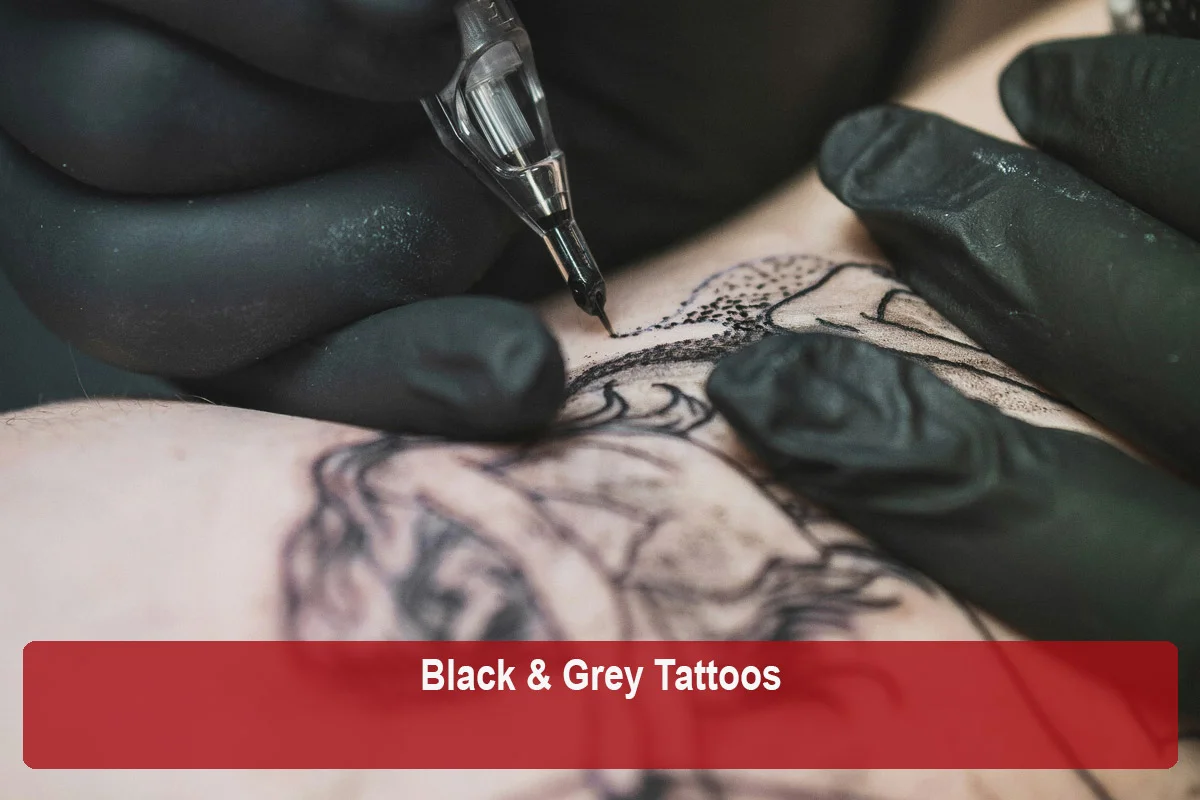
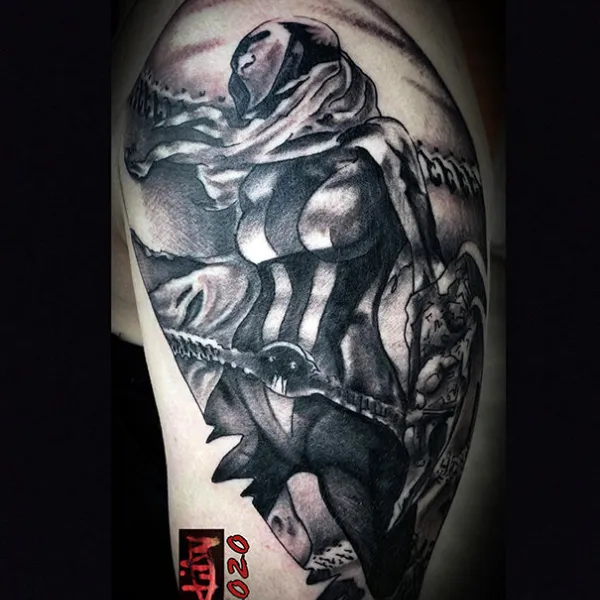
Black and grey tattoos use black ink, diluted grey tones, and areas of untouched skin to create depth without a conventional color palette. Rather than using different colors to separate subjects, the artist controls light, shadow, texture, and contrast.
The technique can produce realistic portraits, detailed flowers, dramatic animal designs, Japanese-inspired compositions, or simplified Traditional tattoos. Two black and grey tattoos may look completely different because the term describes a tonal approach rather than one fixed illustration style.
A successful black and grey tattoo should remain recognizable beyond the close-up photograph. A rose needs distinct petals, a portrait needs believable facial proportions, and an animal should have a clear expression before the viewer notices its finest details.
How Black and Grey Tattoo Shading Works
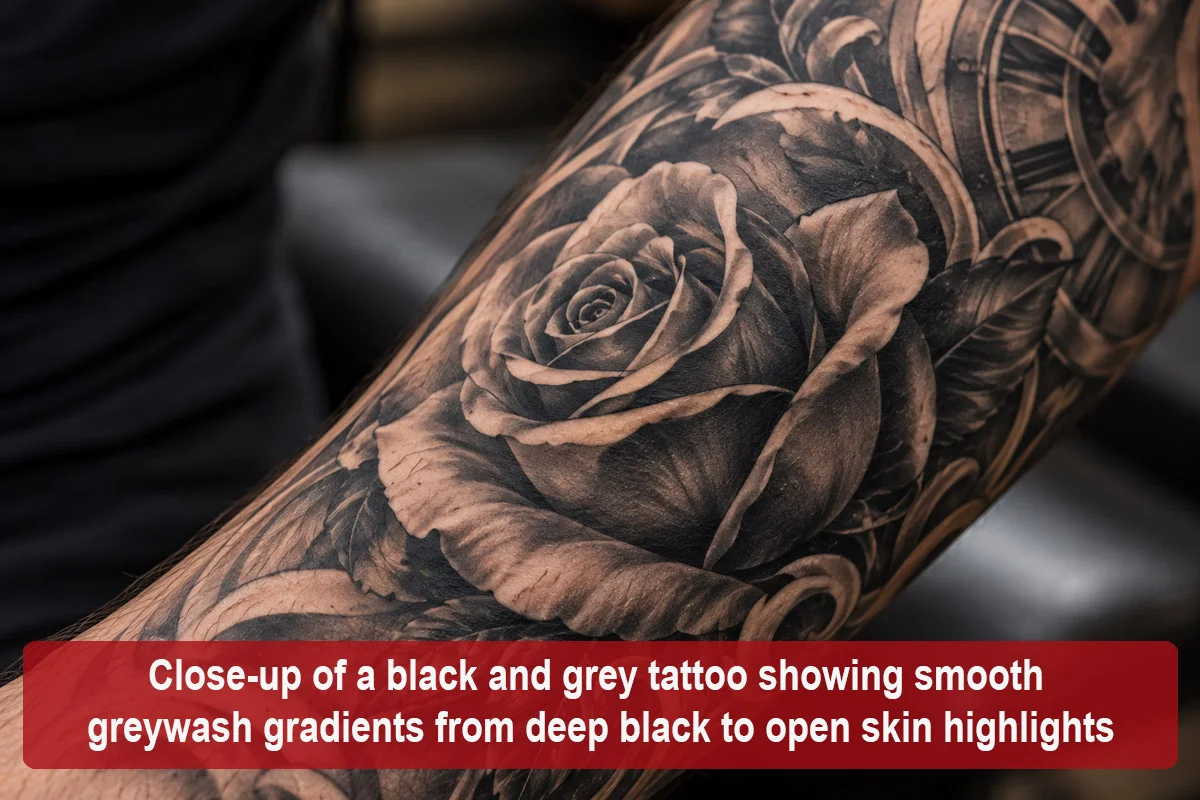
Black and grey tattooing depends on the relationship between dark ink, lighter shading, and natural skin. Artists often use greywash, a controlled dilution of black tattoo ink, to create different tonal values. Commercially prepared greywash mixtures are also available.
The lightest areas may be created by leaving skin untattooed rather than applying white ink. These skin breaks help define highlights and separate overlapping elements.
Greywash creates gradual tones, while open skin forms the brightest highlights.
Why Dark, Medium, and Light Values Matter
Imagine a black and grey wolf portrait. The darkest areas might define the pupils, nose, mouth, and deeper fur shadows. Medium greys establish the shape of the face, while lighter areas separate the ears, muzzle, and surrounding fur.
If the entire wolf is shaded with similar medium-grey tones, the features may blend together. Adding more individual hairs will not necessarily solve the problem. The artist must establish the larger facial structure first.
This is why contrast matters more than the number of different grey shades used.
Greywash and Smooth Gradients
Greywash allows artists to create gradual transitions between dark and light areas. It is particularly useful for portraits, wildlife, flowers, and designs inspired by photography or sculpture.
However, smooth shading alone does not guarantee a strong tattoo. The darkest areas must provide enough structure, and the lighter areas must remain visible against the surrounding skin.
Whip Shading, Pepper Shading, and Stippling
Not all black and grey tattoos use completely smooth gradients. Some artists create texture through whip shading, pepper shading, stippling, or combinations of these approaches.
These techniques can give a botanical illustration a printed appearance, create rough textures in a skull, or add visual character to an ornamental design.
When choosing an artist, compare the finished appearance rather than assuming one shading technique is automatically superior.
Black and Grey Realism Tattoos: What Makes a Portrait Convincing?
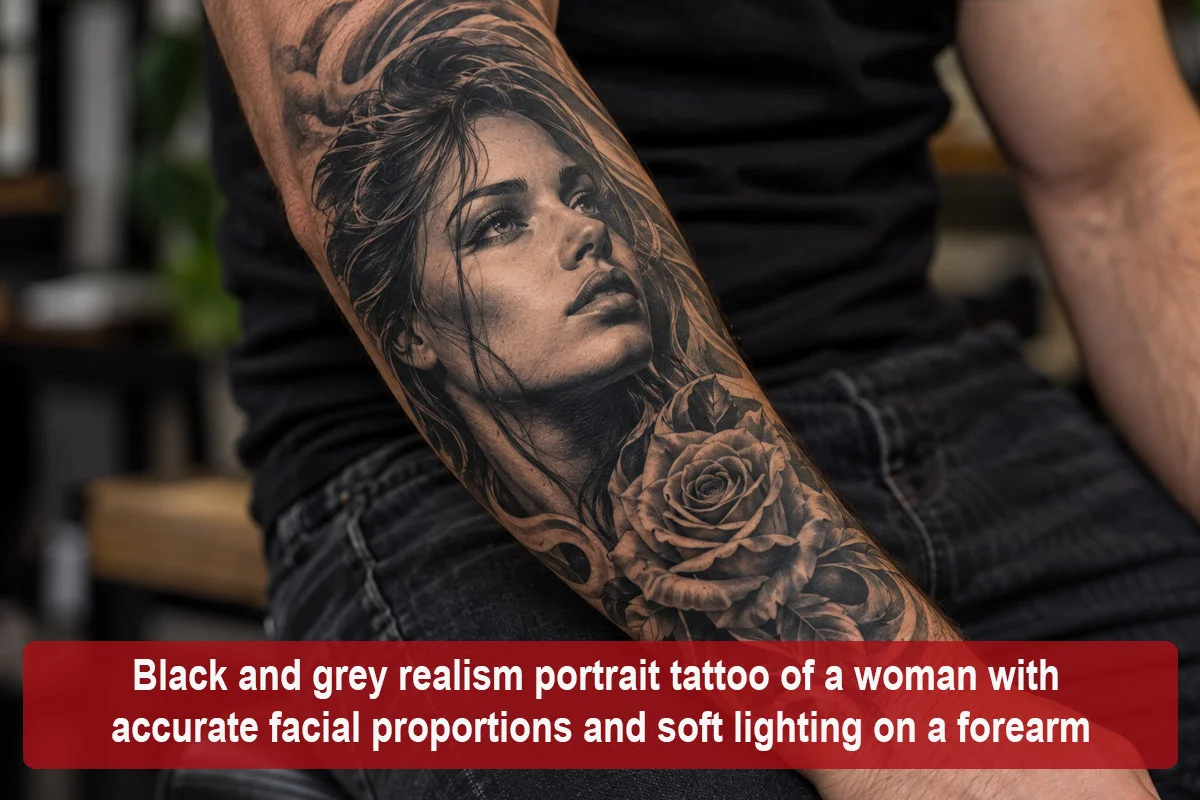
Black and grey realism aims to reproduce believable anatomy, lighting, and texture. Portraits, wildlife, statues, architecture, and cinematic imagery are common subjects.
Realism is especially demanding because small errors in facial proportions can change a person's expression or likeness. A tattoo may contain exceptionally smooth shading and still fail as a portrait if the eyes, nose, mouth, or facial structure are inaccurate.
A convincing portrait depends on accurate proportions before fine detail.
Choosing the Right Reference Photograph
A good reference photograph should have clear features, readable shadows, and enough detail for the artist to understand the subject. Strong directional lighting can help establish facial volume, while extremely dark or heavily filtered photographs may hide important information.
For memorial portraits, choose an image that captures the person's recognizable expression rather than selecting a photograph solely because it has dramatic lighting.
Why Realistic Tattoos Need Enough Space
A large portrait can accommodate subtle differences between the eyelids, cheekbones, lips, and hair. When the same image is reduced to a small area, those details become more difficult to reproduce and maintain visually.
An experienced realism artist may recommend a larger placement, a tighter crop, or the removal of background elements.
The Healed Portrait Test
Look for healed photographs of the artist's previous portraits. Examine whether the face remains recognizable, whether the darkest features are distinct, and whether the lighter shading still contributes to the overall image.
A portfolio containing only fresh close-up photographs provides less evidence of how the artist's realism work looks after healing.
Black and Grey Flower Tattoos: Roses, Peonies, and Botanical Designs
Black and grey flower tattoos can be delicate, dramatic, or highly realistic depending on their shading and composition. Flowers work particularly well with greywash because overlapping petals naturally create shadows.
Black and Grey Rose Tattoos
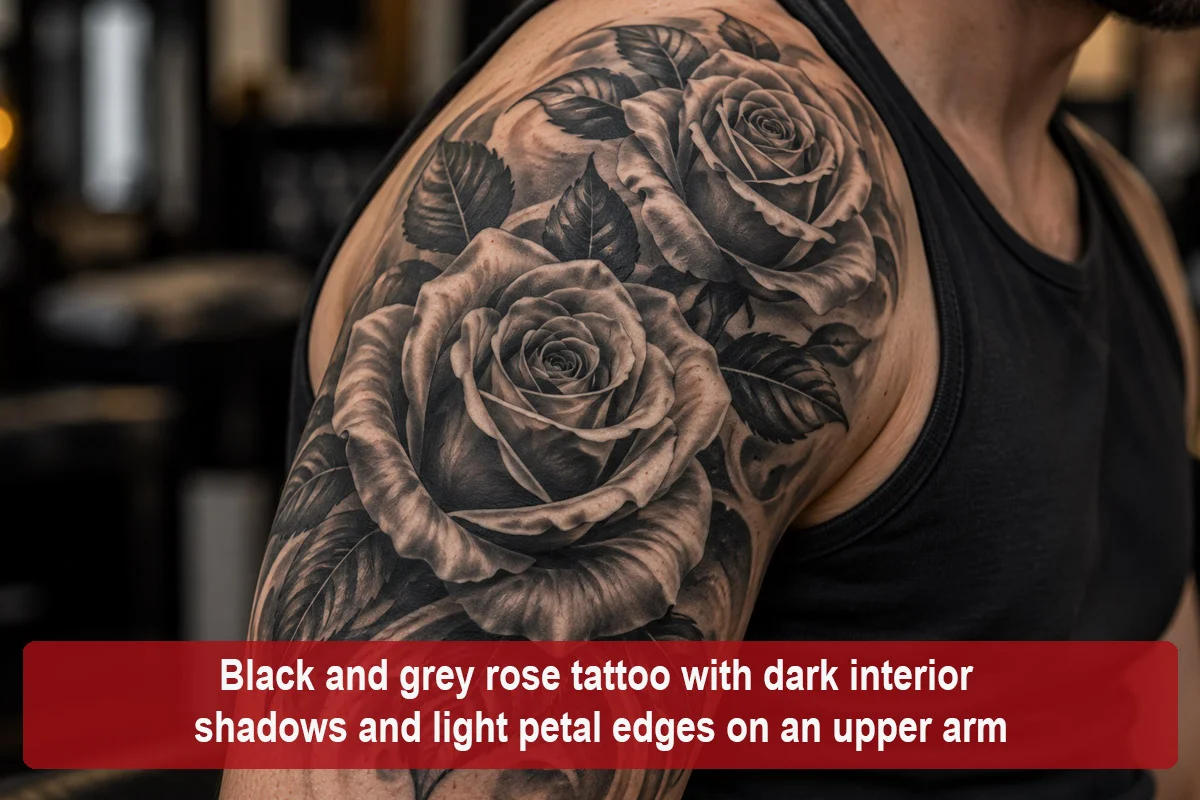
A rose contains layers of curved petals that can be separated through dark interior shadows and lighter edges. In a larger rose tattoo, the artist may use subtle tonal changes to show how individual petals fold and overlap.
For smaller roses, simplifying the number of petals may produce a clearer design than attempting to reproduce every detail from a photograph.
What to check: Can you identify the center of the rose and follow its petal structure, or does the flower become a collection of similar grey shapes?
Dark centers and light edges separate the petals of a black and grey rose.
Black and Grey Peony and Chrysanthemum Tattoos
Peonies offer broad, layered petals that can support soft shading and large floral compositions. Chrysanthemums contain numerous narrower petals and require careful spacing to prevent the flower from appearing crowded.
These flowers can work as standalone pieces or form part of Japanese-inspired and illustrative tattoo compositions.
Black and Grey Floral Sleeves
A floral sleeve can use one or two large flowers as focal points, with leaves, stems, and smaller blossoms connecting the composition.
Filling every gap with foliage or background shading is not always necessary. Leaving open skin between important forms can help maintain contrast and prevent the sleeve from becoming visually dense.
Popular Black and Grey Tattoo Ideas Beyond Flowers
Some subjects naturally lend themselves to tonal shading because their shapes depend on light and shadow. The right choice should reflect both the image you want and the artist's experience with that subject.
Black and Grey Lion, Wolf, and Tiger Tattoos
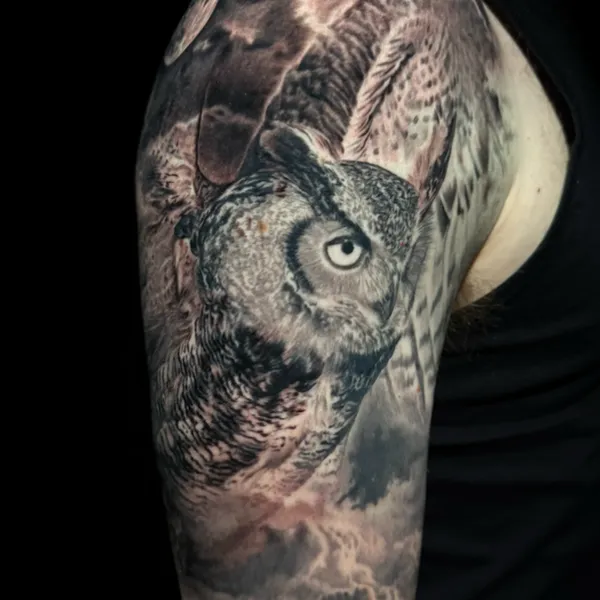
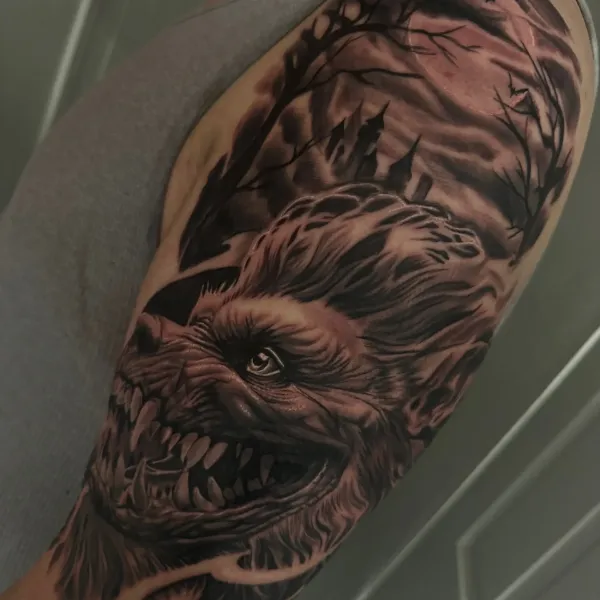
Animal portraits allow artists to show facial expression, fur texture, and dramatic lighting. Lions can emphasize the volume of the mane, wolves can use directional fur and facial shadows, and tigers can combine recognizable stripe patterns with realistic anatomy.
The strongest designs establish the animal's head and expression before adding fine textures. A lion should remain identifiable even when viewed without the surrounding mane details.
Black and Grey Skull Tattoos
Skulls provide naturally strong contrasts between bone, eye sockets, teeth, and deep shadows. They can be rendered realistically or combined with flowers, snakes, clocks, and other imagery.
For smaller skull tattoos, simplified teeth and carefully controlled shadow areas may work better than excessive anatomical detail.
Black and Grey Angel and Religious Tattoos
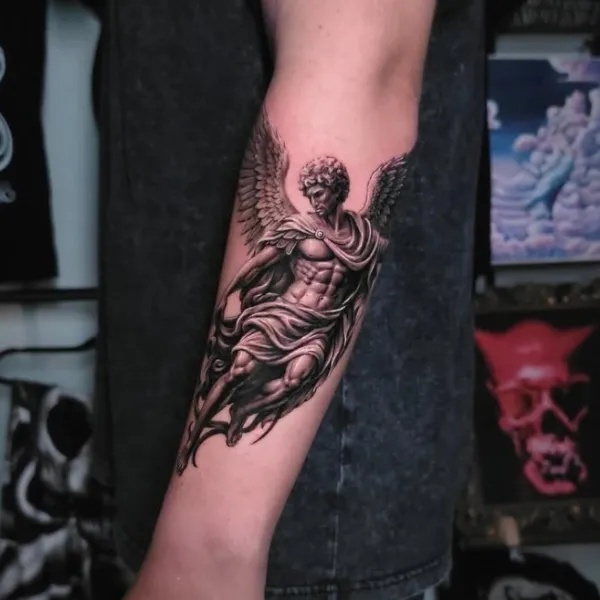
Angels, praying hands, crosses, religious figures, and sculpture-inspired imagery are established subjects in black and grey tattooing. The technique can reproduce the appearance of stone, folded fabric, feathers, and directional lighting.
These compositions often contain multiple important elements. The face, hands, or central symbol should remain the focal point rather than being overwhelmed by wings, clouds, and decorative backgrounds.
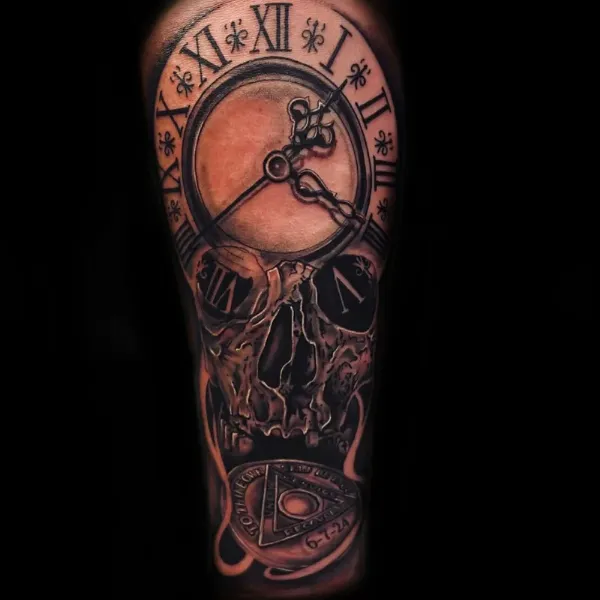
Black and Grey Clock and Memorial Tattoos
Clocks, dates, portraits, flowers, and lettering are frequently combined in memorial compositions. The challenge is arranging several meaningful elements without making the tattoo difficult to read.
For example, a clock face needs enough space for its hands and markings to remain distinct. Small lettering and detailed backgrounds should be evaluated carefully before inclusion.
Start with the element that carries the greatest personal meaning, then build the surrounding composition around it.
Black and Grey Japanese Tattoos: Dragons, Waves, and Large Compositions
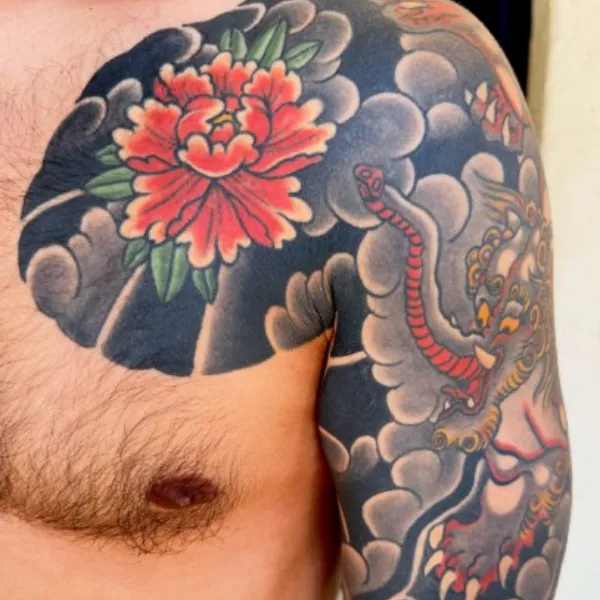
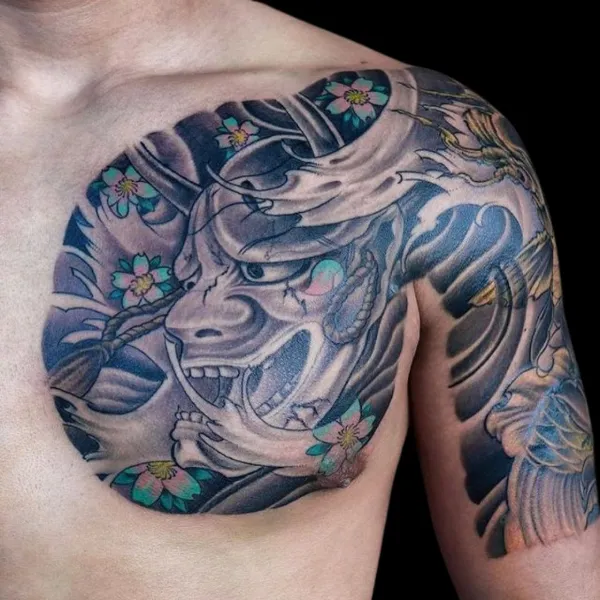
Japanese tattooing can use extensive black and grey shading, but Japanese-inspired work is not defined solely by its color palette. The relationship between the main subject, background, and movement of the body is central to many Japanese compositions.
Dragons, koi, tigers, snakes, peonies, chrysanthemums, clouds, and waves can all appear in black and grey designs.
Black and Grey Japanese Dragon Tattoos
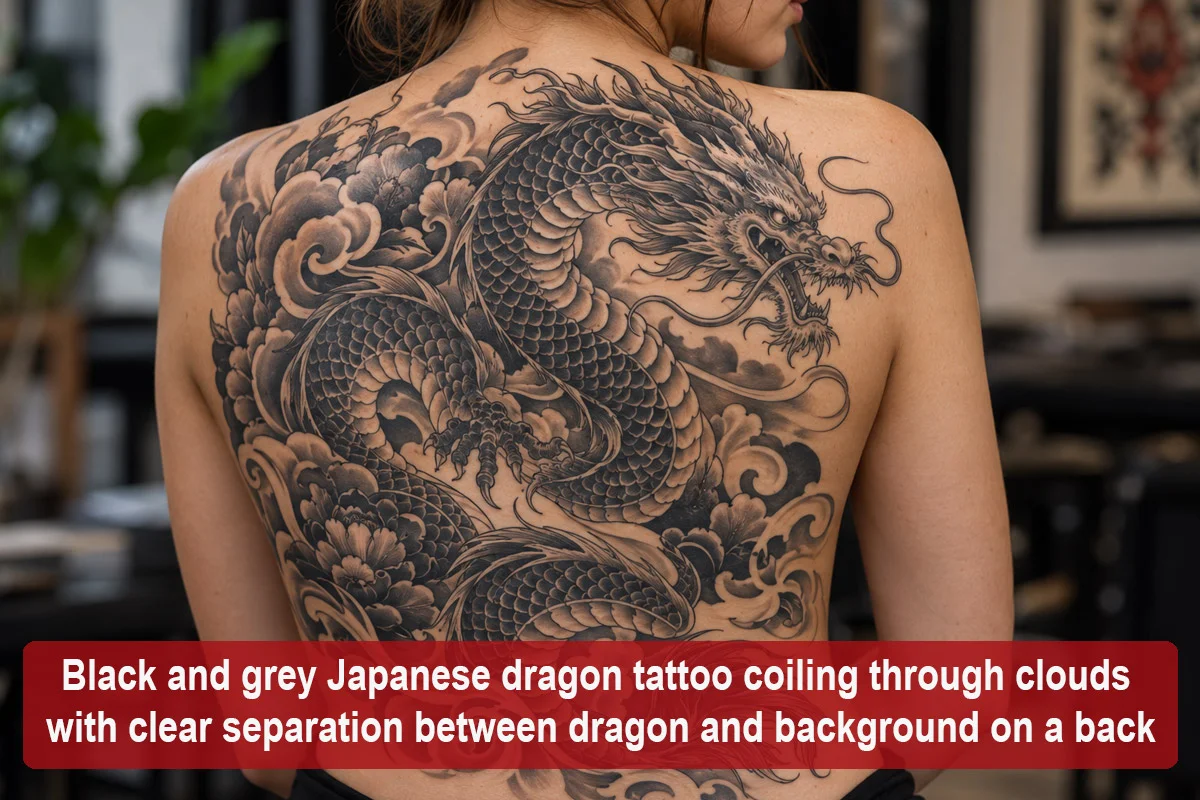
A dragon's long body can follow the arm, shoulder, back, or leg. Its head, claws, and major coils should remain recognizable against surrounding clouds or waves.
When the dragon and background contain similar dark tones, the artist must establish separation through outlines, open skin, and controlled shading.
Outlines and open skin keep a black and grey dragon distinct from its background.
Japanese Black and Grey Sleeves
A Japanese-inspired sleeve often works best when planned as a connected composition. Background elements can guide the eye around the arm while the primary subject follows the body's natural contours.
Before booking, review completed sleeves by the artist. Experience drawing a standalone dragon does not necessarily demonstrate experience planning a full Japanese composition.
American Traditional Tattoos in Black and Grey
American Traditional tattoos are commonly associated with bold outlines and limited, saturated colors. However, familiar Traditional subjects can also be tattooed entirely in black and grey.
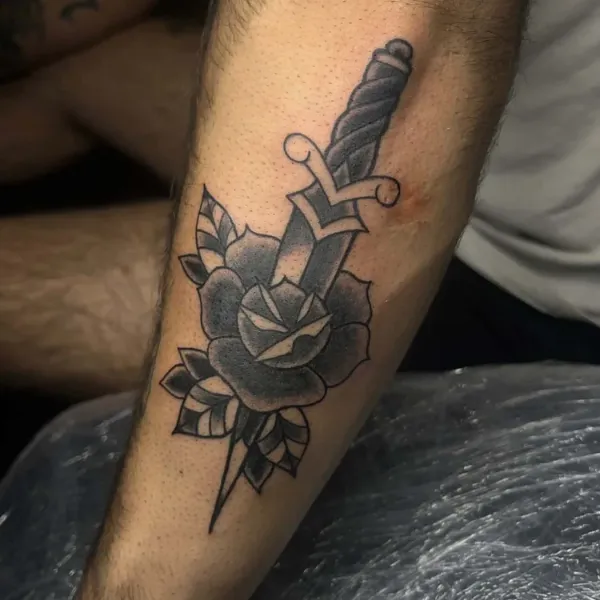
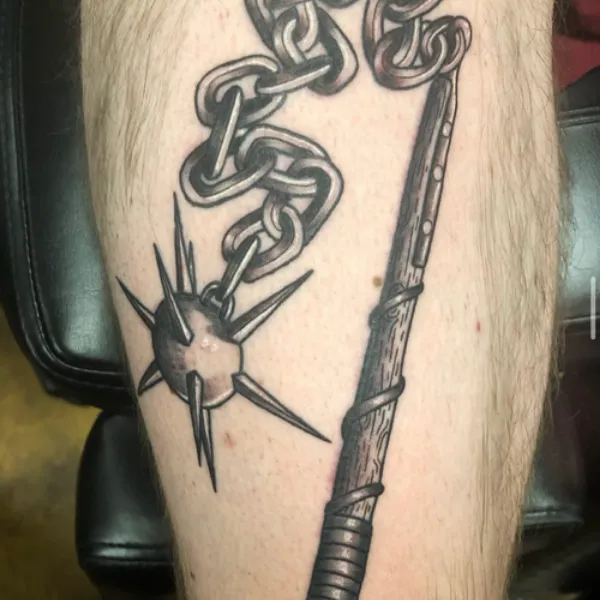
An eagle may retain its simplified wings and strong silhouette. A rose can preserve its recognizable petal shapes, while a dagger or panther may use bold black shading rather than color.
Removing color does not automatically transform a Traditional tattoo into Realism. The underlying drawing style remains important.
Feature
Traditional Black and Grey
Black and Grey Realism
Outlines
Usually prominent and consistent
May use few visible outlines
Shading
Graphic and simplified
Gradual and dimensional
Common subjects
Eagles, roses, daggers, panthers
Portraits, wildlife, sculptures
Visual emphasis
Bold, immediate recognition
Believable light, depth, and texture
Explore our American Traditional tattoo guide to understand how classic outlines, shapes, and motifs differ from more realistic approaches.
Black and Grey, Blackwork, and Fine Line: Understanding the Differences
Black and Grey, Blackwork, and Fine Line tattoos may all use black ink, but they describe different visual approaches.
Style
Main Characteristic
Best Portfolio Evidence
Black & Grey
Gradual shading and tonal contrast
Healed gradients and clear highlights
Blackwork
Solid black shapes, patterns, and graphic contrast
Consistent fills and controlled negative space
Fine Line
Delicate, narrow linework
Clean healed lines and appropriate spacing
Black & Grey Realism
Realistic anatomy, lighting, and texture
Accurate portraits and readable healed details
Black & Grey Neo-Traditional
Illustrative shading with decorative forms
Strong outlines, hierarchy, and composition
A Blackwork raven might rely on a bold silhouette and solid black areas. A Black and Grey raven may use gradual shading to show individual feather groups and reflected light.
A Fine Line flower may consist primarily of narrow outlines, while a Black and Grey flower can use broad tonal transitions to create the appearance of curved petals.
These categories can overlap. The most useful way to choose is to examine an artist's actual work rather than relying only on the style name.
The Chicano Influence on Black and Grey Tattooing
Modern black and grey tattooing has important historical connections to Chicano tattoo culture in California, particularly fine-line tattooing and imagery developed within and around prison communities.
Artists working under severe material restrictions developed monochrome approaches that influenced later professional tattooing. Over time, fine-line black and grey work became associated with sophisticated portraits, religious imagery, lettering, and cultural symbolism.
However, Chicano tattooing should not be reduced to a shading technique. It is a distinct artistic tradition with its own history, visual language, and cultural significance.
Someone seeking Chicano-inspired work should review artists who demonstrate an understanding of that tradition, not simply artists who advertise general black and grey realism.
Small and Simple Black and Grey Tattoos
Small black and grey tattoos can work well when the subject has a clear silhouette and limited detail. A single rose, compact skull, small animal head, or simple botanical design may be more practical than a miniature photographic portrait.
The main limitation is space. Greywash requires enough room for darker and lighter values to remain visually distinct.
Why Shrinking a Realism Design Can Fail
A detailed portrait may look convincing when drawn across a large area. Reducing it to a few inches can compress the eyes, nose, mouth, and subtle facial shadows into a very small space.
An artist may recommend removing background details, increasing the size, or choosing a simpler illustration rather than attempting an exact miniature reproduction.
Simple Does Not Mean Poorly Planned
A restrained black and grey design still needs intentional outlines, spacing, and contrast. A small flower with clearly separated petals may be more visually effective than a complicated flower with numerous indistinct details.
Black and Grey Tattoo Sleeves: Building One Cohesive Design
A black and grey sleeve can combine portraits, animals, religious imagery, flowers, architectural elements, and atmospheric backgrounds. The difficulty is making these subjects work together rather than appear as unrelated images surrounded by filler.
Start With the Main Subjects
Choose the largest elements first. A lion portrait, religious figure, or major floral composition may need a prominent area of the upper arm, while supporting subjects can occupy the forearm.
Starting with small filler designs can leave awkward spaces for the most important artwork later.
Use Dark Areas to Establish Structure
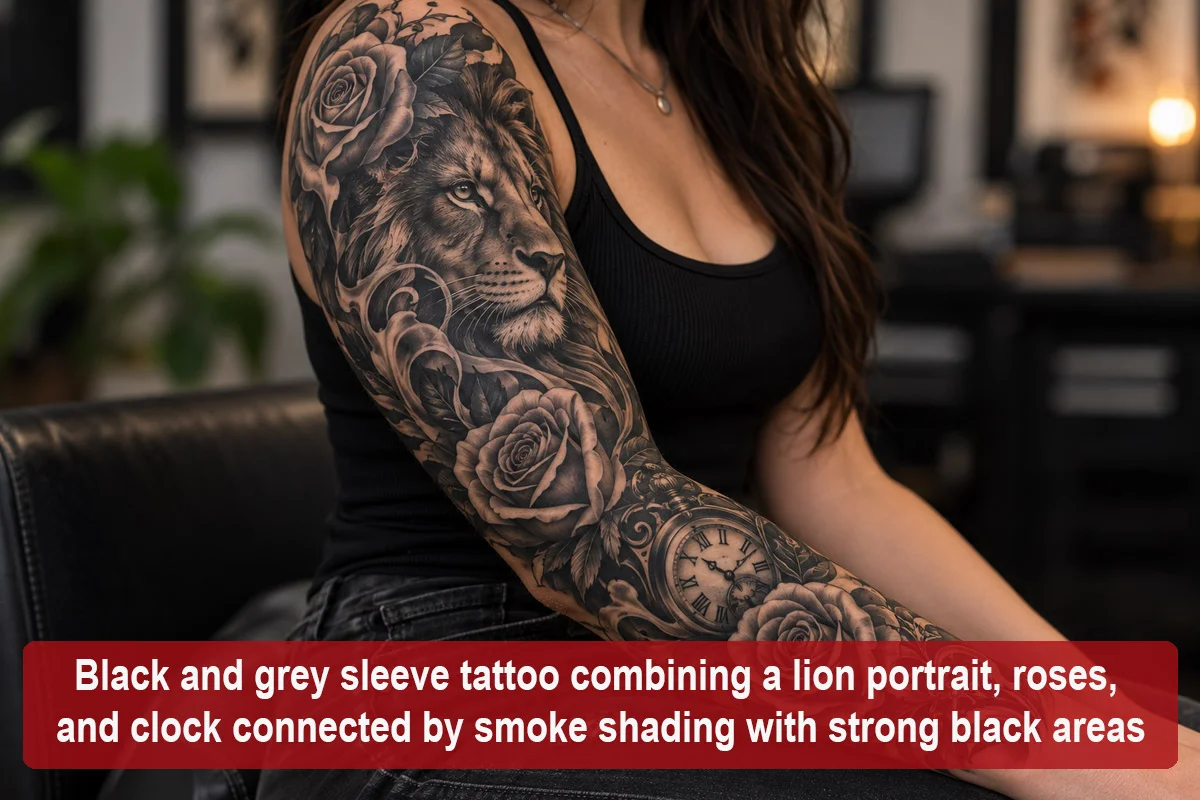
A sleeve containing only soft mid-grey shading can appear flat. Stronger black areas can help separate major subjects, while lighter sections provide visual breathing room.
The goal is not to make the sleeve uniformly dark. It is to establish a readable relationship between its parts.
Strong black areas give a black and grey sleeve its structure.
Plan Smoke, Clouds, and Background Shading Carefully
Smoke and cloud effects are often used to connect individual pieces. They can create continuity, but excessive background shading may reduce the clarity of portraits, flowers, and other focal subjects.
Ask how the background will support the artwork rather than simply fill every available gap.
Full Sleeve vs. Collection Sleeve
A full connected sleeve is designed as one composition, while a collection sleeve combines separate tattoos. Both approaches can work in black and grey.
For a collection sleeve, pay attention to the differences in shading density and scale between pieces. A very dark realistic portrait may dominate several smaller, lightly shaded designs unless their placement is considered.
Mixing Black and Grey with Color Tattoos
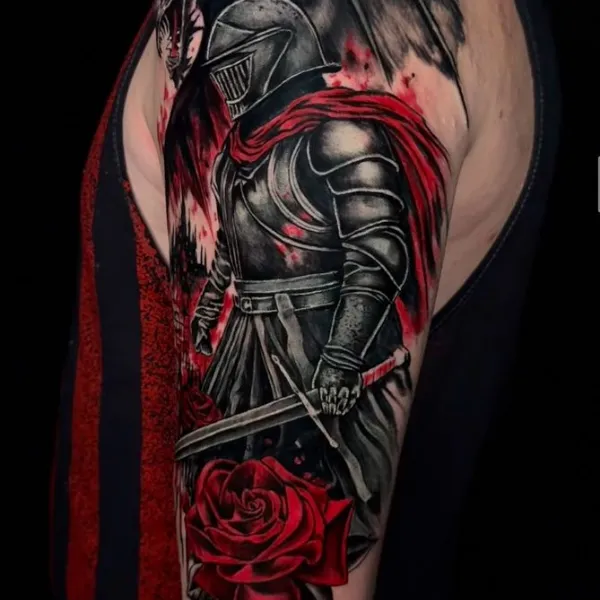
Black and grey tattoos can sit alongside color tattoos or include selective color accents. The challenge is achieving visual balance rather than following a rule that every tattoo must use the same palette.
Combining Black and Grey with Existing Color Tattoos
If you already have colorful tattoos, consider their linework, size, saturation, and overall visual weight before adding a black and grey piece.
For example, a softly shaded realistic rose may look different beside a bold American Traditional eagle. The combination can still work, but the transition should be deliberate.
Using Selective Color Accents
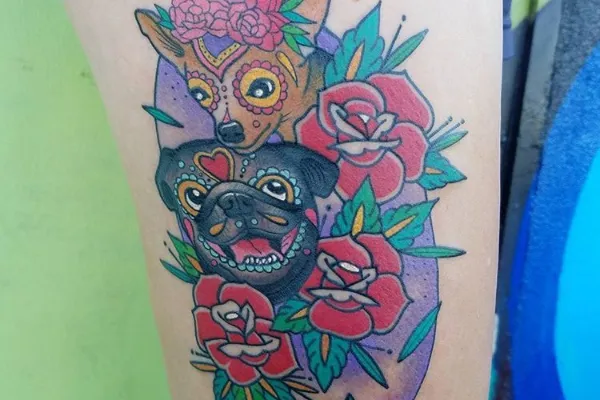
Some designs use limited color within an otherwise monochrome composition. A colored flower, eye, or decorative detail may become the focal point.
Before adding color, ask whether the underlying black and grey composition is strong enough on its own. A small accent should enhance the image rather than compensate for weak structure.
Can Black and Grey Tattoos Cover Existing Tattoos?
Black and grey cover-up tattoos are possible, but the result depends on the existing tattoo's darkness, size, placement, and design. A new tattoo does not erase the old ink underneath.
Because many black and grey designs rely on lighter shading and open highlights, concealing a dense existing tattoo can be challenging.
Why Light Grey Cannot Reliably Hide Dark Ink
Soft grey shading generally cannot conceal a large area of dense black tattoo ink. The cover-up may need stronger black areas, a larger composition, or a different subject.
For example, a lightly shaded flower may not provide enough coverage for a dark symbol. A composition with strategically placed darker elements could offer more flexibility, depending on the existing tattoo.
When Laser Lightening May Help
Professional laser tattoo lightening may expand the available design options by reducing the visibility of existing ink. Results vary, and treatment has potential risks.
Consult an appropriately qualified laser-treatment professional and an experienced cover-up tattoo artist before deciding on a plan.
What to Bring to a Cover-Up Consultation
Clear photographs of the existing tattoo
Its approximate age and dimensions
Information about any previous cover-up work
Examples of subjects you would genuinely enjoy wearing
Willingness to discuss size, shading, and design limitations
Be cautious of anyone promising that a very light black and grey design can completely conceal any tattoo without first examining it.
Best Placements for Black and Grey Tattoos
Placement influences how a design should be drawn. A realistic portrait needs enough width for facial features, while an elongated botanical arrangement may fit naturally along the forearm or calf.
Check the stencil with your arm relaxed and turned in different directions before approving the final placement.
Black and Grey Hand and Neck Tattoos
Hand and neck tattoos require careful consideration because they are highly visible and may present particular placement, healing, and maintenance challenges.
Small tonal details may not be appropriate for every design. Discuss the practical limitations with an artist experienced in these placements.
Black and Grey Back Tattoos
The back provides space for large portraits, wildlife scenes, religious compositions, and detailed shading. However, a large canvas does not mean every area needs to be filled.
Establish the main subject and supporting elements before deciding how much background is necessary.
Black and Grey Tattoos for Men and Women: Focus on the Design
Online galleries often divide black and grey tattoos into categories for men and women. These labels can be useful for browsing familiar design trends, but they do not determine who can wear a particular subject or style.
Someone seeking a bold composition might prefer a large animal portrait, skull, or heavily shaded sleeve. Someone seeking a lighter appearance might choose a single botanical stem, small illustrative design, or more open composition.
Flowers can be dramatic, animal portraits can be delicate, and memorial designs can take many forms. The important decisions are subject, scale, contrast, and placement rather than gender labels.
Do Black and Grey Tattoos Fade or Age Better Than Color?
Black and grey tattoos are sometimes described as longer-lasting than color tattoos, but the comparison is not universal. Dark ink, pale grey shading, saturated colors, and different placements can all change over time.
Light grey areas may become less distinct, while stronger black shapes may remain easier to recognize. The outcome depends on application, design, skin characteristics, sun exposure, and aftercare.
Fresh vs. Healed Black and Grey Tattoos
Fresh tattoos may appear darker, shinier, and more sharply defined. As the skin heals, the appearance of the shading changes.
That is why healed portfolio photographs are valuable. They provide a more useful view of how an artist's greywash, contrast, and finer details settle.
Why Negative Space Matters Over Time
Areas of untouched skin help create highlights and separation. In a portrait, they may define reflected light in the eyes. In a floral tattoo, they can distinguish overlapping petals.
These spaces should be planned deliberately. Extremely small gaps may become less visually distinct as the tattoo changes over time.
Black and Grey Tattoos on Different Skin Tones
Black and grey tattoos can be created on a wide range of skin tones, but lighter shading may appear differently depending on the surrounding skin.
An experienced artist should adapt contrast, scale, and shading to the individual client. Reviewing healed work on skin tones similar to your own can help you assess the artist's experience.
Once healed, appropriate sun protection can help limit ultraviolet exposure. Follow professional aftercare guidance and seek medical advice for concerning skin reactions.
How to Choose a Black and Grey Tattoo Artist
Not every artist who offers black and grey tattooing specializes in the same subjects. A floral artist may not be the right choice for a realistic family portrait, and a portrait specialist may have limited experience planning Japanese-inspired sleeves.
1. Match the Portfolio to Your Subject
If you want a wolf, compare several animal portraits. If you want a memorial portrait, examine completed human portraits. If you want a sleeve, review finished large-scale compositions rather than only individual tattoos.
2. Check the Darkest and Lightest Areas
Look for clear separation between strong black shadows, medium-grey shading, and lighter areas. A design that relies entirely on similar grey values may lack structure.
3. Evaluate Anatomy Before Detail
For portraits and animals, examine proportions, expression, and overall shape before admiring individual hairs, wrinkles, or textures.
Detailed shading cannot compensate for incorrect anatomy.
4. Ask for Healed Examples
Fresh photographs show immediate execution, while healed examples provide additional evidence of how shading and contrast settle.
Whenever possible, compare healed work with a similar subject, placement, and level of detail.
5. Discuss Size and Reference Images
Bring clear references and explain which details matter most. The artist may recommend changing the crop, removing background elements, increasing the size, or strengthening certain shadows.
These adjustments can improve readability without changing the meaning of the design.
Use TattooShopsNearYou to explore available black and grey tattoo shops and artists by location and specialty. Compare portfolios and contact studios to confirm which artist is best suited to your design.
Frequently Asked Questions About Black & Grey Tattoos
A Black and Grey tattoo uses black ink, diluted grey tones, and areas of untouched skin to create depth, shadows, and highlights without relying on colored ink. The technique works across several styles, including Realism, Chicano, floral, Japanese-inspired, and American Traditional tattoos. What distinguishes strong Black and Grey work is the artist's ability to maintain contrast and recognizable shapes, even in detailed compositions.
Not necessarily. Black and Grey tattoos can retain strong visual definition when they have well-planned contrast, but lighter grey shading may become less noticeable over time. Color tattoos also vary in how they age. Placement, application, sun exposure, skin characteristics, and aftercare all influence the result. When choosing an artist, compare healed tattoos with similar shading and detail rather than relying only on fresh portfolio photographs.
Black and Grey tattoos use tonal shading to create dimension, while Blackwork generally emphasizes solid black shapes, patterns, and negative space. For example, a Black and Grey raven may feature softly shaded feathers and realistic lighting, while a Blackwork raven may rely on a bold silhouette and graphic contrast. Some designs combine both approaches, so examine an artist's actual work rather than relying on the style label alone.
Yes. Black and Grey tattoos can sit alongside colorful tattoos or include selective color accents. The main consideration is visual balance. A softly shaded realistic portrait may look disconnected from bold, saturated Traditional tattoos unless the artist plans the transition carefully. For a sleeve, consider the overall composition, linework, contrast, and placement of colored elements before adding new pieces.
Sometimes, but the result depends on the existing tattoo's darkness, size, placement, and design. Light grey shading generally cannot conceal dense black ink effectively. A cover-up may require stronger dark areas, a larger composition, or a different subject. In some cases, professional laser lightening can create additional design options. An experienced cover-up artist should assess the existing tattoo before recommending a solution.
Look for artists whose portfolios demonstrate experience with your intended subject, whether that is a realistic portrait, floral tattoo, animal, or full sleeve. Examine healed examples for smooth shading, accurate proportions, strong contrast, and clear separation between details. Browse Black and Grey tattoo shops and artists on TattooShopsNearYou, compare available portfolios and locations, and contact studios to confirm the right artist for your design.