
 Tattoo Ideas & Designs
How Do Tattoo Artists Connect Existing Tattoos Into a Sleeve...
Published On 07-10-2026
Published by the Tattoo Shops Near You Editorial Team
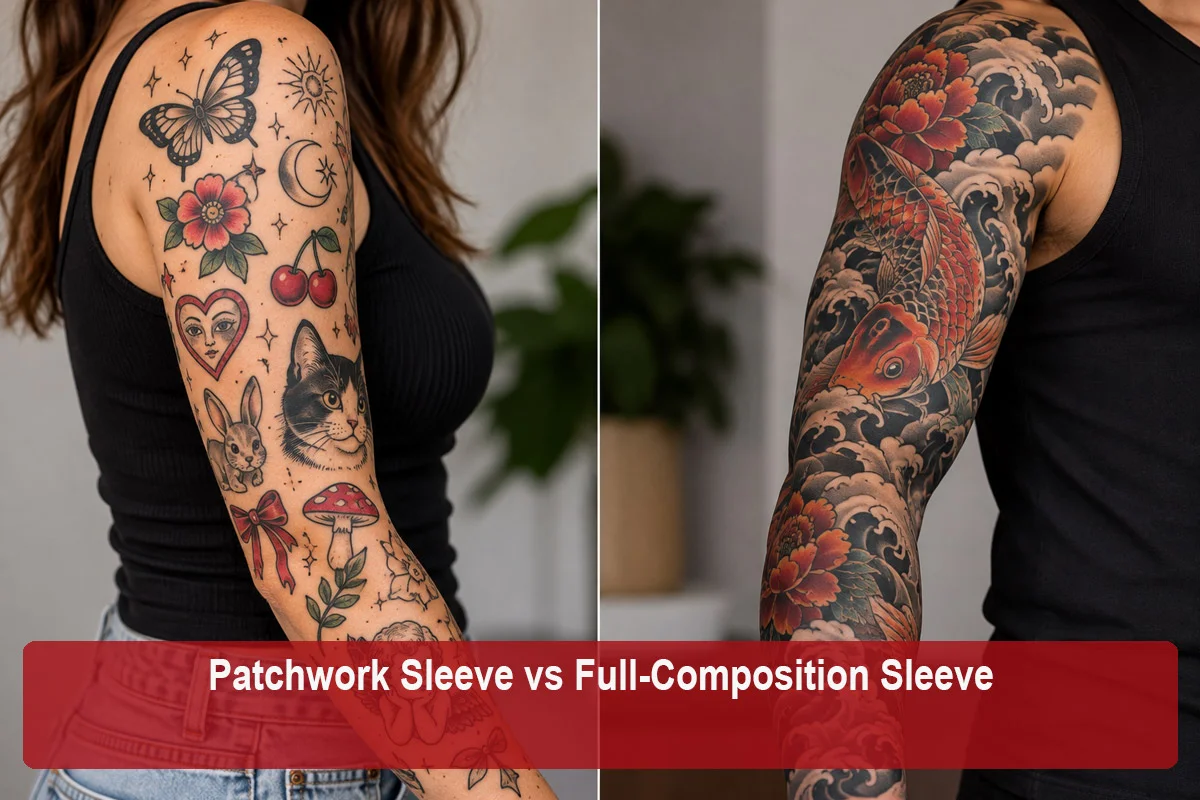
When people picture a tattoo sleeve, they usually imagine one of two looks. The first is a patchwork sleeve: many individual tattoos placed side by side, each standing on its own, with skin showing between them. The second is a full-composition sleeve: one continuous artwork that wraps the arm, with a background connecting every element into a single scene.
Both are popular, both can look stunning, and both reflect different ideas about what a sleeve should be. This guide compares the two side by side, covering look, planning, style, artist choice, time, cost, and how each ages, so you can choose the approach that suits you.
A patchwork sleeve, sometimes called a sticker sleeve, is made up of separate tattoos arranged across the arm. Each piece has its own outline and stands alone, with visible skin between designs. The pieces may share a style, such as American traditional flash, or they may come from different styles and artists.
The overall effect is like a collection displayed on the skin. Patchwork sleeves often grow over time, with each tattoo marking a moment, a trip, or an idea.
A full-composition sleeve is designed as one continuous artwork. The main elements are linked by background imagery such as wind, waves, clouds, smoke, shading, foliage, or patterns, so there is little or no untattooed skin between designs. The sleeve reads as a single picture that flows around the arm.
Full-composition sleeves are common in Japanese tattooing, black and grey realism, and large illustrative work. They are usually designed by one artist with a clear plan from the start.
| Feature | Patchwork Sleeve | Full-Composition Sleeve |
|---|---|---|
| Look | Separate tattoos with skin between them | One continuous artwork with background |
| Planning | Can grow piece by piece | Usually planned upfront |
| Artists | One or many | Usually one |
| Common styles | Traditional flash, mixed styles, small illustrations | Japanese, realism, large illustrative, ornamental |
| Flexibility | High; add pieces anytime | Lower once the design is set |
| Time and sessions | Spread out as pieces are added | Often long, structured sessions |
| Cost pattern | Paid per piece over time | Large total project cost over sessions |
| Changing direction | Easy to adapt | Harder once started |
Patchwork sleeves let you collect tattoos as you go. You can get flash from an artist you admire on a trip, a small piece to mark a milestone, and a design from a guest artist, all on the same arm.
Different artists and designs give a patchwork sleeve a lively, eclectic feel. Many collectors enjoy that each piece has its own personality.
Each patchwork tattoo is a smaller, self-contained commitment. You can stop at any point and still have a sleeve that looks intentional.
Patchwork arms built from traditional flash are rooted in classic Western tattoo culture, and many collectors love that heritage.
A full-composition sleeve looks like one masterpiece. Elements interact, backgrounds flow, and the eye moves naturally around the arm.
Full compositions cover the arm completely, creating a bold, finished look from every angle.
Because the whole arm is one canvas, large subjects such as dragons, koi, portraits, or scenes can stretch across the sleeve rather than being confined to one area.
A planned composition is shaped around the arm's muscles and contours, so it moves naturally with your body.
Some styles naturally lean toward one approach. American traditional is classically associated with patchwork arms built from flash. Japanese tattooing is classically associated with full compositions that use wind, water, and clouds to connect the main imagery. Realism sleeves often use full compositions with shading and lighting that blend elements together.
That said, the boundaries are flexible. Traditional sleeves can be connected with background, and full compositions can be built in many styles. Our comparisons of American traditional vs neo-traditional and blackwork vs black and grey may help you think about which style fits your preferred sleeve type.
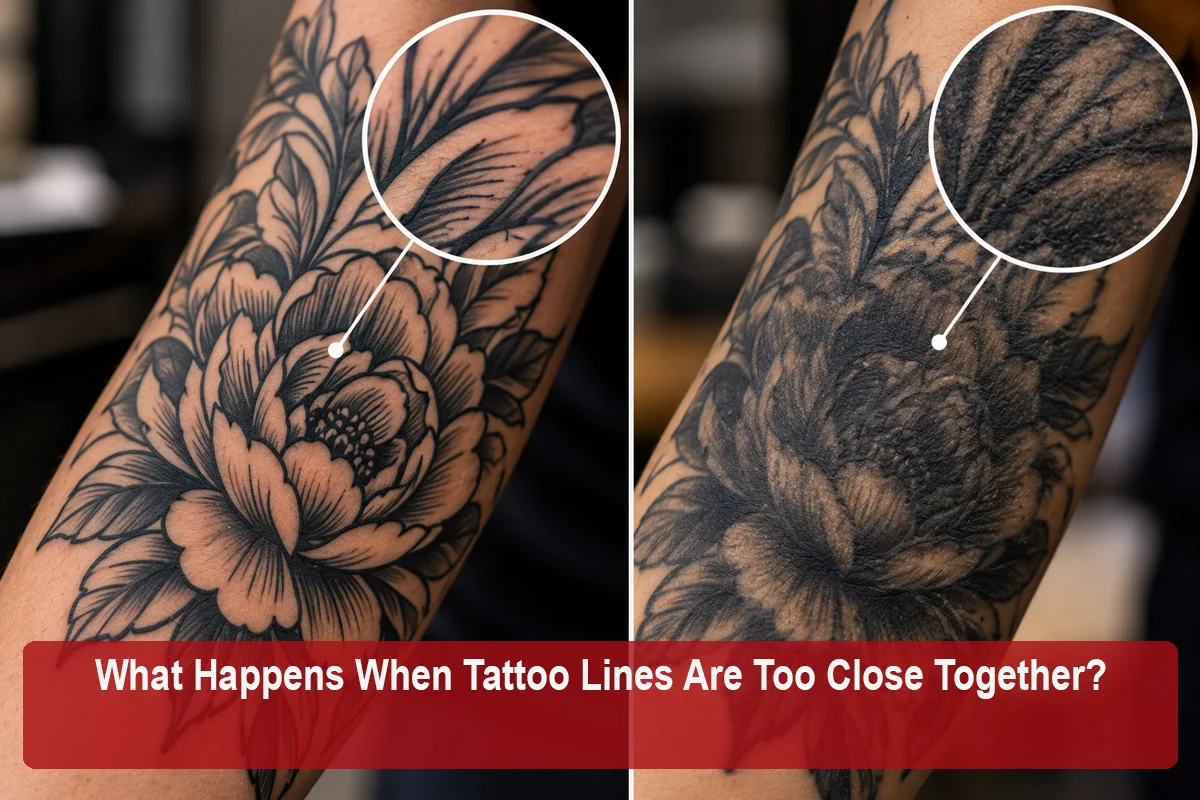
Spacing is an underrated part of a good patchwork sleeve. Pieces placed too close together can look crowded, while pieces spaced too far apart can look scattered. Many artists aim for balanced gaps that let each design breathe while still reading as a collection. Varying the size and orientation of pieces helps the arm feel lively rather than uniform.
If you plan a patchwork sleeve, telling each artist about the arm's overall direction helps them place new pieces to keep the balance.
Background is what turns separate images into a full composition. It fills space, connects elements, and guides the eye. Common backgrounds include wind bars and clouds in Japanese work, smoke and shading in black and grey realism, foliage in botanical sleeves, and geometric patterns in ornamental work. A strong background takes skill to design and execute, so look for artists whose finished sleeves show cohesive, well-integrated backgrounds.
For a patchwork sleeve, you can choose different artists for different pieces, focusing on each artist's strengths. If you want a consistent patchwork look, working with artists in the same style helps.
For a full composition, choose one artist who specializes in your chosen style and has finished, healed sleeves in their portfolio. Our guide on choosing a tattoo artist for your style explains what to look for.
Patchwork sleeves spread cost and time across individual pieces, so you can build at your own pace. Full compositions often involve a larger overall project with structured sessions and long sittings, though the cost is also spread across sessions. Our guide on what to bring to a long tattoo session can help you prepare for extended appointments.
Patchwork sleeves can often be converted into fuller compositions later by adding background between pieces. This is a common way to unify a collection. How well it works depends on how compatible the existing tattoos are in style and placement, and on the artist's skill. Converting a full composition into patchwork is not really possible, since the background already fills the space.
A patchwork sleeve may suit you if you love collecting individual pieces, enjoy variety, want to work with several artists, or are not ready to commit to one large design.
A full-composition sleeve may suit you if you want a unified artwork, complete coverage, large imagery, and a single artist guiding the project.
Not every sleeve fits neatly into one category. Many collectors create hybrids, such as a patchwork sleeve with light background filler that tightens the gaps without fully connecting every piece, or a full composition with a few distinct standalone images placed within it. Hybrids can offer the variety of patchwork with some of the cohesion of a full composition. Discuss this middle ground with your artist if neither extreme feels right.
Patchwork sleeves with skin between pieces often keep each design clearly defined over time, since the open space provides contrast. Full compositions rely on contrast between elements and background, so artists plan light and dark areas carefully to keep main images readable as the tattoo ages. Dense, low-contrast compositions may soften into each other more over time, which is why skilled artists build in strong contrast from the start.
Consider how your sleeve will look from across a room. Patchwork sleeves read as a collection of individual images, each recognizable on its own. Full compositions read as one large pattern of light and dark, with the main subjects visible as bold shapes. Both can look striking, but they create different impressions at a distance.
Everything in this comparison applies to leg sleeves as well. Patchwork legs, often called sticker legs, are popular with traditional collectors, while full-composition leg sleeves are common in Japanese and realism work. Legs offer more space than arms, which can make full compositions especially impressive and patchwork layouts easier to balance.
Your sleeve choice may also shape the rest of your collection. Patchwork collectors often continue the same approach on other limbs and the torso, creating a consistent look across the body. Full-composition collectors may plan matching or complementary sleeves and back pieces. Thinking about your long-term direction can help you choose an approach you will be happy to repeat.
The best way to decide is to look at finished, healed sleeves of both types. Pay attention to how patchwork sleeves balance spacing and how full compositions use background and contrast. Notice which ones you keep returning to. Your instinctive reaction to real sleeves is often the clearest guide to which approach will make you happiest in the long run.
Patchwork lets you pay as you go, piece by piece. Full compositions spread cost across sessions but involve a larger total commitment. Choose the approach that matches both your vision and your finances.
Patchwork and full-composition sleeves represent two different philosophies. Patchwork celebrates collecting, variety, and flexibility, with each tattoo standing on its own. Full composition celebrates unity, flow, and the arm as one canvas.
Think about the look you love, your preferred style, and how much flexibility you want. Either way, thoughtful spacing, placement, and artist choice will help your sleeve look intentional for years to come.
This article was reviewed by the Tattoo Shops Near You Editorial Team for accuracy, clarity, and relevance. We use reliable industry resources, official business information, and other authoritative sources where applicable to help readers make informed decisions about tattoo shops, artists, styles, and services.
Last reviewed: October 2026
Tattoo Ideas & Designs
 Tattoo Ideas & Designs
 Tattoo Ideas & Designs
 Tattoo Ideas & Designs