
 Tattoo Ideas & Designs
How Do Tattoo Artists Connect Existing Tattoos Into a Sleeve...
Published On 07-10-2026
Published by the Tattoo Shops Near You Editorial Team
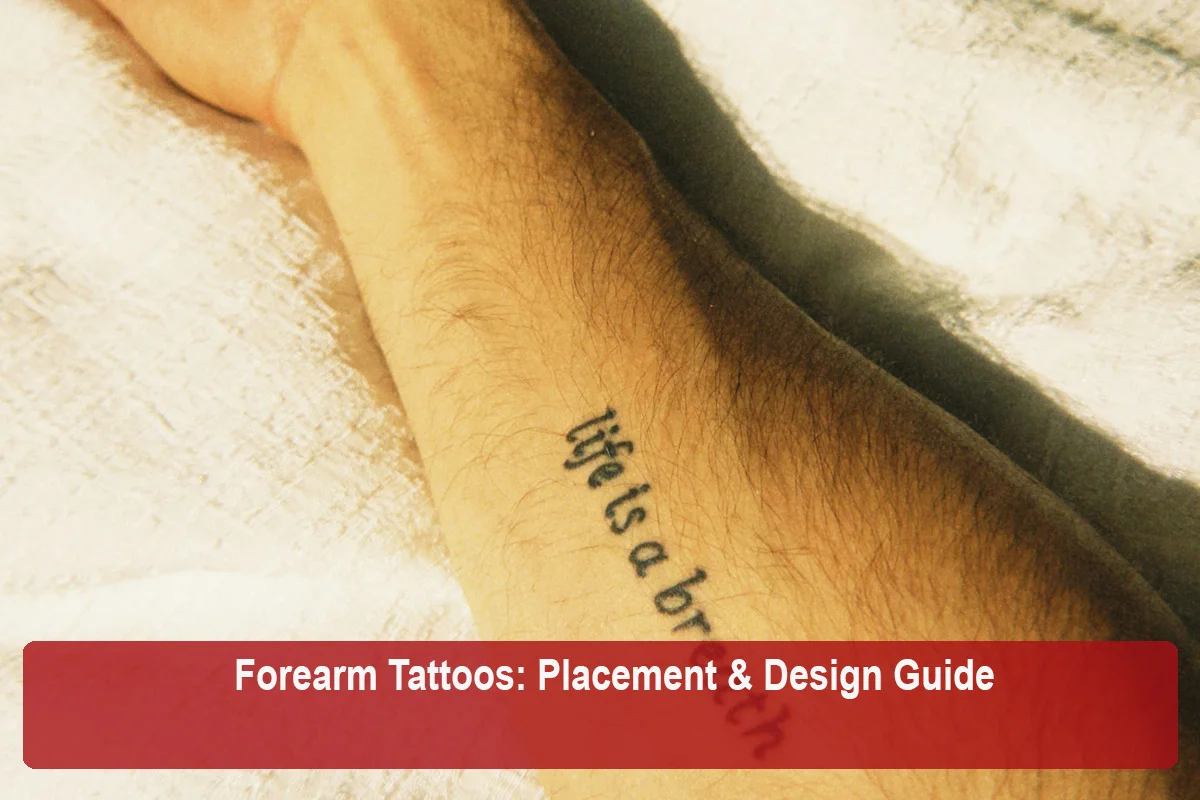
The forearm is one of the most popular tattoo placements, and for good reason. It offers a generous, fairly even canvas, it is easy to show or cover depending on your sleeves, and it suits almost every tattoo style. Many collectors get their first meaningful piece on the forearm, and many sleeves start there too.
This guide focuses on placement and design: the different zones of the forearm, which shapes and compositions suit it best, how to orient a design, how to plan for future work, and how forearm tattoos tend to age. If you want to know about pain specifically, our separate article on whether forearm tattoos hurt covers that in detail.
The forearm combines several qualities that make it attractive to both clients and artists. The surface is relatively stable, with fewer sharp bony points than areas like the ankle or ribs. It is long and roughly cylindrical, which suits vertical designs. It is easy for the artist to access and for you to sit comfortably during the session.
It is also a placement you see every day. Many people love being able to look down and enjoy their tattoo, which is less true of placements like the back or the back of the arm.
The forearm can be divided into several areas, each with its own character.
The inner forearm is smooth, relatively flat, and faces you when your palm is turned up. It is a popular spot for lettering, fine line work, and designs with personal meaning that the wearer wants to see often.
The outer forearm faces outward when your arms hang naturally. It is highly visible to others and is often chosen for bolder designs meant to be seen.
Near the wrist, the forearm narrows and the skin becomes thinner. Designs here tend to be smaller or taper down from a larger piece.
Near the elbow, the forearm widens and meets the elbow joint and the inner elbow crease. Designs here often transition into upper arm work or stop just short of the joint.
Some designs wrap around the entire forearm, either as a band, a continuous scene, or a lower half sleeve. These turn the forearm into a single connected canvas.
The forearm is long and narrow compared to placements like the back or thigh. Designs that follow this shape usually look the most natural.
Square or very wide designs can work too, but they may wrap around the curve of the arm in ways that hide parts of the image. Your artist can help adapt them.
One of the most common forearm questions is which way the design should face. A design that reads correctly when you look down at your arm may appear upside down to someone standing in front of you, and vice versa.
There is no single right answer. Some people choose an orientation that faces them, especially for meaningful lettering or images they want to enjoy. Others orient the design for viewers, treating the tattoo as something to be seen. For figures and animals, many artists orient them upright when the arm hangs naturally at your side, which is how others usually see it.
Decide what matters most to you, and ask your artist to show the stencil in both orientations before you commit.
| Zone | Commonly Chosen Designs | Design Tips |
|---|---|---|
| Inner forearm | Lettering, fine line, botanicals, meaningful symbols | Great for designs you want to see daily |
| Outer forearm | Bold traditional pieces, animals, portraits | Highly visible; strong shapes read well |
| Wrist end | Small symbols, tapering elements, bands | Narrow area; keep details proportionate |
| Elbow end | Transitions into upper arm, framing elements | Plan for how it may connect to future work |
| Full wraparound | Bands, continuous scenes, lower half sleeves | Design should read from multiple angles |
Almost every style suits the forearm, which is part of its appeal. A few common pairings:
Match the style to the artist's specialty and to the amount of detail the size can support.
Many people start with a forearm tattoo and later decide they want more. Planning ahead, even loosely, can make that expansion much easier.
If there is any chance you will build a sleeve, consider these questions:
Placing a small design right in the middle of the forearm can make it harder to fit large pieces around it later. Placing it slightly toward one side or end can leave more flexibility. Mention your long-term plans to your artist so they can position the piece with the future in mind.
The forearm can hold a wide range of sizes, from small symbols to full coverage. As a general principle, more detailed designs need more space. A portrait or detailed animal benefits from using a significant portion of the outer forearm, while a simple symbol can be much smaller.
Consider proportion too. A design that is very small on a large forearm can look lost, especially from a distance. Your artist can help you find a size that balances detail, readability, and the overall look of your arm.
Forearm tattoos are generally considered to age well compared to high-wear placements like hands and feet. The skin is fairly stable and does not experience constant friction.
The main long-term factor for many people is sun exposure, especially on the outer forearm, which is often uncovered in warm weather. Fine lines and light shading tend to show fading first. Protecting healed tattoos from sun, following your artist's aftercare guidance, can help them stay crisp longer.
Forearm tattoos are easy to show with short sleeves and easy to cover with long sleeves. This flexibility makes them a popular choice for people who want visible tattoos without the near-constant visibility of hands or neck.
Still, consider your work environment and the settings you spend time in. If you sometimes need to cover tattoos, the inner forearm and areas closer to the elbow are generally easier to hide under a sleeve than designs near the wrist.
The forearm is commonly reported as one of the more comfortable placements, especially the outer forearm, though areas near the wrist, inner elbow, and bony points may feel more intense for some people. Experiences vary widely. Our separate article on whether forearm tattoos hurt goes into more detail.
The forearm handles both color and black and grey well, so the choice comes down to style, mood, and your existing tattoos. Bold color can make an outer forearm piece pop, while black and grey offers a timeless look that blends easily with future additions.
If you plan to build a sleeve, think about whether you want the whole arm in one approach. Mixing color and black and grey is possible but works best when planned. Your artist can also advise on how particular colors tend to look on your skin tone, which is worth discussing for any color piece.
Forearms often have features an artist will plan around, such as existing tattoos, scars, birthmarks, or prominent veins. Many artists prefer to work around moles rather than tattooing over them, which can influence where elements are placed. Scars may be incorporated or worked around depending on their texture and age.
Mention any of these features when you book, and show them during consultation. A good artist will design with them in mind so the finished piece looks intentional rather than squeezed around obstacles.
For forearm designs, references that show the shape you have in mind are especially helpful. If you want a long, vertical composition, bring examples of designs that follow the arm in that way. Photos of forearm tattoos you admire, alongside references for the subject itself, help your artist understand both the content and the layout you are imagining.
Let the artist adapt the references to your arm's specific length and width. A design built for your forearm will almost always fit better than one copied from someone else's.
Before your forearm session, confirm the final size, orientation, and exact placement with your artist. Take a moment with the stencil in the mirror, letting your arm hang naturally, then turning your palm up and down to see how the design moves. Check any lettering carefully for spelling. These few minutes help ensure the finished tattoo sits exactly the way you pictured it.
The forearm is a flexible, practical placement that suits almost any style and size. The best forearm tattoos follow the arm's long, tapering shape, are oriented with intention, and are placed with an eye on future work.
Think about which zone suits your design, how you want it to face, and whether you might expand later. Share those plans with your artist, and your forearm piece can stand beautifully on its own or become the start of something bigger.
This article was reviewed by the Tattoo Shops Near You Editorial Team for accuracy, clarity, and relevance. We use reliable industry resources, official business information, and other authoritative sources where applicable to help readers make informed decisions about tattoo shops, artists, styles, and services.
Last reviewed: October 2026
Tattoo Ideas & Designs
 Tattoo Ideas & Designs
 Tattoo Ideas & Designs
 Tattoo Ideas & Designs