Illustrative Tattoos: Styles, Ideas & Artists Near You
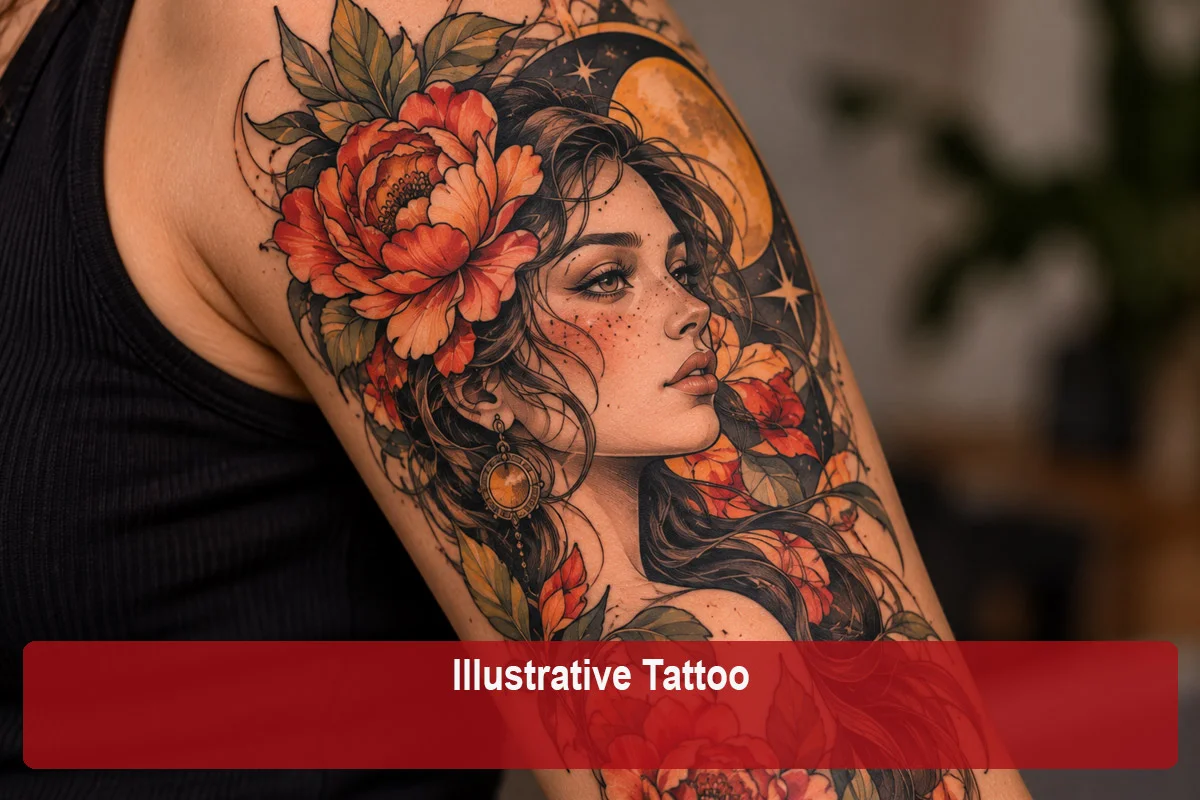
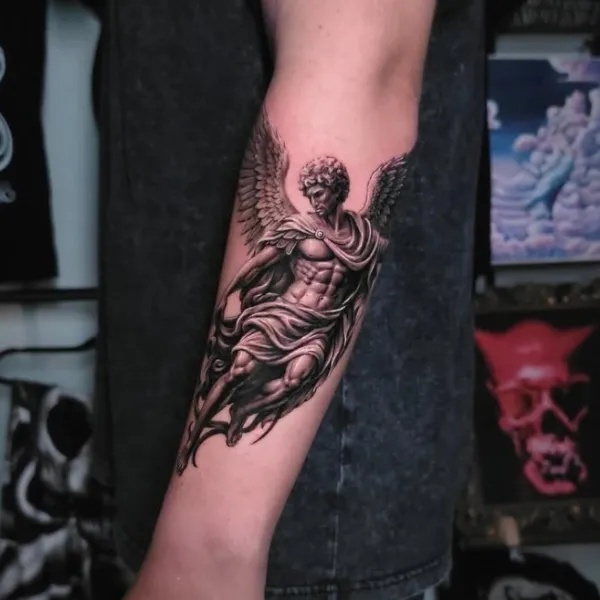
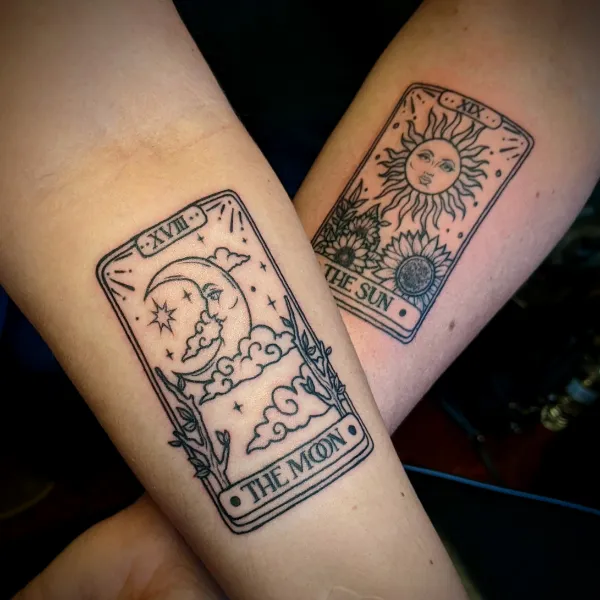
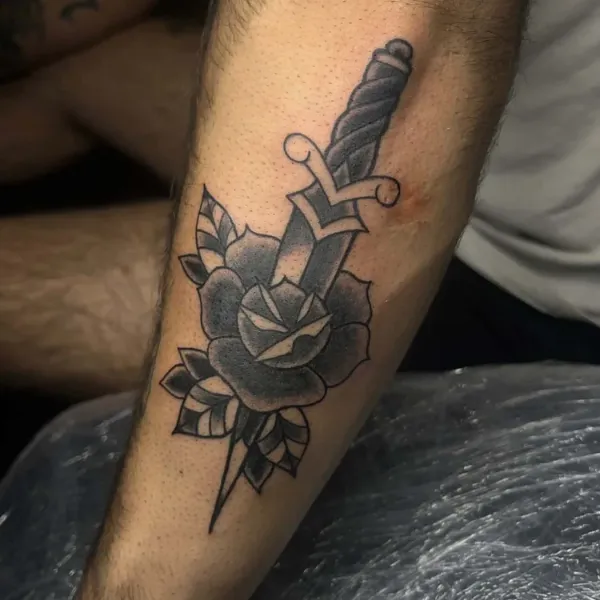
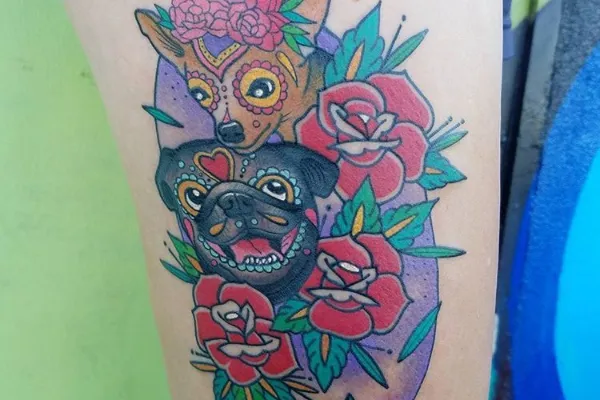
Illustrative is one of the broadest labels in tattooing. It covers any tattoo that looks like it came from a drawing, print, or book rather than from tattoo flash or a photograph: a fox rendered in fine hatching like a nature guide, a moth that resembles an old engraving, a scene that could be a page from a storybook.
Because the label is so broad, two "illustrative" artists can have almost nothing in common. One might work in delicate pen-and-ink hatching, another in bold woodcut-style blocks, another in soft, colorful storybook art. The most useful thing you can do is figure out which kind of illustration you're drawn to, then find an artist in our directory who specializes in it. This page helps with that. Considering other styles too? Compare all tattoo styles.
Illustrative Tattoo Artists & Shops Near You
Browse 18 tattoo artists and shops featuring Illustrative work. Compare portfolios and healed examples before you book.
1502 W Camelback Rd Ste 1, Phoenix, Arizona, 85015
American Traditional, Neo-Traditional, Black & Grey
The Main Families of Illustrative Tattooing
Think of illustrative as a group of related approaches. These are the ones you'll most often see in portfolios:
Etching and engraving. Fine parallel lines and crosshatching that imitate old printed illustrations and banknotes. See our Etching / Engraving guide.
Woodcut and linocut. Bold, carved-looking marks with strong black and open skin, like a relief print. See our Woodcut guide and etching vs. woodcut.
Sketch. Loose, energetic lines that keep the feel of a drawing in progress. See our Sketch guide.
Botanical and scientific illustration. Plants, insects, and animals drawn with the precision of a field guide.
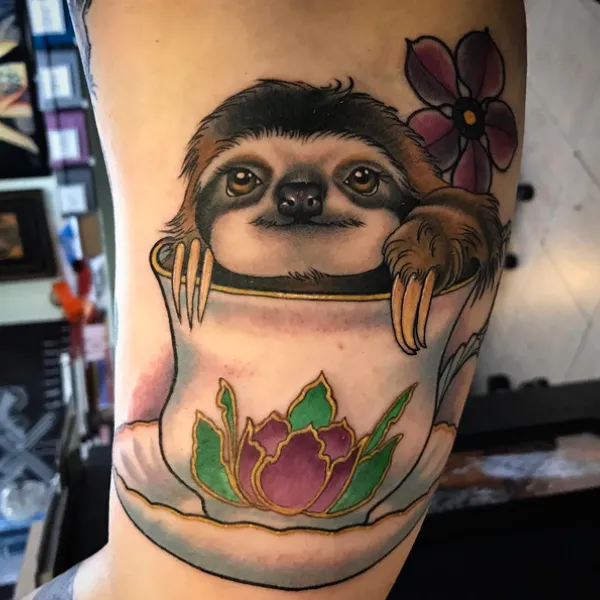
Storybook and fairy tale. Soft shading or gentle color that recalls children's books and fables.
Comic and graphic novel. Strong inking, dramatic shadows, and dynamic compositions borrowed from comics.
Etching, woodcut, and sketch are all illustrative, but each uses line differently.
How Illustrative Tattoos Are Built: Line Hierarchy
What separates a good illustrative tattoo from a busy one is line hierarchy. Strong outlines define the main subject, medium lines describe its form, and the finest lines or hatching add texture and shadow. Your eye reads the subject first, then the detail.
Bold outlines, medium form lines, and fine hatching create a clear hierarchy.
Shading in illustrative work often comes from the lines themselves rather than smooth grey. Hatching (parallel lines), crosshatching (layered lines at angles), and stippling (dots) all create tone. The closer together the marks, the darker the area looks.
That has a practical consequence. All tattoo lines spread slightly over time, so hatching that is very tightly packed can gradually fill in and turn into a solid patch. Good illustrative artists leave enough space between marks for the texture to survive. See what happens when tattoo lines are too close together.
Well-spaced hatching keeps its texture after healing.
How to Brief an Illustrative Artist
Clients often bring tattoo photos as references. For illustrative work, references from outside tattooing are usually more useful. Consider bringing:
Illustrators or printmakers you love: a book illustrator, a vintage nature guide, a comic artist, or an old engraving.
The mood you want: eerie, whimsical, scientific, romantic, or dramatic.
Black only or color: illustrative work can be either, and the decision shapes the design.
Your subject and its story: why this animal, plant, or scene matters to you.
Illustrative tattooing suits subjects with natural texture or a story. Animals with fur or feathers, insects and moths, plants and mushrooms, mythology and folklore, landscapes in small vignettes, and literary scenes are all popular. Framed vignettes, where a scene sits inside a circle or arch, are a common illustrative composition and work well on the forearm, calf, and upper arm.
A framed vignette is a classic illustrative composition.
Size, Color, and Aging
Illustrative tattoos rely on linework and texture, so they need enough size for the marks to stay separate. A design with lots of fine hatching usually needs to be larger than a design built from bold blocks. If you want something small, a woodcut or bold-line illustrative approach will usually age better than fine etching.
Color illustrative work often uses color as a wash over strong linework. Because the linework carries the structure, these tattoos generally keep their shape well as color softens. Black-only illustrative pieces depend on contrast between dense and open areas, so ask how the artist plans that contrast.
Color washes over strong linework keep their shape as the color softens.
Illustrative Tattoos on Darker Skin
Bold illustrative approaches, such as woodcut and heavy inking, show particularly well on darker skin. Very fine hatching and pale color washes carry less contrast, so an artist may suggest bolder lines, larger spacing, or a slightly bigger size. Ask for healed examples on skin tones similar to yours.
Finding the Right Illustrative Artist
Since the label is so broad, start by matching the artist's drawing style to the family you want. Then look closely at healed work for clean, consistent lines, hatching that stays open rather than filling in, and a clear hierarchy that makes the subject easy to read. Many illustrative artists post their drawings and prints as well as tattoos, which can tell you a lot about their style.
Frequently Asked Questions About Illustrative Tattoos
An illustrative tattoo looks like a drawing, print, or book illustration. It uses linework, hatching, and texture rather than flat color or photographic shading, and covers approaches such as etching, woodcut, sketch, botanical, and storybook styles.
Neo-traditional builds on traditional tattoo outlines with ornamental frames and bold color. Illustrative draws on drawing and printmaking, often using hatching and texture instead of solid color, and can be black only or color.
They can, especially when hatching and fine details have enough space between marks. Very tightly packed linework can fill in over time, so size and spacing are important.
Yes. Many illustrative tattoos use color washes over strong linework, while others are black only. Discuss which approach suits your design with your artist.
Bring references from illustrators, prints, or books you like, a sense of the mood you want, and your subject's story. These help the artist create an original design in their own style.