
 Getting a Tattoo
How to Plan a Tattoo Sleeve
Published On 07-10-2026
Published by the Tattoo Shops Near You Editorial Team
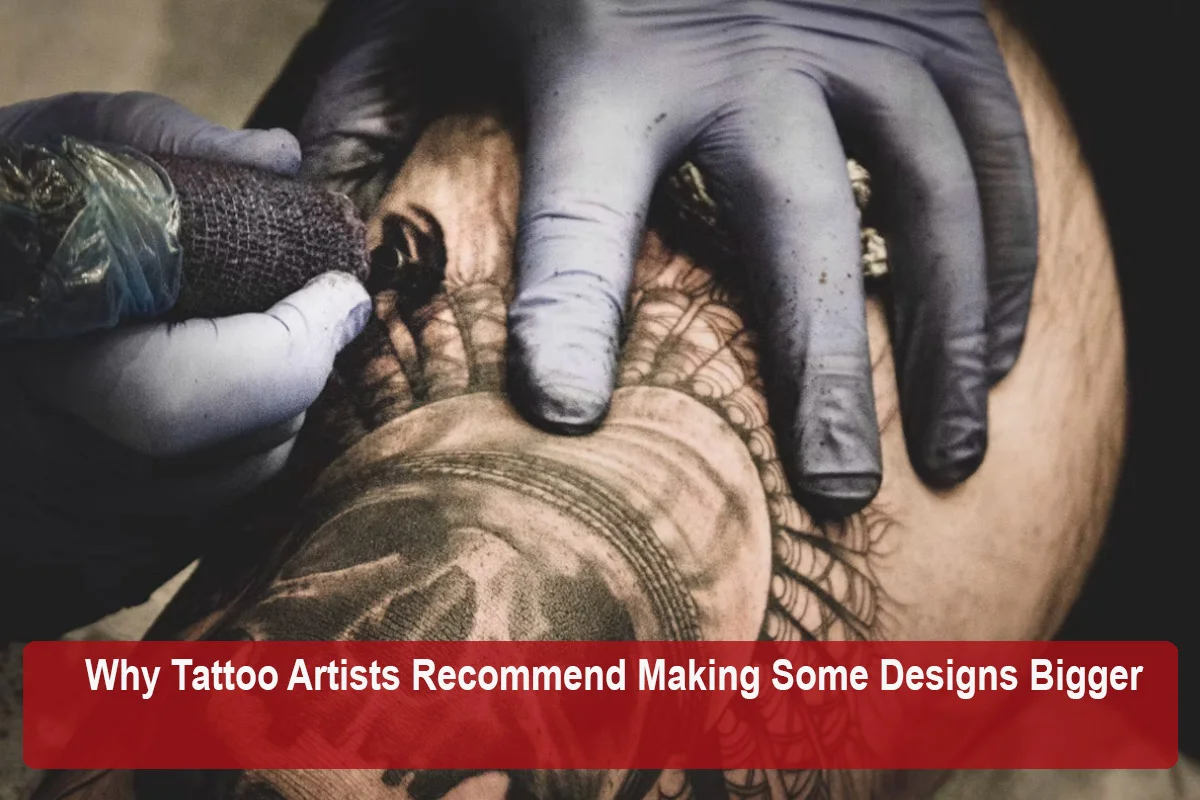
Hearing an artist suggest making your design bigger than you originally pictured can feel like an unexpected pushback on your idea, but this recommendation almost always comes from technical experience rather than a simple preference for larger work. Understanding the reasoning behind it helps you evaluate the suggestion on its merits rather than feeling like your original vision is being dismissed.
When an artist suggests sizing up, it is almost always about how the finished tattoo will look in the years ahead, not how it will look on the day it is finished. A design that would look perfectly fine fresh at a smaller size can lose definition as it settles and ages, and increasing the size gives the same content more room to hold its clarity over time.
A few common triggers lead artists to recommend a size increase: fine text that would otherwise become illegible, multiple small elements packed closely together that risk blurring into each other, delicate shading or gradient work that needs more physical space to preserve its tonal range, and intricate detail that simply has nowhere to go if compressed into too small an area. Recognizing which of these applies to your specific design helps you understand exactly what the size increase is meant to solve.
An artist suggesting a larger size is not dismissing your original idea, they are trying to help that same idea actually succeed as a tattoo rather than as just a drawing. Approaching this recommendation as a collaborative problem-solving conversation, rather than a personal critique of your taste or judgment, tends to lead to a more productive discussion about how to move forward.
Rather than immediately accepting or rejecting the suggestion outright, it is worth asking your artist to explain specifically which elements are driving the recommendation, and what the tradeoffs would be if you kept the original size anyway. This gives you enough information to make a genuinely informed decision rather than simply deferring or pushing back without understanding the reasoning.
Sometimes there is room to negotiate a middle ground, a size increase that is more modest than what the artist might ideally prefer, combined with some simplification of the most vulnerable details. This kind of compromise is worth discussing directly if your original size matters enough to you that you would rather adjust the content somewhat than the overall scale.
A larger design generally means more time to complete, which affects the overall cost, since most shops price larger or more time-intensive work accordingly. It is worth asking directly how a suggested size increase affects the expected price, so you can factor this into your decision alongside the purely visual and technical considerations.
If keeping a smaller size matters enormously to you, for a specific placement reason, a personal preference, or simply your own comfort level with a larger commitment, it is reasonable to have an honest conversation with your artist about accepting some tradeoff in long-term crispness in exchange for keeping the design at your preferred scale. A good artist should be willing to have this conversation honestly, laying out the realistic tradeoff rather than simply insisting on their initial recommendation.
A small floral design with several individual petals and leaves, sized up even modestly, gives each element enough breathing room to stay visually distinct as the tattoo ages, rather than the petals blurring into an indistinct shape. A piece of delicate script, given more overall length and letter spacing, holds its legibility considerably better than the same words compressed into a tighter space. These kinds of concrete examples are worth asking your artist to walk through specifically for your own design.
| What Prompts the Recommendation | What Sizing Up Solves |
|---|---|
| Fine or delicate text | Preserves legibility as the tattoo ages |
| Multiple small elements close together | Keeps individual pieces from blurring into each other |
| Detailed shading or gradients | Gives tonal transitions enough room to hold their depth |
| Intricate overall detail | Gives fine linework enough space to stay distinct over time |
It is worth distinguishing between a technically grounded recommendation tied to your specific design's content, and an artist who generally prefers working larger regardless of the actual details involved. Asking specifically why they are recommending a larger size for your particular idea, rather than accepting a vague general preference, helps you understand whether the feedback is genuinely tailored to your design or more of a default habit.
Some artists have a policy of declining designs below a certain size regardless of content, simply because they are not interested in taking on work they consider unlikely to hold up well long-term, or because very small pieces do not fit their preferred working style. This is a different situation from a specific recommendation tailored to your design, and it is worth clarifying which scenario you are actually in during your conversation.
When discussing a size recommendation, bringing a printed reference at the actual physical dimensions you are picturing, rather than just a digital image at an arbitrary zoom level, gives both you and your artist a much more concrete, shared basis for the conversation than an abstract discussion of inches or centimeters alone.
If you consult with more than one artist and hear a similar recommendation to size up, that consistency across independent professional opinions is a meaningful signal worth taking seriously, since it suggests the concern is rooted in genuine technical reality rather than one individual artist's personal preference or working style.
A size recommendation rarely arrives as an isolated comment. It usually comes alongside a broader conversation about placement, detail level, and how the whole design is expected to age, all of which are connected considerations rather than separate, unrelated pieces of feedback. Understanding the size suggestion as part of this bigger picture, rather than in isolation, helps it feel less like an arbitrary demand and more like one piece of a coherent, thoughtful plan for your tattoo.
If you do decide to go along with a size increase, it can help to mentally reframe the adjusted design as the version that will actually deliver what you originally wanted, a clear, lasting piece you'll be happy with for years, rather than viewing it as a compromise or a lesser version of your original idea. The recommendation exists specifically to help your vision succeed, not to water it down.
Clients who follow a genuine, well-reasoned size recommendation tend to report considerably more satisfaction with their tattoo years down the road than those who insisted on keeping an original, undersized concept against their artist's advice. This long-term payoff is ultimately the whole point of the recommendation in the first place.
A well-reasoned size recommendation is specific to your design, not a blanket policy applied to every client regardless of what they bring in. An artist who can point to exactly which elements of your particular idea prompted the suggestion, rather than offering a vague, generic explanation, is demonstrating the kind of genuine technical reasoning this recommendation should be grounded in.
Once you understand why this recommendation happens and how to evaluate it thoughtfully, you carry that understanding into every future tattoo consultation, not just your current one. This makes you a more informed collaborator in the design process generally, better equipped to have a productive conversation with any artist about sizing, regardless of the specific project.
A size recommendation, properly understood, is one of the clearer signs that an artist is thinking seriously about your long-term satisfaction rather than simply executing whatever is requested without question. Approaching this feedback with openness, while still asking the specific questions that help you understand and, where reasonable, negotiate it, tends to produce both a better final tattoo and a more collaborative, trusting relationship with your artist.
This article was reviewed by the Tattoo Shops Near You Editorial Team for accuracy, clarity, and relevance. We use reliable industry resources, official business information, and other authoritative sources where applicable to help readers make informed decisions about tattoo shops, artists, styles, and services.
Last reviewed: September 2026
Getting a Tattoo
 Getting a Tattoo
 Getting a Tattoo
 Getting a Tattoo