
 Tattoo Ideas & Designs
Patchwork Sleeve vs Full-Composition Sleeve
Published On 07-10-2026
Published by the Tattoo Shops Near You Editorial Team
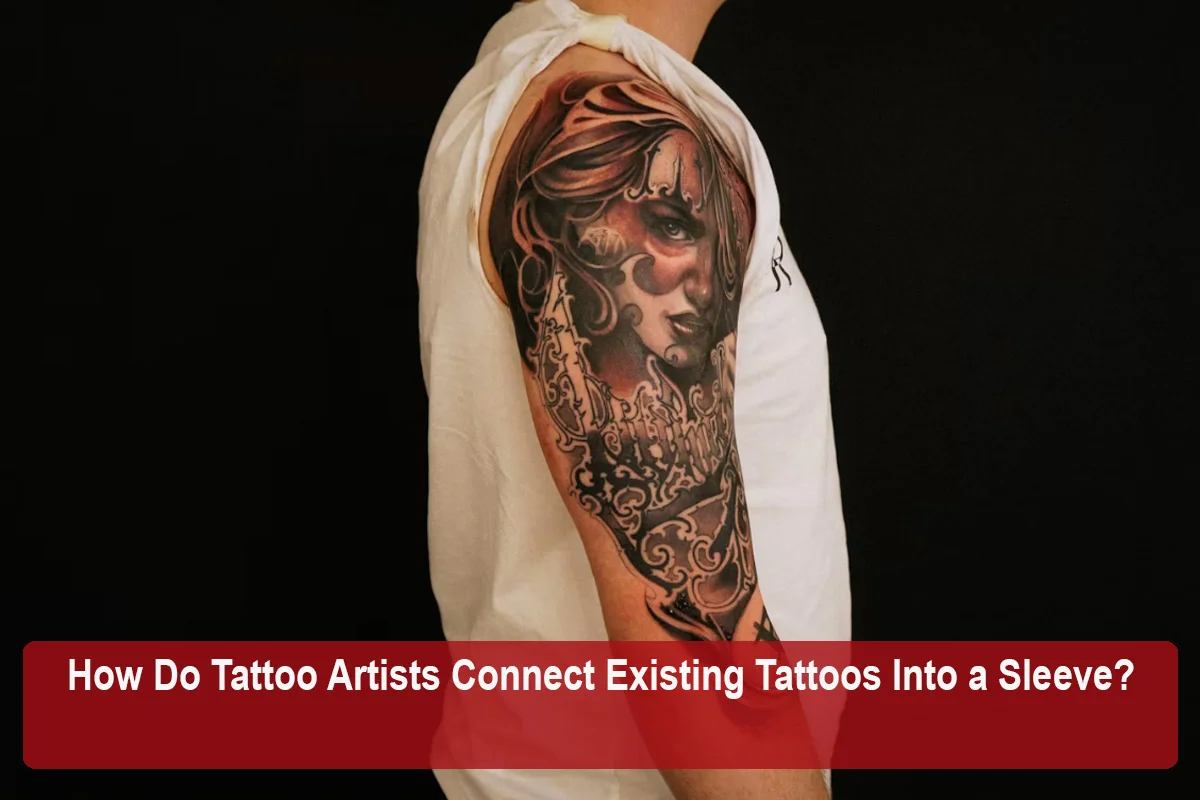
Many sleeves do not start as sleeves. They begin as a few separate tattoos collected over the years, often from different artists, in different styles, placed wherever made sense at the time. Eventually, many collectors decide they want those pieces to come together as one finished arm. The good news is that skilled artists connect existing tattoos into sleeves all the time.
This guide explains how artists approach the process, the techniques they use to link unrelated pieces, how older tattoos may be refreshed or reworked, what to do with pieces that do not fit, and how to prepare for a consultation.
The first step is usually a careful look at what you already have. An artist will consider:
This assessment shapes everything that follows. Our article on what happens at a tattoo consultation explains how these conversations usually work.
The most common way to connect tattoos is with background. Filler fills the spaces between existing pieces and links them visually. Common filler options include:
The artist chooses filler that complements your existing tattoos and suits the overall style you want.
Larger gaps may call for new main elements rather than just background. An artist might add a new image that bridges two existing tattoos, such as a snake winding between pieces, a branch connecting flowers, or a banner linking two designs. These connecting pieces give the sleeve new focal points while tying the old work together.
When existing tattoos differ in color, a consistent background tone can help them feel related. For example, a black and grey background can unify a mix of color and black and grey pieces. In a color sleeve, repeating certain colors in the filler can echo colors in existing tattoos. The aim is to give the eye a common thread across the whole arm.
Older tattoos may have softened lines or faded color. To help them sit comfortably next to new work, an artist may:
Reworking an existing tattoo means changing it, so discuss exactly what will be adjusted before agreeing. Our article on whether a tattoo artist can change your design covers how to approach these conversations.
Sometimes one existing tattoo does not fit the direction of the sleeve, perhaps because of its style, size, condition, or because you no longer like it. Options include incorporating it into a larger new design, covering it with a bolder or darker piece, or blacking it out as part of a blackwork section. For very dark or large pieces, some people consult qualified professionals about laser lightening before a cover-up, which can give the artist more flexibility.
| Technique | How It Works | Best For |
|---|---|---|
| Background filler | Fills gaps with wind, smoke, foliage, patterns | Most sleeves with moderate gaps |
| New connecting pieces | Adds new images that bridge existing tattoos | Large gaps or few existing pieces |
| Unifying tone | Uses consistent background color or shading | Mixed color and black and grey work |
| Refresh or rework | Re-darkens or updates older tattoos | Faded or softened pieces |
| Cover-up or blackout | Replaces or hides pieces that do not fit | Unwanted or incompatible tattoos |
Connecting tattoos in very different styles, such as a delicate fine line piece next to bold traditional work, is one of the biggest challenges. Options include bolding up the delicate piece, framing each piece in a way that makes the contrast feel deliberate, or using strong background to separate and unify them at once. A skilled artist can often make a mixed collection look intentional, but it may require more creative compromise.
When connecting tattoos from other artists, many artists take care to respect the original work. They may avoid altering a well-executed piece more than necessary and focus on supporting it with background. If an existing piece is by a well-known artist or holds deep meaning for you, say so, and discuss how much it should be changed.
Connecting existing work takes specific skills: composition, adaptability, and the ability to design around fixed elements. Look for artists whose portfolios show finished sleeves that incorporate previous tattoos, ideally with before and after photos. Healed results matter too. Our guide on how to read a tattoo artist's portfolio explains what to look for.
Choose an artist whose style matches the direction you want your finished sleeve to take, since their filler and new pieces will shape the final look.
Our article on what to bring to a tattoo consultation has more tips.
Gaps often sit in awkward places, such as the elbow, inner elbow, inner upper arm, or around the wrist. These areas are commonly reported as more sensitive and can be harder to tattoo smoothly. Artists often use patterns, background shading, or simple elements there rather than detailed imagery. Planning how to fill these spots is part of creating a finished sleeve that looks complete from every angle.
Connecting existing tattoos can take anywhere from one session to many, depending on how much space needs filling, whether pieces need reworking, and how detailed the filler is. Large gaps and heavy background work take more time. Ask your artist for an estimate after the assessment.
Filler and background work is charged like any other tattoo time, and reworks or cover-ups can add to the total. Pricing varies widely by artist and region. Some collectors are surprised by how much time background takes, since it often covers more skin than the original pieces. Planning your budget per session helps keep the project manageable.
Several traditional flash pieces: an artist may add stars, dots, and small traditional symbols between pieces, or solid black background, to create a tight patchwork or full traditional sleeve.
Mixed color and black and grey pieces: an artist may use black and grey smoke or shading as a unifying background, keeping the color pieces as highlights.
One large piece and a few small ones: an artist may design new connecting elements that extend from the large piece and wrap around the smaller ones.
An old faded tattoo among newer work: an artist may refresh it or rework it so it matches the clarity of the surrounding pieces.
A connected sleeve will rarely look exactly like one designed from scratch. Existing tattoos set fixed points that the artist must work around. Embrace this as part of the sleeve's story. A skilled artist can create a cohesive, impressive result, but some compromise is natural. Being open to the artist's suggestions usually leads to the best outcome.
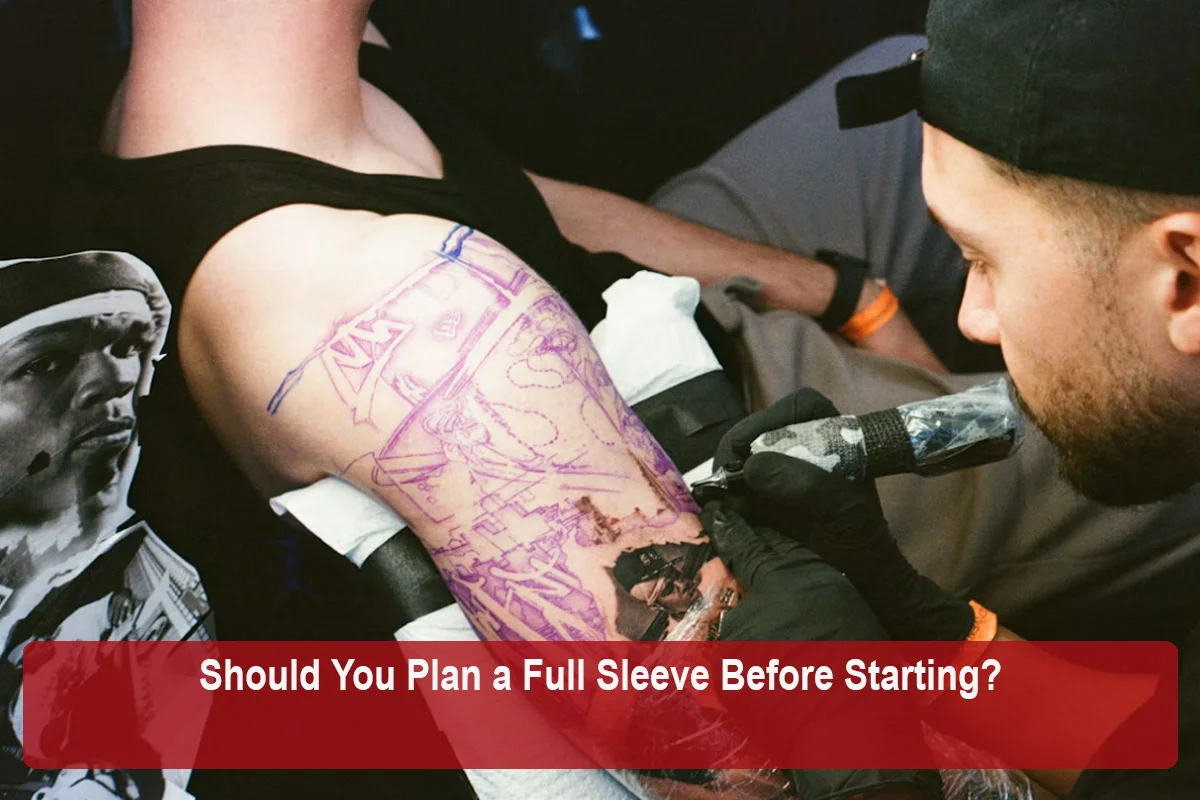
When connecting existing tattoos, look at the arm as one canvas rather than a set of gaps. Ask your artist to show you a rough plan of the finished sleeve, even if it is a quick sketch over a photo. Seeing the end goal helps you make decisions about what to keep, rework, or cover, and keeps every session moving toward a cohesive result.
Because filler often surrounds existing tattoos, each session may leave large areas healing at once. Follow your artist's aftercare instructions closely, and allow full healing before the next session in the same area. Healed results also show how well new filler blends with older work, which can guide decisions in later sessions.
Connecting tattoos is a collaborative process. Share your feelings as the sleeve develops. If a filler choice is not working for you, say so early rather than waiting until the end. Good artists welcome feedback and adjust their approach to keep the sleeve moving in a direction you love.
A connected sleeve carries the history of every piece that came before. Many collectors love that their finished arm tells the story of how it grew.
Turning existing tattoos into a sleeve is one of the most rewarding projects in tattooing. Artists connect separate pieces using background filler, new connecting images, unifying tone, refreshes, and when needed, cover-ups. The result can be a sleeve that feels cohesive while still honoring the tattoos that started it.
Start with a clear assessment of what you have, decide what matters most to you, and choose an artist experienced in building sleeves around existing work. With a thoughtful plan, your collection can become one finished arm.
This article was reviewed by the Tattoo Shops Near You Editorial Team for accuracy, clarity, and relevance. We use reliable industry resources, official business information, and other authoritative sources where applicable to help readers make informed decisions about tattoo shops, artists, styles, and services.
Last reviewed: October 2026
Tattoo Ideas & Designs
 Tattoo Ideas & Designs
 Tattoo Ideas & Designs
 Tattoo Ideas & Designs