
 Getting a Tattoo
How to Plan a Tattoo Sleeve
Published On 07-10-2026
Published by the Tattoo Shops Near You Editorial Team
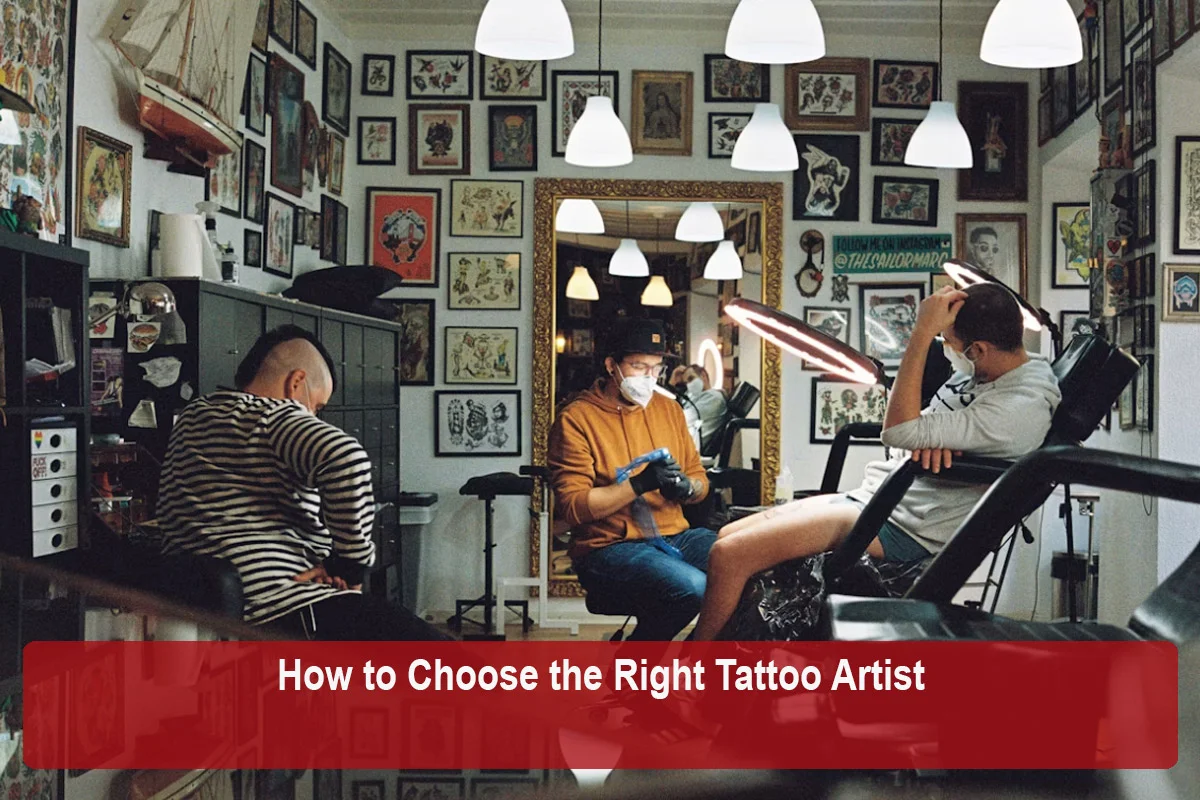
The artist you choose has more influence on your tattoo than almost any other decision. The same idea can turn out completely differently depending on who draws and tattoos it. Finding the right artist is not about finding the most famous name or the closest studio. It is about finding the person whose skills, style, and approach match the specific tattoo you want.
This guide is for anyone choosing an artist, whether you are planning a single piece or building a larger collection over time. It covers how to define what you need, how to evaluate portfolios, how to judge fit and communication, and how to think about the practical side of booking.
Before you start searching, get clear on what you want. You do not need a finished design, but you should know the general style, approximate size, placement, and whether it will be color or black and grey. These details determine which artists are a realistic match.
A realistic portrait, a bold traditional panther, a delicate fine line botanical, and a large Japanese back piece all require different skills. Many artists focus on one or two styles and do them extremely well. Knowing your style narrows the search from every artist nearby to the handful who specialize in what you want.
If you are unsure which style suits your idea, spend time browsing different styles first. Save images you love and look for common threads. You may find you are consistently drawn to certain line weights, color palettes, or levels of detail.
Most experienced artists can technically tattoo many styles, but specialists tend to produce the strongest results in their area. They have refined their technique through repetition, they understand how their style ages, and they design with that style's strengths in mind.
Asking an artist to work far outside their specialty can lead to a tattoo that looks acceptable but lacks the confidence and finish of work from someone who lives in that style every day. Many artists will openly refer clients to colleagues when a request does not suit them, which is a sign of professionalism rather than a lack of skill.
An artist's portfolio is the best evidence of what they can do for you. Go beyond scrolling for pieces you like and evaluate the work with your specific project in mind.
One great piece in your style is encouraging. Many great pieces in your style is much more reassuring. Look for consistency across the portfolio rather than a single standout.
Look at line quality: are lines smooth, steady, and consistent in weight? Look at shading: are transitions smooth without patchiness? Look at color, if relevant: is it saturated and even? These fundamentals separate strong artists from average ones.
Fresh tattoos are often photographed in ideal lighting while the ink is at its brightest. Healed photos show how the work settles over time. Artists who share healed work regularly are showing confidence in how their tattoos last.
Look for work at a similar size and placement to what you want. An artist who excels at large sleeves may approach small pieces differently, and vice versa. Seeing how they handle your intended placement is valuable.
If you want a custom piece, look for evidence that the artist designs original work rather than only reproducing existing images. Custom design is a skill in its own right.
The scale of your project influences who is the best fit.
For a single, small to medium piece, the most important factors are style match and execution quality. You may only see the artist once or twice.
For a large project, such as a sleeve, back piece, or bodysuit, you are entering a long-term working relationship. Multiple sessions over months or longer mean that communication, reliability, and how comfortable you feel in their chair become just as important as their portfolio. Ask how they plan large projects, how they schedule ongoing sessions, and how they handle design changes along the way.
For a collection built over time, consider whether you want one artist to guide the overall look or prefer to collect work from different artists. Both approaches are valid. One artist creates cohesion; many artists create variety.
Every client is different, and some situations benefit from specific experience. Consider asking about relevant work if any of the following apply:
An artist who shows relevant examples and explains limitations honestly is giving you useful information.
Technical skill is essential, but the experience of working with an artist also matters. You will share ideas, receive feedback, and spend hours in their company.
Signs of a good fit include listening carefully to your ideas, asking thoughtful questions, offering honest suggestions about size, placement, or design, and explaining the reasons behind those suggestions. A good artist respects your vision while bringing their expertise to make it work as a tattoo.
Be cautious if an artist dismisses your concerns, refuses to explain their recommendations, or makes you feel rushed. Equally, be open to constructive input. An artist who suggests making a design larger or simplifying details is often protecting the long-term quality of your tattoo.
Artists manage bookings in different ways, and understanding them helps set expectations.
If an artist you love has a long wait, consider whether the wait is worthwhile. For a significant or large piece, it often is.
Many collectors travel to work with a specific artist, and many artists travel for guest spots at other studios. Both open up options beyond your local area.
If you plan to travel, factor in the cost and time of travel, the possibility of multiple sessions, and the practicalities of healing away from home. For guest spot bookings, ask how touch-ups are handled, since the artist may not return to that location soon.
Pricing varies widely based on the artist's experience, demand, location, and the complexity of the work. Some charge by the hour, others by the piece, and many have a shop minimum for small tattoos.
Price is a reasonable factor to consider, but choosing an artist mainly because they are the cheapest option rarely leads to the best result. A tattoo is permanent, and correcting or covering a poor tattoo often costs more than getting it done well the first time. Ask how the artist prices your project so you can plan with confidence.
When you bring references, use them to communicate style and mood rather than asking for a direct copy of another artist's tattoo. Most artists prefer to create original designs and many will decline to copy someone else's work. Choosing an artist because you admire their own style, then letting them design for you, usually produces the best and most personal results.
| Factor | What to Look For | Why It Matters |
|---|---|---|
| Style specialty | Repeated strong work in your style | Specialists usually produce the most refined results |
| Fundamentals | Clean lines, smooth shading, even color | Strong technique underpins every style |
| Healed work | Regularly shared healed photos | Shows how tattoos age over time |
| Relevant experience | Similar size, placement, skin tone, or cover-ups | Confirms they can handle your specific situation |
| Communication | Clear, honest, respectful responses | Essential for design and long projects |
| Availability | A booking timeline that suits your plans | Helps you plan and set expectations |
| Shop standards | Licensed, clean, clear policies | Protects your safety and investment |
A consultation, whether in person or by message, is your chance to confirm that an artist is right for your project before committing. Share your idea, references, size, and placement, and pay attention to how the artist responds. Do they understand what you are aiming for? Do they offer ideas that improve the concept? Are they realistic about what will work on your chosen placement?
It is also a good moment to ask practical questions: how they price the work, how many sessions they expect, when you will see the design, and how revisions are handled. You do not have to book with the first artist you consult. Speaking with two or three artists for a significant piece is common and helps you compare approaches.
Many collectors return to the same artist again and again. An artist who knows your existing tattoos, your skin, and your taste can plan new pieces that fit your collection and suggest ideas you might not have considered. Being a reliable client helps that relationship too: arriving on time, following aftercare advice, respecting deposit policies, and communicating clearly if plans change. Over time, that mutual trust often leads to the best work.
Choosing the right tattoo artist starts with knowing what you want, then finding someone who specializes in it and has the healed work to prove it. From there, consider your project's scope, any specific circumstances, how well you communicate, and how their booking system and pricing fit your plans.
Take your time, ask questions, and trust both the evidence in their portfolio and your instincts about working with them. The right artist will not just tattoo your idea. They will help turn it into something better than you imagined.
This article was reviewed by the Tattoo Shops Near You Editorial Team for accuracy, clarity, and relevance. We use reliable industry resources, official business information, and other authoritative sources where applicable to help readers make informed decisions about tattoo shops, artists, styles, and services.
Last reviewed: October 2026
Getting a Tattoo
 Getting a Tattoo
 Getting a Tattoo
 Getting a Tattoo