Tribal Tattoos: History, Neo-Tribal Designs & Artists Near You
"Tribal" usually refers to bold, solid black tattoos made of flowing, pointed, interlocking shapes that follow the muscles of the body. In the 1990s, it was one of the most popular tattoo styles in the Western world: the armband, the lower back piece, the shoulder flame. Today it's having a revival, reworked into sharper neo-tribal designs.
The word itself causes confusion. Western tribal tattooing is a modern style inspired by older Indigenous traditions, but it isn't the same as those traditions. This guide explains where the style came from, how to approach it respectfully, what's happening with neo-tribal now, and what to do if you already have an old tribal tattoo you want to change. If you're interested in a specific cultural tradition, see our Polynesian and Māori guides.
Tribal Tattoo Artists & Shops Near You
Browse 1 tattoo artists and shops featuring Tribal work. Compare portfolios and healed examples before you book.
Bold black patterns are among the oldest forms of tattooing, with deep traditions in Borneo, the Philippines, Polynesia, and many other parts of the world. Modern Western tribal tattooing grew from artists who studied those traditions in the late twentieth century.
The artist most closely associated with it is Leo Zulueta, often called the father of modern tribal tattooing. He explored Bornean tattooing in the 1970s, was encouraged to become a tattooist by Don Ed Hardy after they met in 1976, began tattooing professionally in 1981, and founded Black Wave Tattoo in Los Angeles in 1992. His flowing, abstract black designs influenced a generation of artists, and through the 1990s the style spread into mainstream culture.
As the style spread, many designs drifted away from any original meaning and became decorative shapes. That's how "tribal" came to mean a look rather than a specific tradition.
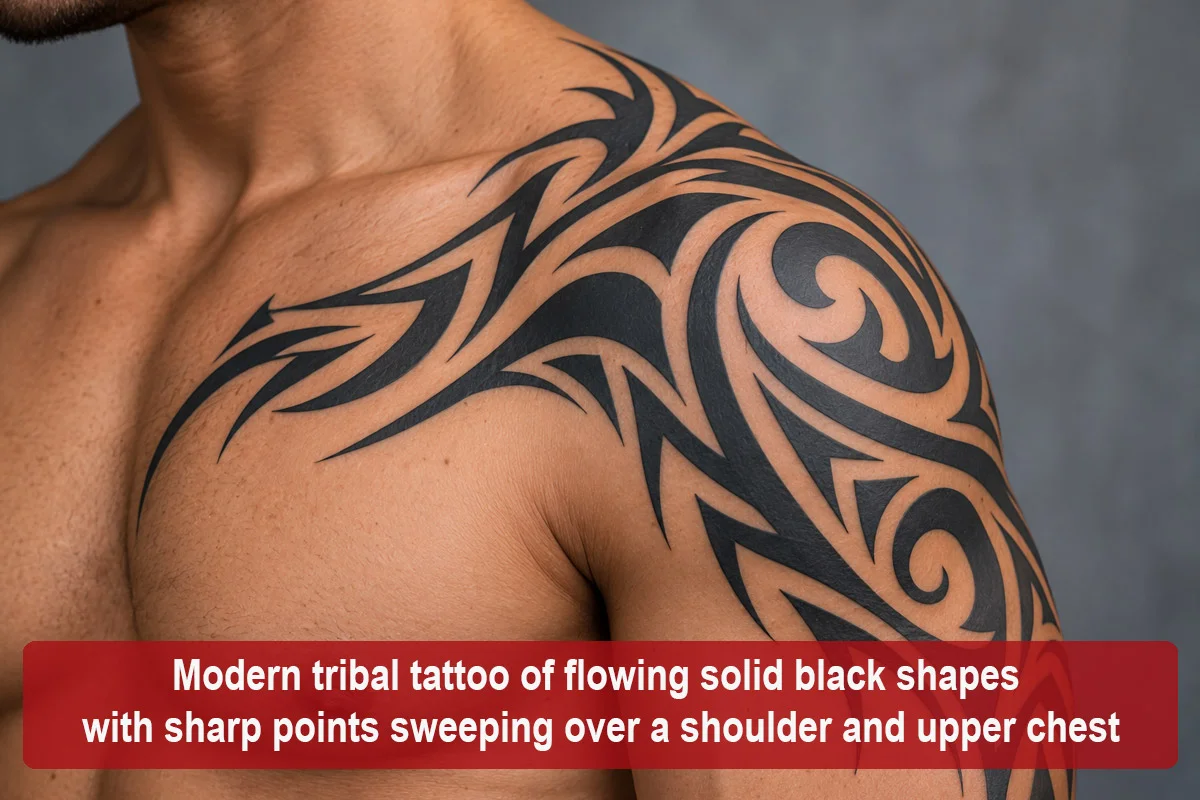
Flowing solid black shapes that follow the shoulder and chest.
What Defines the Tribal Style
Solid black. Tribal relies on fully saturated black shapes with no shading or color.
Flow with the body. Shapes are designed to follow muscles, bones, and curves, sweeping around the shoulder, along the ribs, or down the calf.
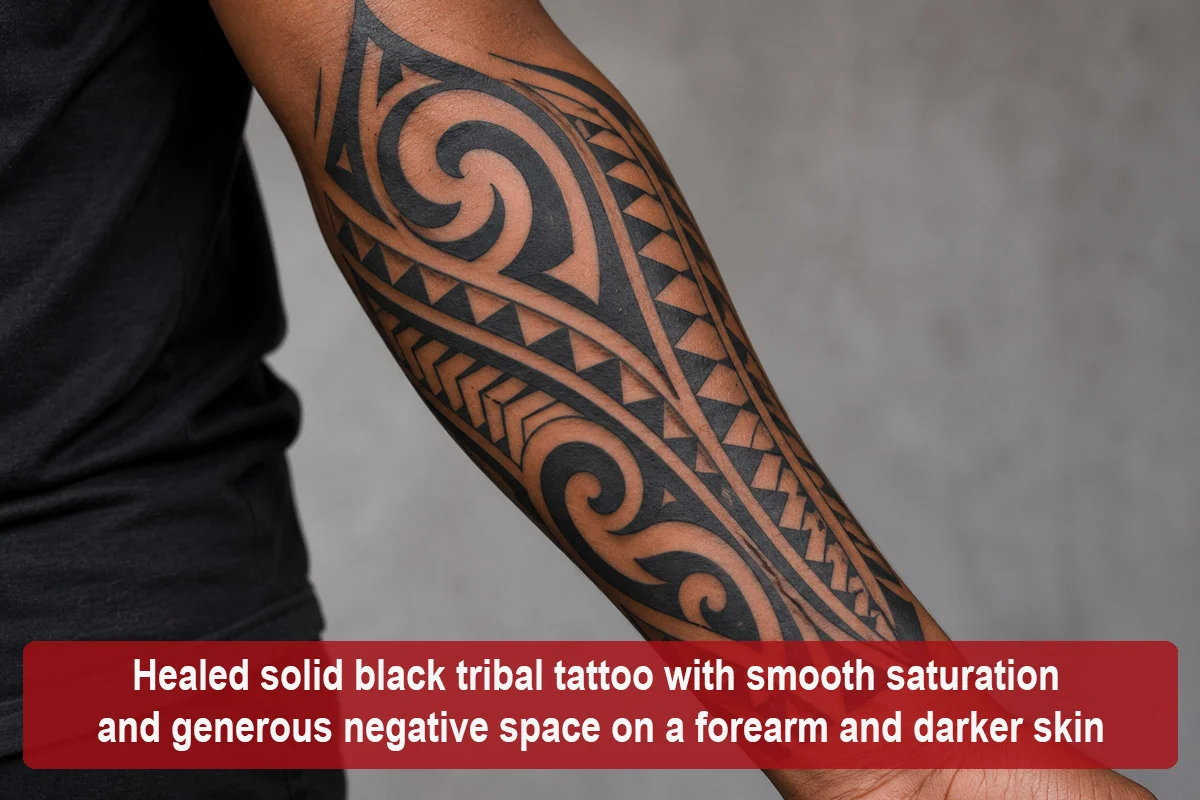
Negative space. The skin between black shapes is part of the design, creating the sharp points and channels that define the look.
Abstract forms. Most Western tribal designs are abstract rather than pictorial, though some incorporate animals or symbols in silhouette.
The skin between the black shapes is part of the design.
Choosing a Tribal Design Respectfully
Some patterns associated with "tribal" come from living cultures where tattoos carry genealogy, status, and spiritual meaning. Copying those specific designs as decoration can be disrespectful to the communities they belong to. A few practical guidelines:
Ask where a design comes from. A good artist can tell you whether a design is an original abstract tribal piece or based on a specific cultural tradition.
Don't copy someone else's cultural tattoo. In many traditions, designs are personal and tied to family and identity.
If you want a cultural tattoo, go to the source. Seek out artists who belong to or are trained in that tradition, such as Polynesian or Māori practitioners.
Original abstract tribal is a different thing. Flowing black designs created for your body, without borrowing specific cultural motifs, are a modern art style in their own right.
Neo-Tribal: The Revival
Tribal is back, but it looks different. Neo-tribal designs tend to be sharper, thinner, and more angular, mixing tribal flow with influences from graphic design, Y2K aesthetics, and other blackwork styles. Thin, spiky linework that branches across the body has developed into its own style, Cyber Sigilism, while heavier neo-tribal pieces overlap with Blackwork.
Neo-tribal is sharper, thinner, and more angular than 1990s tribal.
Updating or Covering an Old Tribal Tattoo
Many people have a 1990s tribal tattoo they'd like to change. Because tribal is solid black, it can't simply be covered with lighter work, but there are good options:
Rework it. An artist can redraw and extend the existing shapes into a cleaner, more modern tribal or neo-tribal design, often the most natural route.
Incorporate it into blackwork. The old design can become part of a larger blackwork, ornamental, or geometric piece.
Black it out. Some people cover old tribal with a solid black area or a blackout design, sometimes with linework added on top later.
Lighten it first. A few laser sessions can lighten old black ink enough for a more detailed or colorful cover-up. Removal of solid black typically takes multiple sessions.
An old tribal armband reworked and extended into a modern design.
How Tribal Tattoos Age and Look on Different Skin Tones
Tribal is one of the most durable styles. Solid black is the longest-lasting tattoo pigment, and bold shapes with clear negative space stay readable for decades. The main risk is narrow channels of skin between black shapes, which can close up over time, so a good design keeps those gaps generous.
Solid black tribal shows strongly on every skin tone, which is one reason it suits darker skin especially well. If you're prone to keloids or raised scarring, mention it at your consultation, since large solid black areas involve more skin trauma.
Solid black tribal shows strongly on every skin tone.
How to Choose a Tribal Artist
Smooth, solid black in healed photos, with no patchiness.
Sharp, clean points and curves.
Designs that flow with the body, drawn for each person rather than repeated from flash.
Cover-up and rework experience if you're updating an old piece.
Clear answers about design origins.
Find a Tribal Tattoo Artist Near You
Browse tribal and neo-tribal artists in our directory, then compare their healed black work and custom flowing designs. Related styles include Blackwork, Cyber Sigilism, Polynesian, Māori, and Ornamental.
Frequently Asked Questions About Tribal Tattoos
In Western tattooing, a tribal tattoo is a bold, solid black design made of flowing, pointed shapes that follow the body. The modern style was inspired by older Indigenous tattoo traditions but is a distinct contemporary style.
Leo Zulueta is often called the father of modern tribal tattooing. Inspired by Bornean tattooing, he began tattooing professionally in 1981 and founded Black Wave Tattoo in Los Angeles in 1992.
It depends on the design. Original abstract tribal designs are a modern style, but copying specific cultural designs with personal or spiritual meaning can be disrespectful. Ask your artist where a design comes from, and go to artists from that tradition for cultural tattoos.
Neo-tribal is the modern revival of tribal tattooing, with sharper, thinner, and more angular shapes influenced by graphic design and blackwork. Spiky, branching versions have developed into the Cyber Sigilism style.
Common options are reworking it into a new tribal design, incorporating it into a larger blackwork piece, blacking it out, or lightening it with laser before a more detailed cover-up. An artist experienced in cover-ups can recommend the best route.
Tribal tattoos are among the most durable, because solid black ink holds well. The main change over time is that narrow gaps between black shapes can soften, so generous spacing helps.