 Tattoo Care & Healing
Why Do Hand Tattoos Fade?
Published On 05-10-2026
Published by the Tattoo Shops Near You Editorial Team
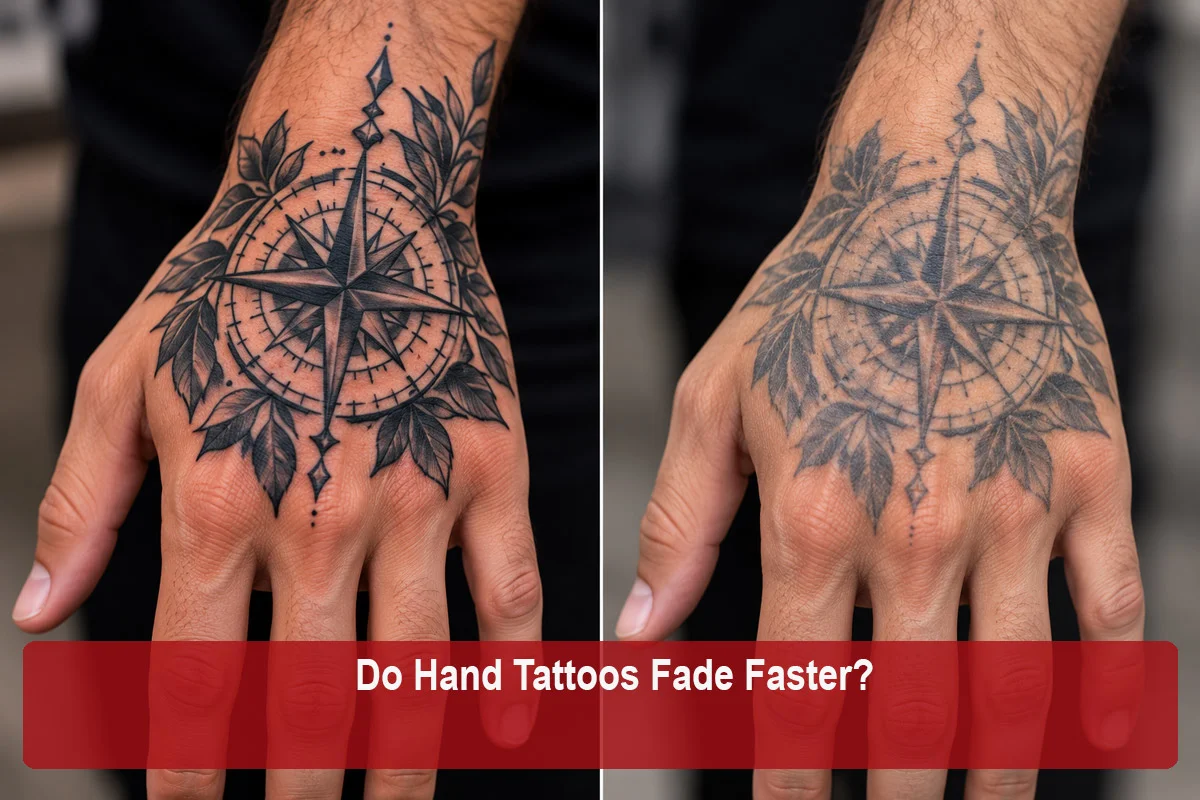
If you have spent any time researching hand tattoos, you have probably seen the warning: hand tattoos fade faster. It is one of the most repeated pieces of advice in tattooing, and most artists will mention it before agreeing to tattoo a hand. But how much faster, compared to what, and does it apply equally to every part of the hand?
This article puts that claim in context. It compares hands to other common placements, breaks down which hand zones are most affected, looks at how style and color change the picture, and explains what you can realistically expect.
Yes. Hand tattoos are widely and consistently reported by artists to fade faster than tattoos on most other parts of the body. This is not a rare experience or a sign of a bad artist. It is a well-known characteristic of the placement.
That said, faster does not mean that a hand tattoo will disappear. A well-done hand tattoo stays visible. What tends to happen sooner on hands is a loss of crispness: lines soften, fills become patchier, and fine details blur. How noticeable this is depends on the zone of the hand, the design, the artist, and how you use your hands.
Fading on hands rarely looks like the whole tattoo uniformly lightening. More often, it shows up in specific ways:
Some of these changes can appear early, after the initial healing, while others develop gradually over years.
To understand why hands stand out, it helps to compare them with placements that are known for aging well.
Areas like the upper arm, thigh, calf, and back are generally protected by clothing, experience less friction, and have fairly stable skin. Tattoos there are commonly described as holding their crispness for a long time.
The forearm sits in the middle. It is stable and low friction but often exposed to sun, especially on the outer side.
Hands combine nearly every factor associated with fading: constant use, frequent washing, regular sun exposure, and lots of movement and creasing. Feet share many of these traits, which is why foot tattoos are often grouped with hands as higher-maintenance placements.
| Placement | Commonly Reported Fading Rate | Main Factors |
|---|---|---|
| Fingers and palms | Among the fastest | Constant friction, washing, creasing |
| Back of hand | Faster than most placements | Sun, washing, tendon movement |
| Feet and ankles | Faster than most placements | Footwear friction, sun on tops of feet |
| Outer forearm | Moderate | Sun exposure |
| Upper arm and shoulder | Slower | Often covered, stable skin |
| Thigh and calf | Slower | Often covered, low friction |
| Back and chest | Slower | Usually covered, stable surface |
These are general patterns reported across the industry, not guarantees. Individual results vary widely.
The hand is made up of several zones, and they behave very differently.
Palms are commonly considered the most difficult area of all. Many artists decline palm tattoos because results are so often patchy or short-lived.
The inner surfaces and sides of fingers are in near-constant contact with objects. Tattoos here are widely reported to fade quickly and unevenly, sometimes noticeably soon after healing.
The tops of fingers and knuckles fare somewhat better than the inner sides, but creasing over the joints can still cause lines to soften and spread over time.
The back of the hand is generally the most durable hand zone. It still fades faster than most body placements, but bold designs here can hold up well for a long time with care.
Areas where the back of the hand meets the wrist often behave more like the forearm, holding up comparatively well.
Design style has a large influence on how quickly fading becomes noticeable.
Bold styles such as American traditional and heavy blackwork are commonly described as the most resilient on hands. Thick outlines and solid fills still look strong even after some softening.
Fine line and micro styles are the most vulnerable. Thin lines and tiny details have little margin before fading makes them hard to read.
Script and lettering can blur or fill in at small sizes, especially across knuckles and finger joints.
Watercolor and soft shading without structural lines may lose definition faster.
Black ink is generally considered the most durable choice for hands. Saturated, bold colors can also hold up reasonably well when packed solidly. Light shades, pastels, and subtle color blends are usually the first to dull, particularly with sun exposure.
If you want color on your hand, ask your artist which colors they have seen hold up best on hands and on your skin tone specifically.
Hand skin is challenging to tattoo. It varies in thickness and texture across short distances, and getting ink to settle consistently requires experience. An artist who regularly tattoos hands understands how to adapt their technique for the placement.
That is why looking at healed hand work in an artist's portfolio is so valuable. It shows you their real-world results on this exact placement, not just how their hand tattoos look on the day they are finished.
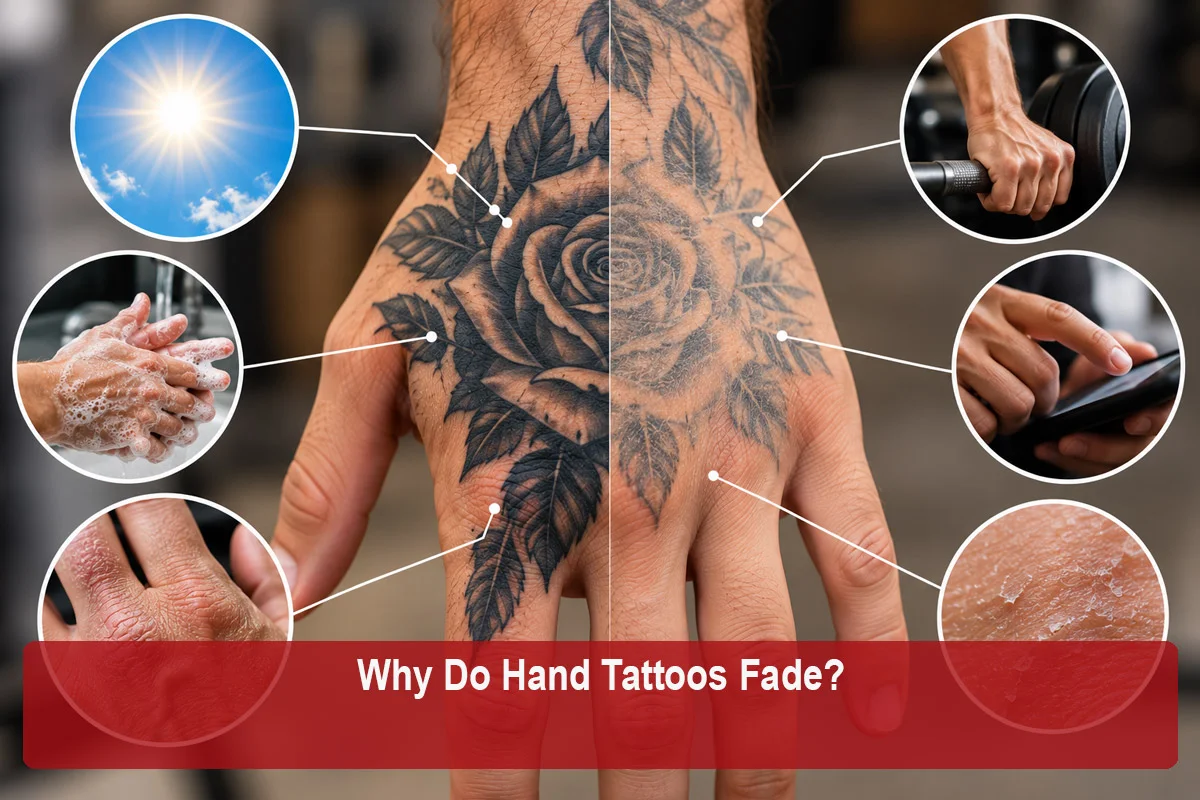
Two people can get the same hand tattoo from the same artist and see different results, largely because of how they use their hands. Fading is commonly reported to be faster for people who:
Thinking honestly about your lifestyle can help you set realistic expectations before booking.
You cannot stop a hand tattoo from aging, but you can influence how quickly it shows. Common approaches include:
For many people, no. Hand tattoos remain popular because people love how they look, and many accept fading and touch-ups as part of owning them. Some even enjoy the worn, lived-in character an older hand tattoo develops.
What matters is going in with accurate expectations. If you want a tattoo that stays crisp with minimal maintenance, a different placement may suit you better. If you love the idea of a hand tattoo and are comfortable with its realities, it can be a rewarding choice.
Feet are the placement most often compared to hands. Both experience heavy friction, both are commonly described as fading faster than most areas, and both often need touch-ups. The causes differ slightly. Feet deal with constant rubbing from socks and shoes, while hands deal more with washing, handling objects, and sun. The tops of the feet can also get significant sun in warm weather. If you have a foot tattoo that has aged in a way you are happy with, that experience may give you a rough sense of what to expect from a hand tattoo.
Skin tone influences how fading appears. On any skin tone, contrast between ink and skin is what makes a tattoo readable, and as tattoos soften that contrast can reduce. Bold black linework and solid fills generally keep the strongest contrast across skin tones. If you are considering color, ask your artist which colors they have seen hold up well on hands with skin tones similar to yours, and look for healed examples.
Myth: a good artist means no fading. Skilled artists can reduce patchiness and choose durable approaches, but hand tattoos from even the best artists still soften faster than tattoos elsewhere.
Myth: hand tattoos eventually disappear. A properly done hand tattoo stays visible. Fading usually means softening and patchiness, not vanishing.
Myth: only cheap tattoos fade on hands. Price does not change the placement's characteristics. Design, zone, technique, and lifestyle matter far more.
Myth: all hand zones are the same. The back of the hand and the sides of fingers behave very differently, as covered above.
Much of the surprise people feel about hand tattoo fading comes from photos. Most hand tattoos shared online are photographed fresh, when lines are sharpest and color is brightest. Healed hand tattoos look noticeably different, even when they have healed well. Before booking, spend time looking specifically at healed hand tattoos, ideally ones that are a year or more old, so your expectations match what hand work really looks like over time.
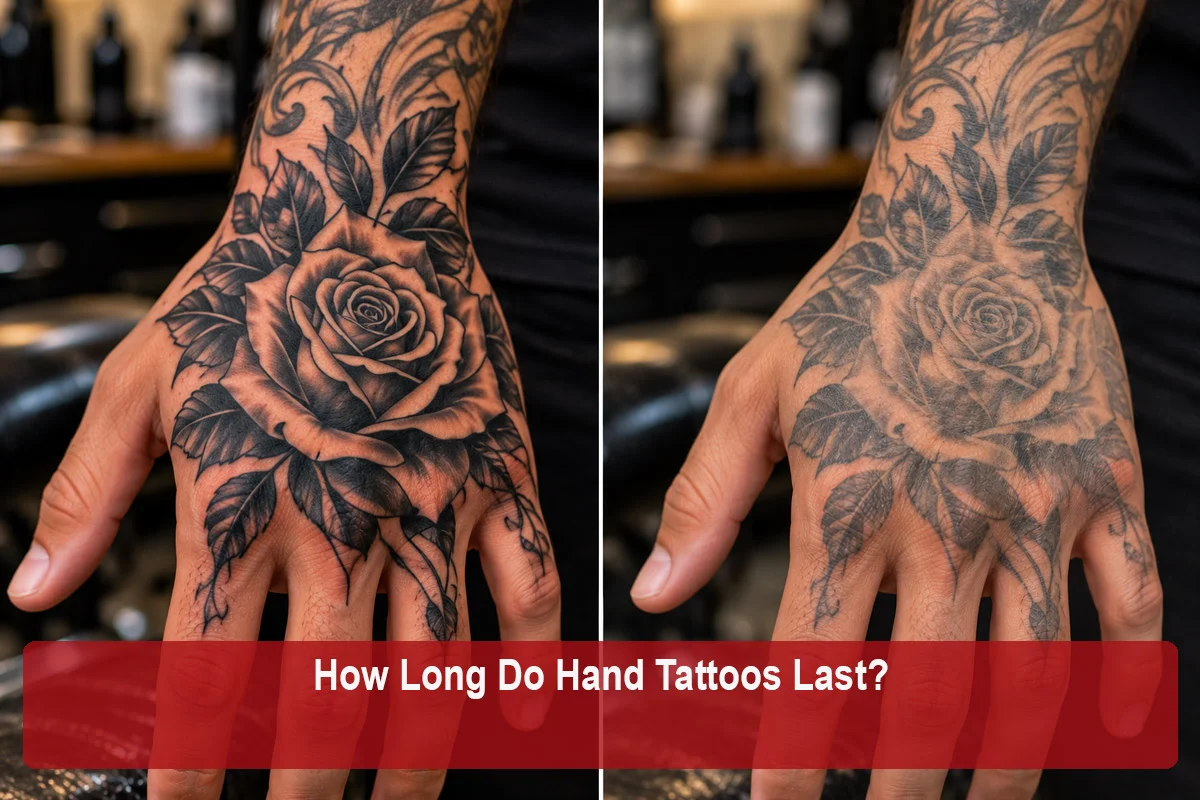
Many people with hand tattoos come to appreciate the way they age. A softened traditional rose on the back of the hand can carry a lived-in charm that a fresh tattoo lacks. If you approach a hand tattoo knowing it will change, that evolution can become part of its character.
Hand tattoos do fade faster than tattoos on most other placements, and the effect is strongest on palms and finger sides. The back of the hand holds up best, bold styles and black ink are the most resilient, and lifestyle plays a big role in results.
Choose a durable design, a sensible zone, and an artist with healed hand work to show you. With realistic expectations and good care, a hand tattoo can look great for a long time.
This article was reviewed by the Tattoo Shops Near You Editorial Team for accuracy, clarity, and relevance. We use reliable industry resources, official business information, and other authoritative sources where applicable to help readers make informed decisions about tattoo shops, artists, styles, and services.
Last reviewed: October 2026